Tag: Vladimir Putin

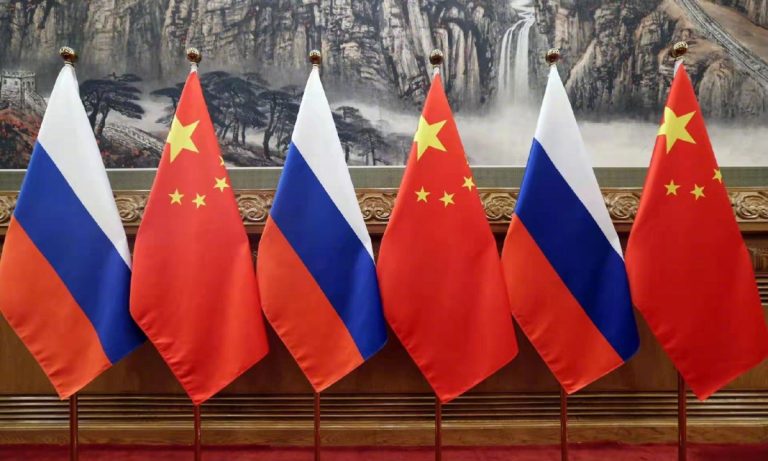
Alternating flags of China and Russia displayed at a summit.

Xi and Putin Unite Against Golden Dome at Beijing Summit

This analysis explores the strategic consolidation between Moscow and Beijing during the recent Beijing summit, where both leaders condemned the U.S. “Golden Dome” missile defense initiative. As energy ties deepen—driven by the disruptions of the ongoing Iran war—we examine how this anti-hegemonic alignment seeks to reshape the global security architecture while highlighting the growing structural asymmetry of the Russia-China relationship.

Read More »
Vladimir Putin speaking at a podium with Russian and Chinese flags in the background.

Why US Pressure Keeps Pushing Moscow and Beijing Closer

This analysis explores the resilience of the Sino-Russian partnership, arguing that Western pressure has inadvertently solidified their cooperation. By examining the shift from ideological alignment to a partnership built on shared threats—and analyzing the failure of recent U.S. “wedge strategies”—we highlight why Moscow and Beijing view their collaboration as an indispensable strategic necessity, even amidst growing economic asymmetries and localized frictions.

Read More »
Small desktop flags of Russia and China standing crossed against a soft, light-colored background.

Putin’s 25th Visit to China Tests Beijing’s Balancing Act

This article analyzes Vladimir Putin’s 25th presidential visit to China, arriving immediately after Donald Trump’s departure from Beijing. While the leaders target energy deals like the Power of Siberia 2 pipeline, the summit highlights China’s strategic tightrope walk as an indispensable power broker managing ties with both Washington and Moscow.

Read More »
Chinese President Xi Jinping speaking at a podium during the Beijing Summit with a prominent orange background displaying Beijing China.

Beijing’s Double Summit Rewrites the Power Triangle

This analysis explores the geopolitical significance of Xi Jinping hosting the American and Russian presidents back-to-back in Beijing. Breaking from historical Cold War dynamics, China now occupies the center of this unequal power triangle, balancing massive Western commercial ties with an existential energy partnership with a sanctioned, anxious Moscow.

Read More »
A stylized graphic for an article. It features a grayscale cutout of Hungarian Prime Minister Viktor Orbán on the left and a younger man in a traditional-style jacket gesturing on the right. The background is a textured representation of the Hungarian national flag.

Iran War Accelerates Multipolar World Order

The recent confrontation involving Iran marks a turning point in global geopolitics, accelerating the transition toward a multipolar order. This analysis explores how strained transatlantic ties, the rise of non-Western economic networks, and new metrics of technological strength are redefining influence, proving that unilateral action faces increasing limits in 2026.

Read More »
A grayscale collage of Viktor Orbán and another political figure against the red, white, and green colors of the Hungarian flag.

European Votes Test Populist Staying Power

This analysis explores the recent electoral shifts in Britain and Hungary, highlighting the governance challenges facing populist movements. While outsider appeals can win elections, sustaining power requires delivering on economic stewardship and institutional integrity. As US conservatives look toward upcoming midterms, these European results serve as a vital warning.

Read More »
Graphic for the 11th NPT Review Conference in 2026 featuring the UN General Assembly and a knotted gun statue.

NPT Credibility Tested by Iran Strikes

The 2026 NPT Review Conference in Geneva has been overshadowed by the failure of military strikes to permanently degrade Iran’s missile and nuclear capabilities. Backed by strategic support from Beijing and Moscow, Tehran’s rapid reconstitution of its infrastructure highlights the growing limitations of kinetic operations and the urgent need for multilateral treaty reform.

Read More »
The Iranian flag flying over a pile of concrete rubble and destroyed buildings.

Iran Conflict Accelerates Multipolar Realignment

The inconclusive US-Israeli campaign against Iran has accelerated a global shift toward multipolarity. By demonstrating state resilience and weaponizing energy chokepoints, Tehran has forced major powers to reassess the costs of intervention. This new reality is driving a strategic realignment, pushing nations toward pragmatic diplomacy and diversified resource security.

Read More »

Why Washington Misplaces Central Asia

The United States risks losing strategic ground in Central Asia due to institutional fragmentation and inconsistent regional categorization. While Washington’s engagement remains episodic, China has methodically secured vital energy pipelines and overland trade corridors, insulating its economy from maritime disruptions and deepening its long-term influence across the Eurasian heartland.

Read More »

Iran’s Hormuz Leverage Erodes US Gulf Influence

Tehran has transformed the Strait of Hormuz into its most potent bargaining chip, leveraging control over 20% of global oil to demand a new regional order. As Supreme Leader Mojtaba Khamenei rejects outside influence, the shift is fracturing traditional Gulf alliances and forcing major powers to recalibrate their energy security strategies.

Read More »
A large street billboard in Iran depicting military failures and naval captures.

Why the Iran Collapse Strategy Keeps Backfiring

Washington’s reliance on a “breakdown” strategy in Iran is being tested by Tehran’s ability to endure sustained military and economic pressure. Instead of a swift collapse, current cycles of attrition have fueled global oil price spikes, reaching $4.50 per gallon in the U.S., while strengthening Iran’s informal trade networks and regional alliances.

Read More »
Vladimir Putin walking past a line of Russian military guards in uniform.

Trump’s America Foils Putin’s Global Strategy

The return of Donald Trump has disrupted Vladimir Putin’s long-term global strategy by devaluing the international institutions where Russia holds formal power. As Washington pivots to parallel mechanisms and unilateral action, Moscow finds its traditional diplomatic leverage weakened, forcing the Kremlin to recalibrate its influence amid the ongoing conflict in Ukraine.

Read More »