Editorial Note: This article originates from Global Times, a Chinese state media outlet operating under the editorial oversight of the People’s Daily and the Chinese Communist Party. The editorial reflects Beijing’s official position on the US-Iran conflict and should be read in that context. ThinkTanksMonitor has cross-referenced key factual claims against independent sources and presents this as one perspective within the broader international debate.
Twenty-eight days. That is how long the Islamabad Memorandum of Understanding held before the conflict it was meant to close reignited in earnest. The US completed strikes against Iranian military targets for a third consecutive night on July 14, while Tehran struck two Emirati oil tankers in the Strait of Hormuz and triggered fresh missile alerts in Bahrain. The US also reimposed its naval blockade of Iranian ports, and Iran’s deputy foreign minister accused Washington of destroying the interim peace deal, saying Tehran now has no commitments under the MOU.
The speed of the unraveling says something important. The MOU was not simply a ceasefire that broke down under the pressure of events. It was a document that neither side appears to have treated as binding from the moment it was signed. Trump said he was reinstating the blockade because Iran broke the recent ceasefire deal by launching missile attacks on commercial tankers and by trying to shut down the Strait of Hormuz. Iran made the mirror-image accusation. Both are partly right, and that symmetry is the problem.
A Strait That Has Become a Battlefield
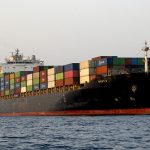
Since the conclusion of the MOU in June 2026, Iran has repeatedly threatened and attacked ships passing through the Strait of Hormuz, hoping to coerce commercial vessels and the international community into following routes and protocols that would allow it to control the strait and collect fees on ships passing through. CENTCOM said its latest attacks were aimed at degrading Iranian capabilities used to attack commercial shipping, with US forces striking coastal defense systems, missile and drone sites, and maritime capabilities.
Earlier on July 14, Iranian officials and state media reported US strikes on the city of Abadan, which hosts the oldest oil refinery in the Middle East, the port city of Mahshahr, Qeshm Island, and Kish Island. Iran also carried out retaliatory attacks on Kuwait, Bahrain, and Jordan. Al Jazeera’s correspondent in Tehran described the situation as “a low-intensity war that is becoming persistent,” with concerns that further escalation could mean a return to full-scale conflict.
Brent crude rose 2% to $85 a barrel while US West Texas Intermediate rose 2.3% to $80 amid renewed uncertainty over commercial shipping through the Hormuz waterway that carried a fifth of the world’s oil and gas before the conflict. War risk premiums for the Strait of Hormuz are expected to increase sharply, with shipowners and charterers pausing transits through the waterway.
What the IMF Numbers Already Showed — Before This Week
The economic damage was being measured before the latest escalation began. The IMF’s July World Economic Outlook update projects 3.0% global growth in 2026, down 0.1 percentage point from April, as war-driven energy pressure and stalled disinflation offset technology investment gains. The modest slowdown reflects the effects of the war in the Middle East being partly offset by accelerated demand-driven momentum in the global technology cycle, with the impact varying widely based on countries’ exposure to the war and position in the technology value chain.
Inflation remains a key concern, with the IMF revising its global headline inflation forecast up to 4.7% for 2026 compared with 4.1% in 2025, before an expected decline to 3.9% in 2027. Put simply, the disinflation trend that has been in place since early 2024 has stalled. Those figures were compiled before the third round of strikes and the renewed blockade. The July 8 forecast was already incorporating a longer closure of the Strait of Hormuz than the April assumptions allowed for. The next revision will start from a worse baseline.
The regional picture is starker. The V-shaped pattern of slowdown followed by rebound is most visible in the Middle East and North Africa, where the IMF forecasts growth dropping sharply from 3.7% in 2025 to 0.7% in 2026, before projecting a rebound of 6.5% in 2027. A 0.7% growth rate across a region already under sustained military and economic stress is, in practice, a description of contraction for much of the population living through it.
The Communication Breakdown Nobody Is Fixing
The most damaging feature of the current situation is not the military exchange itself — it is the complete absence of a mechanism to stop it. Mediator Qatar condemned the attacks on tankers transiting the Strait of Hormuz, while Oman called on all parties involved to respect international law regarding navigation in the waterway. The International Maritime Organization expressed concern about the latest attacks in the strait, which it said had claimed the lives of two seafarers, and said the “cycle of escalation must end.”
China’s Foreign Ministry said it was “deeply concerned over resumed military conflict in the Gulf region” and called on relevant parties to “remain calm and exercise restraint, safeguard the hard-won ceasefire, avoid the return of war, and more importantly, prevent the fighting from spreading and hurting more innocent people.” That language is careful, measured, and entirely without enforcement mechanism.
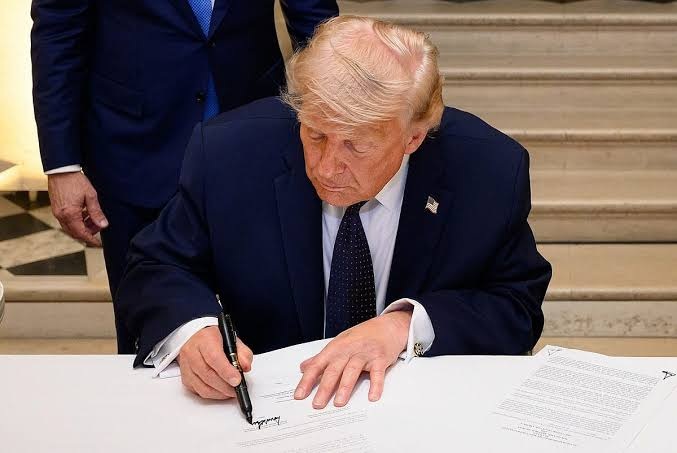
Trump announced on Tuesday that he was backing away from the US charging a 20% fee on cargo moving through the Strait of Hormuz, replacing the measure with trade and investment deals with Gulf states. The retreat on the toll — announced and then reversed within 24 hours — illustrates the core problem with the current US approach to this conflict: policy is being made and unmade in real time, through social media posts, without the kind of institutional structure that adversaries need to trust in order to de-escalate.
What the History of These Conflicts Actually Shows
The Global Times editorial cites Afghanistan and Iraq as cautionary examples of military force failing to produce political solutions. That argument is selective — it omits cases where military pressure contributed to negotiated outcomes — but the underlying structural point is harder to dismiss. The 2026 Iran war disrupted global travel and trade, halted flights in and out of the Middle East, and led to shipping reroutes to avoid the Strait of Hormuz and the Red Sea. Those disruptions are now entering their fifth month. Commercial traffic through the Strait of Hormuz dropped more than 90% after the outbreak of conflict, and Iran’s attacks on traffic caused a further decline.
The IMF warned that renewed escalation in the Middle East could reignite commodity price volatility, tighten financial conditions, strain policy buffers and worsen food insecurity in low-income countries, while upside risks include faster AI adoption and a quicker normalization of trade through the Strait of Hormuz. Those upside risks are now receding with each new round of strikes. The window for a negotiated reopening of the strait does not stay open indefinitely. Every tanker attack and every retaliatory strike makes the political cost of a diplomatic settlement higher for both sides — and the economic cost of continued conflict higher for everyone else.
Original analysis inspired by the Global Times editorial board from Global Times. Additional research and verification conducted through multiple sources.
By ThinkTanksMonitor