Category: Cartoon

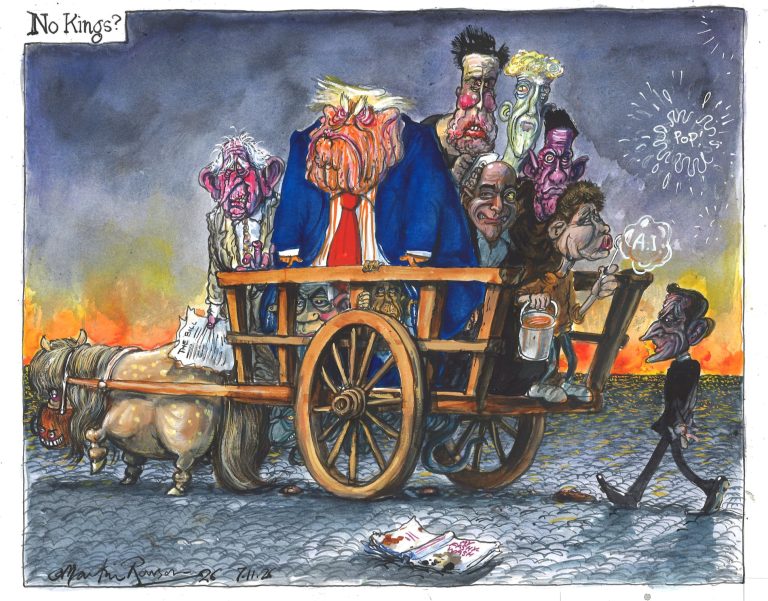
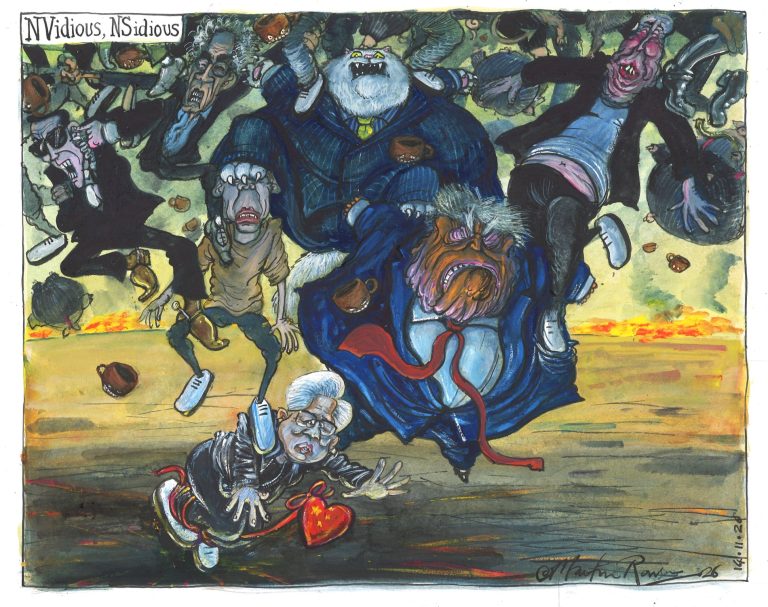
Martin Rowson on the downfall of Nvidia’s Jensen Huang – cartoon

Analysis: Published in The Guardian, Martin Rowson’s editorial cartoon targets the intersection of personal scandal, corporate concentration, and great-power intelligence rivalry following Jensen Huang’s exit from Nvidia. (Note: the specific visual composition could not be directly inspected from the image-only page.) Strategically, the piece captures growing Western anxiety that concentrated “tech-bro” oligarchies controlling critical AI semiconductor infrastructure represent systemic national security liabilities when exposed to foreign intelligence operations and geopolitical competition with China.
Read More »

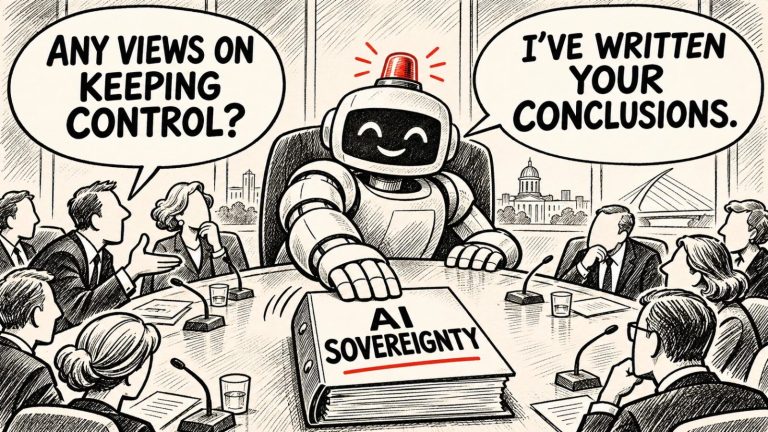
Under control? — Daily cartoon, 13 November 2026

Analysis: Visually, the cartoon portrays anonymous European summit officials seated at a conference table asking, “Any views on keeping control?” while a robot calmly slides a completed report titled “AI Sovereignty” across the table, replying, “I’ve written your conclusions.” Published to coincide with the November 13 EU leaders’ summit in Dublin, the piece satirizes the gap between European regulatory rhetoric and actual technological dependence. It matters because it captures Europe’s structural dilemma as it attempts to assert digital sovereignty amid U.S. and Chinese dominance in frontier AI.

Read More »

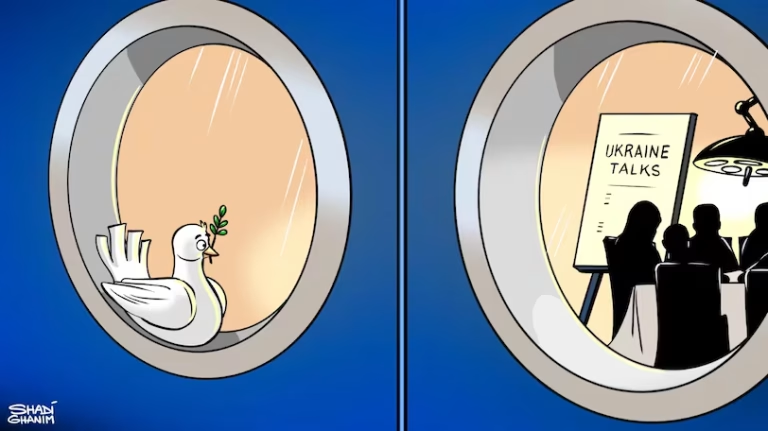
Shadi’s take on talks between Ukraine, Russia and the US in Abu Dhabi

Analysis: Note: A direct visual description of the artwork is unavailable because the source page hosts the standalone image without text captions and live browser viewing was not permitted. Strategically, the cartoon highlights the Gulf’s emerging role as a neutral diplomatic broker hosting the first U.S.-Russia-Ukraine security talks since February, amid Moscow’s territorial demands and Kyiv’s refusal to cede land. Its publication in a leading UAE outlet underscores how Middle Eastern powers are positioning themselves as indispensable mediators in a fragmenting international system.

Read More »

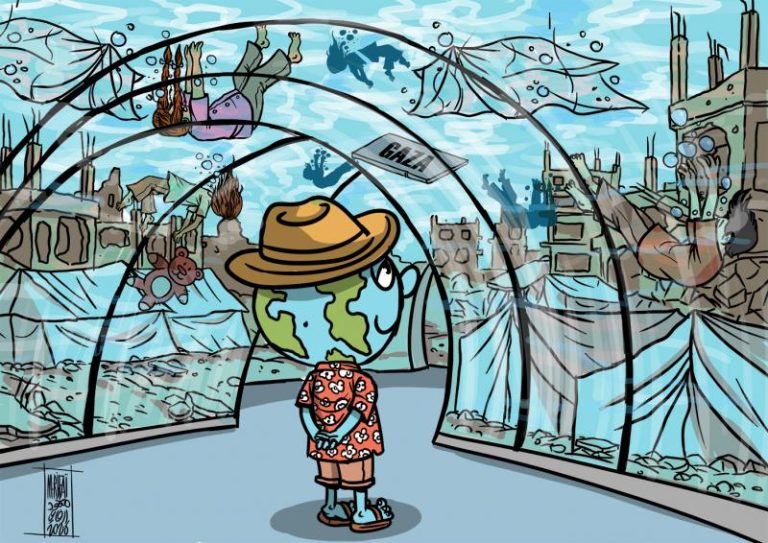
Gaza underwater

Analysis: The illustration depicts a personified Earth globe dressed in casual resort wear standing inside a dry, panoramic underwater viewing tube, placidly gazing upon submerged tents and stranded civilian refugees. This visual metaphor exposes the stark disconnect between an insulated international community and the severe human cost of destroyed civil infrastructure under extreme seasonal weather. By framing the conflict zone as an exhibit observed through impenetrable spectator glass, the artist delivers a sharp indictment of multilateral paralysis and the normalization of systemic displacement.

Read More »

Martin Rowson on the aftermath of the US midterm elections – cartoon

Analysis: The illustration depicts a grotesque, disheveled Trump stranded amidst a smoking landscape of shattered ballot boxes, crumbling imperial monuments, and discarded policy mandates. Rowson uses his trademark visceral satire to convey that Washington’s aggressive overseas ventures and coercive economic sanctions have triggered fatal domestic political exhaustion. This visual autopsy matters strategically because a lame-duck administration facing a hostile legislature paralyzes US foreign policy projection, opening strategic vacuums for rival powers across Eurasia and the Global South.

Read More »

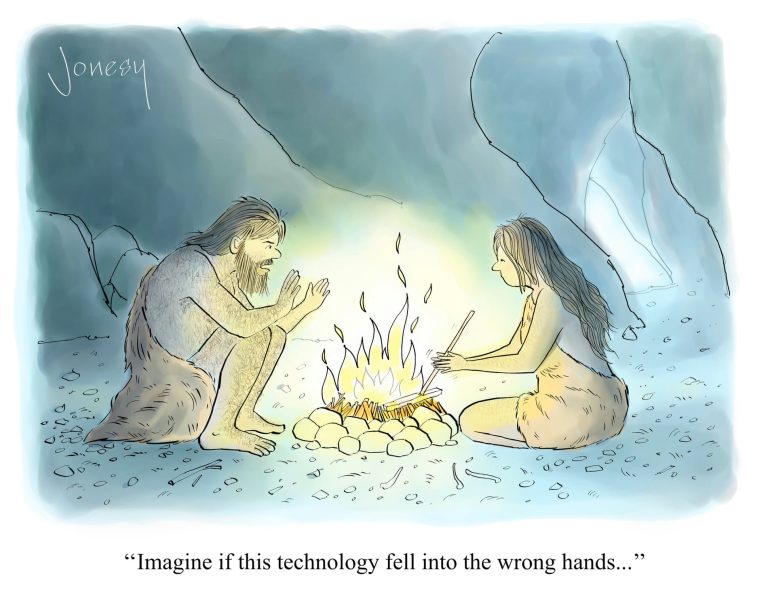
Steve Jones on dangerous tech innovations – cartoon

Analysis: The cartoon depicts early prehistoric hominids encountering an open flame alongside modern corporate technologists operating beside an ominous, superheated data processing core. Jones visualizes artificial intelligence not merely as a commercial breakthrough, but as an ungoverned, elemental force that shifts rapidly from utility to systemic vulnerability. The strategic relevance lies in illustrating the precarious governance gap confronting global powers, where competitive pressures prevent the establishment of non-proliferation safeguards on sovereign dual-use technologies.

Read More »

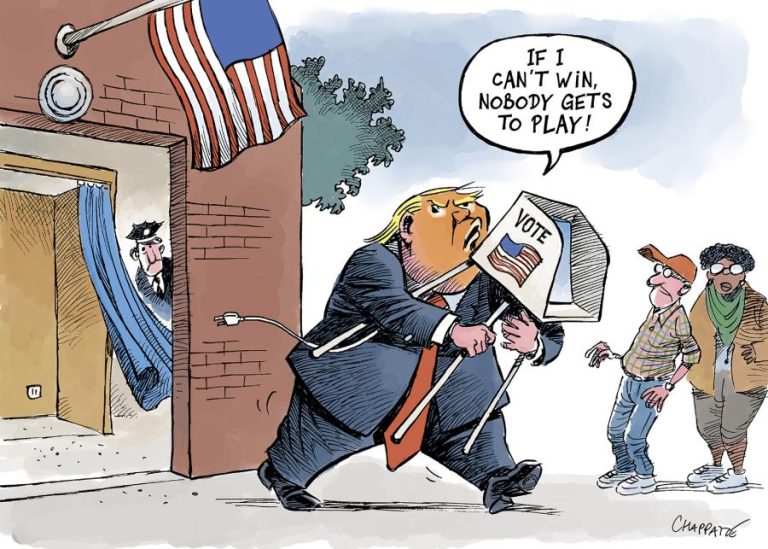
Trump puts pressure on the midterms

Analysis: The cartoon visually depicts Donald Trump physically exerting brute muscular pressure against the architectural dome of the US Capitol, using visual hyperbole to dramatize systemic electoral coercion and institutional fragility. The underlying message illustrates that the erosion of American global hegemony is inextricably rooted in domestic political dysfunction, where foundational democratic norms and constitutional guardrails are openly compromised for factional preservation. This visual commentary is vital for international strategic observers because internal polarization and governance crises within the core hegemon severely paralyze Washington’s foreign policy credibility, accelerating global geopolitical realignment toward a multipolar order.

Read More »

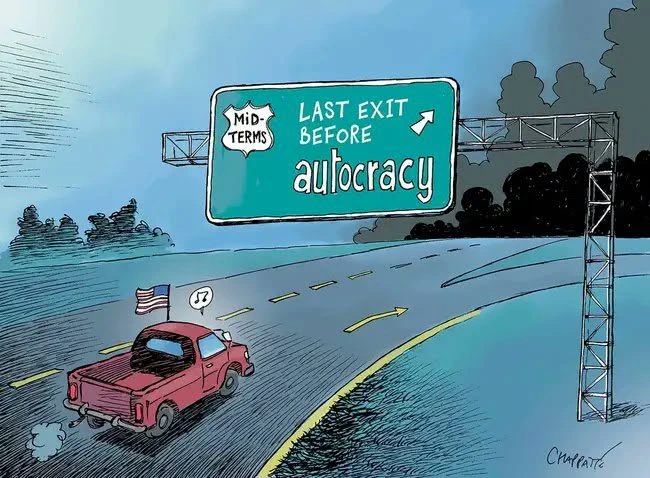
CSotD: It’s Now or Never

Analysis: Visually, Swiss cartoonist Patrick Chappatte (originally published in Geneva’s Le Temps) illustrates the November 3 US midterm vote as a highway sign marking the “last exit” off the road to autocracy, while Dutch cartoonist Maarten Wolterink portrays Vladimir Putin and Benjamin Netanyahu as puppet masters pulling the strings behind Donald Trump’s disruptive campaign and Michigan Democrat Haley Stevens’s sudden defection to endorse Republican Mike Rogers over Abdul El-Sayed (The Daily Cartoonist, Al Jazeera). Together, these European cartoons project a stark international consensus that American institutional credibility is fracturing under the weight of domestic authoritarianism and foreign policy polarization over Israel and Russia (The Daily Cartoonist). This visual commentary matters because declining allied confidence in US democratic stability accelerates Europe’s push for strategic autonomy and weakens Washington’s normative authority abroad (The Guardian).

Read More »

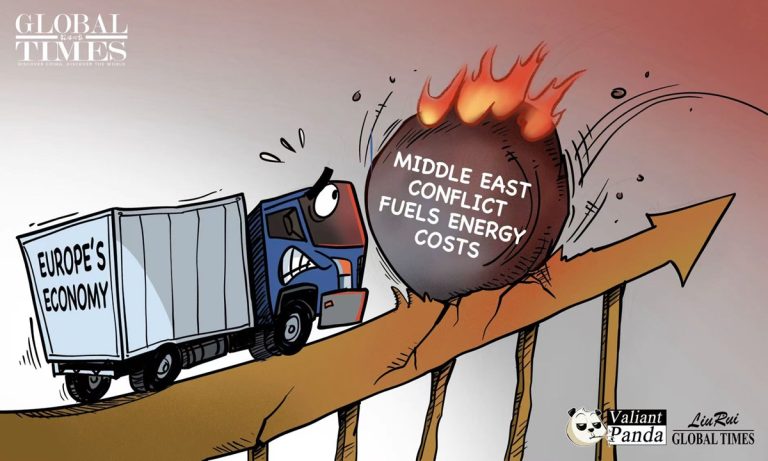
Europe’s burning burden

Analysis: Visually, political cartoonist Liu Rui depicts Europe staggering beneath a fiery, crushing weight of surging fuel and energy costs—an “energy shock” ignited by the eight-month US-Israel military campaign against Iran and ongoing disruptions in the Strait of Hormuz (Global Times, People’s Daily Online). Anchored by German Chancellor Friedrich Merz’s admission that higher energy prices from the Iran conflict have cost Europe over €100 billion in eight months (Global Times Cartoon Archive), the cartoon advances Beijing’s strategic narrative that European alignment with Washington’s military interventions is economically self-destructive. It underscores how energy insecurity and inflation are fueling widespread cost-of-living protests across Europe while deepening transatlantic rifts (People’s Daily Online).

Read More »

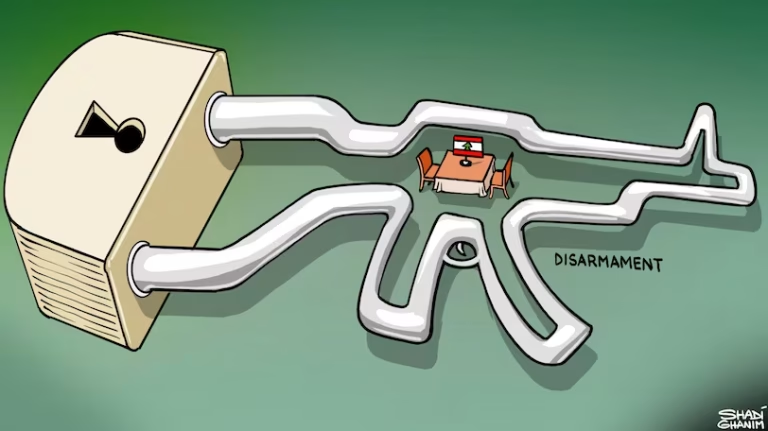
Shadi’s take on the issue of Hezbollah’s disarmament

Analysis: The illustration visually depicts the Lebanese state trapped inside a crushing mechanical vise tightened by Western and Israeli diplomatic ultimatums, juxtaposed against a fortified mountain of asymmetric weaponry refusing to yield. Ghanim’s strategic caricature cuts to the core of Western ceasefire proposals that treat non-state disarmament as an administrative precondition while disregarding the regional balance of terror and Israeli territorial violations. The cartoon underscores why coercive diplomatic mandates detached from security realities risk triggering internal Lebanese civil fragmentation rather than delivering sustainable regional stability.

Read More »

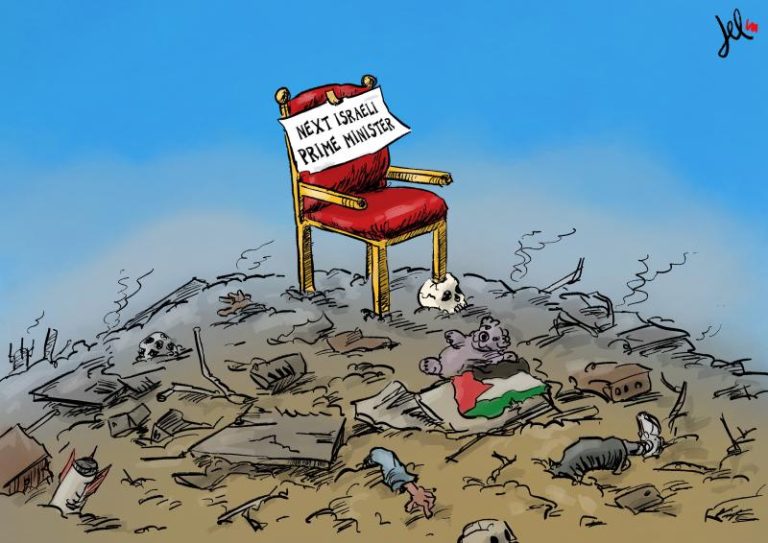
Israel elections Editorial Cartoon

The artwork visually depicts an Israeli ballot box surrounded by the shadows of wartime ruins, framing the act of voting against an ominous backdrop of prolonged warfare and acute social distress. Del Rosso exposes how perpetual external military mobilization and political survival maneuvers have exacerbated internal ideological rifts, eroding civic consensus and institutional cohesion. This visual commentary matters because it crystallizes how wartime escalation fails to paper over systemic domestic paralysis, leaving Israeli society deeply polarized over its moral and political future.

Read More »

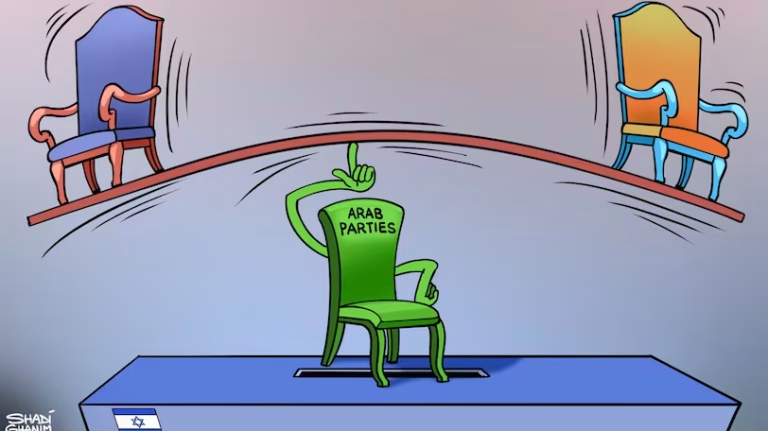
Shadi’s take on Israel’s Arab-majority parties being potential kingmakers

Analysis: Visually, the cartoon depicts Arab faction leaders holding the balancing weight on an unstable political scale, as rival figures Benjamin Netanyahu and Gadi Eisenkot look on anxiously from deadlocked camps. The caricature captures the profound domestic contradiction wherein historically sidelined Arab-led factions command the decisive arithmetic seats required to form a parliamentary majority or block executive power. Strategically, the illustration highlights the severe institutional deadlock within the Israeli state, where deep-seated political resistance to formal Arab coalition participation risks continuous governance paralysis and systemic instability.

Read More »