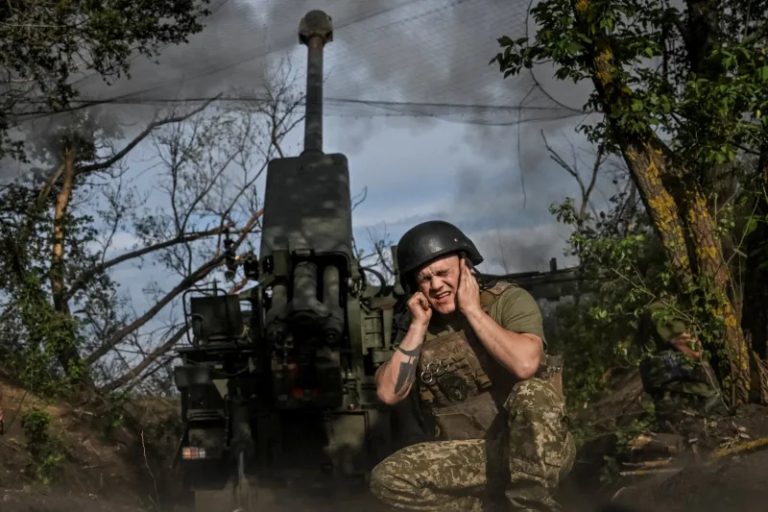
For most of the past two years, the strategic arithmetic of Russia’s war in Ukraine seemed to favor Moscow. Russian forces were absorbing enormous casualties and still advancing, grinding through Ukrainian defensive lines in the Donbas at a pace that made Kremlin confidence feel, if not justified, at least understandable. That picture has changed meaningfully. Not through a dramatic battlefield reversal, but through a quiet convergence of trends — Ukrainian tactical improvement, Ukrainian army reform, and a measurable deterioration in Russian combat quality — that together point toward a different phase of the war.
Ukraine’s Army Has Turned a Corner
The most important shift on the Ukrainian side is institutional, not technological. In mid-2025, Kyiv established over a dozen army corps, each overseeing several subordinate brigades and taking direct responsibility for the training of the troops those brigades would lead into combat. The result was a measurable improvement in training quality and a sharp reduction in the desertion that had plagued recruiting pipelines. By early 2026, over 200,000 Ukrainian soldiers were listed as absent without leave — a figure that reflects the cumulative exhaustion of troops spending upward of 200 consecutive days in active combat zones. The corps reform was a direct response to that crisis, and early indicators suggest it is working.
On the frontline, the tactical dividend has already materialized. Ukrainian forces have recorded advances near Kupyansk and seized ground around Huliaipole, a sector where Russia had been building toward an assault on the fortified logistics hub at Orikhiv. Crucially, Ukraine maintained a favorable casualty exchange ratio during these operations, losing fewer troops than the Russians even while on the offensive. Ukrainian drone units have simultaneously extended their strike range to logistics targets 60 miles behind the frontline, degrading Russian resupply and limiting the combat mass Moscow can concentrate at any single point.
Russia’s Force Is Degrading From Within
On the Russian side, the numbers that once justified Kremlin confidence are reversing. Russian recruitment fell approximately 20 percent in the first quarter of 2026 compared to the same period in 2025, dropping from roughly 1,000 to 1,200 recruits per day down to approximately 800. At the same time, average daily losses have been running well above 1,500 dead and wounded. For four consecutive months spanning late 2025 and early 2026, Russian losses have exceeded the number of soldiers Moscow actually managed to bring into the force.
The quality problem compounds the numbers problem. Roughly 40 percent of new Russian personnel are now drawn from vulnerable population groups, including prisoners and heavily indebted individuals recruited through amnesties and financial relief. Junior officers who received their promotions in the field rather than through formal training are being asked to execute complex tactical plans against an adversary that is becoming demonstrably more proficient. The Russian army of 2026 is, in one analyst’s assessment, larger on paper in some sectors than a year ago and meaningfully less capable soldier by soldier. The Kremlin has reportedly approached a ceiling in its ability to significantly increase deployed resources without triggering a formal mobilization Putin has so far consistently resisted.
The Ceasefire Calculus
These converging trends are reframing the diplomatic environment. Russia is no longer advancing toward its minimal objective of occupying the full Donbas on anything close to the timeline the Kremlin projected. In April 2026, Russian forces captured just 53 square kilometers in the Donetsk region while sustaining 25,000 casualties in the same sector — a cost-to-gain ratio that makes indefinite continuation of the current operational tempo look increasingly irrational even by the Kremlin’s standards.
A ceasefire remains possible under these conditions, but it would not be a settlement. It would be a pause. Putin has shown willingness to accept territorial realities when battlefield facts leave no alternative — the withdrawals from Kyiv and Kherson in 2022 are the clearest precedent. A ceasefire would allow Moscow to stabilize its forces, fix structural problems in the military, and wait for Ukraine’s political cohesion to fracture under postwar pressures. For Kyiv, the risks of a ceasefire are substantial: demobilization pressure from a war-weary public, infrastructure and economic reconstruction competing with defense spending, and European partners potentially reducing their commitments as the immediate threat recedes. Ukraine winning the war and Ukraine winning the peace are two entirely different challenges, and the second may prove harder than the first.
Original analysis inspired by Jack Watling from Foreign Affairs. Additional research and verification conducted through multiple sources.