Category: Korea peninsula

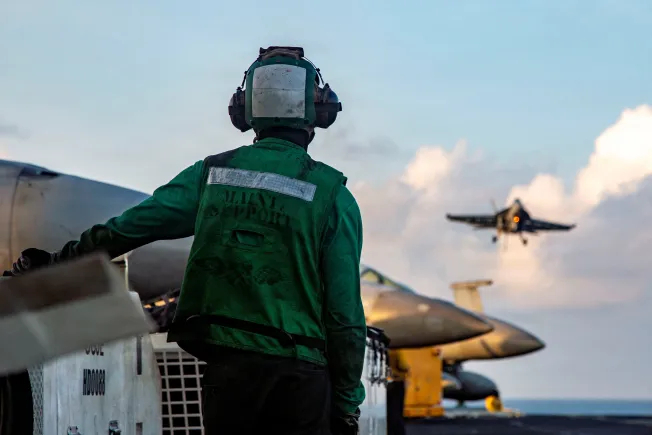
A flight deck crew member in a green vest watching a fighter jet take off or land on an aircraft carrier.

What the Iran War Taught the Pentagon About Missiles

Operation Epic Fury has provided the Pentagon with a critical reality check on missile warfare. While interception rates in the Gulf reached an impressive 90%, the “magazine depth” crisis is now a strategic liability. With the U.S. depleting nearly 30% of its Tomahawk arsenal and 40% of its global THAAD inventory in just weeks, the conflict has exposed a dangerous replenishment gap that could compromise deterrence in the Indo-Pacific theater against more sophisticated hypersonic threats.

Read More »
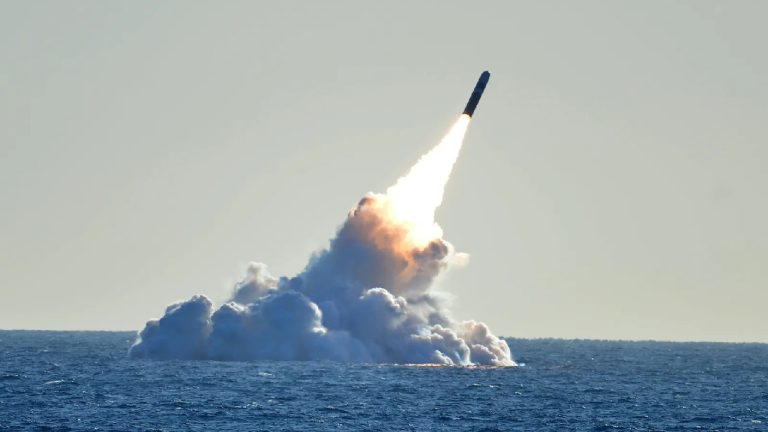
A dark missile launching vertically from the blue ocean with a large plume of white smoke and a bright fire trail at its base.

Allied Missile Defense Could Reshape East Asia’s SLBM Threat

This analysis examines how a trilateral, sea-based missile defense architecture between the U.S., Japan, and South Korea could neutralize the evolving North Korean Submarine-Launched Ballistic Missile (SLBM) threat. By moving away from the “sole defender” model depicted in the 2025 thriller A House of Dynamite, the alliance can leverage forward-deployed Aegis assets to create a layered, multi-azimuth defense that buys critical decision-making time.

Read More »
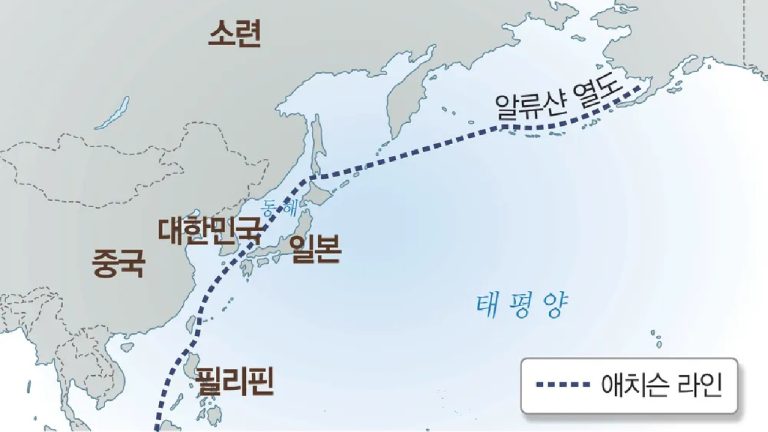
Map showing the Acheson Line (dotted blue line) defining the US defense perimeter in the Pacific, labeled in Korean

The New Acheson Line: How Trump’s ‘America First’ Strategy Abandons Asia

The 2025 National Security Strategy (NSS) released by the Trump administration has shocked the Indo-Pacific, indicating a major shift in U.S. defense commitments. Framed as a “realist” recalibration, it is perceived by analysts in Tokyo and Seoul as a strategic retreat, echoing the Nixon Doctrine and repositioning a defensive perimeter along the First Island Chain, thereby conceding the Asian mainland to Chinese influence and prioritizing economic nationalism over alliance unity.

Read More »