Tag: Vladimir Putin

Digital collage depicting military tension between the United States and Iran flags.

Superpowers Learn Restraint From US-Iran War

Recent military confrontations between the U.S. and Iran have led global strategists to reevaluate the costs of overcommitment. As defense spending competes with domestic needs and media coverage amplifies setbacks, major powers are shifting toward more selective engagement, prioritizing internal stability and core interests over prolonged, distant interventions.

Read More »

Karaganov’s Nuclear Gambit: Russia’s Hawkish Voice Grows Louder

Sergey Karaganov is intensifying his call for a radical overhaul of Russia’s nuclear strategy following the expiration of the New START treaty. His May 2026 proposals advocate for offensive deterrence, resumed nuclear testing, and targeting European centers, reflecting a dangerous shift in Moscow’s rhetoric toward global escalation and strategic compellence.

Read More »
Portrait montage of world leaders Vladimir Putin, Xi Jinping, and Donald Trump.

Why Grand Bargains Elude Washington, Beijing and Moscow

High-level summits in Beijing between leaders of the U.S., China, and Russia highlight a new era of strategic distrust. As interdependence fades, these powers are prioritizing economic resilience and flexible, time-limited understandings over comprehensive global accords. This shift reflects a broader trend toward a fragmented, multipolar world defined by competition rather than shared rules.

Read More »
Split screen showing Vladimir Putin and Donald Trump both speaking on landline telephones.

Putin-Trump Talks Chart Path Beyond Ukraine Stalemate

Recent high-level discussions between President Trump and Vladimir Putin suggest a pivot beyond the Ukraine stalemate. Building on the 2025 Anchorage Summit, the leaders are exploring limited cooperation on Iranian enrichment and energy markets. This evolving dialogue signals a shift toward pragmatism, as both capitals navigate a complex multipolar landscape.

Read More »
Large Chinese ballistic missile canisters on transport vehicles during a military parade with a soldier in the foreground.

US-China Nuclear Rivalry Edges Closer to the Brink

China’s rapid nuclear buildup, projected to exceed 1,000 warheads by 2030, is fundamentally reshaping global strategic stability. Driven by fears of US intervention, Beijing’s expansion has accelerated American modernization and deepened regional tensions. Breaking this cycle requires pragmatic, small-scale transparency measures and concrete discussions on restraint during upcoming high-level summits.

Read More »
Close-up portrait of Hungarian Prime Minister Viktor Orbán against a blurred background of European Union flags.

Hungary Vote Exposes EU’s Enduring Splits

The landslide victory of Péter Magyar’s Tisza Party in Hungary marks the end of Viktor Orbán’s 16-year rule and a significant turning point for the EU. While the new government promises to unblock major aid packages for Ukraine, enduring disagreements over enlargement and national sovereignty continue to challenge European unity.

Read More »
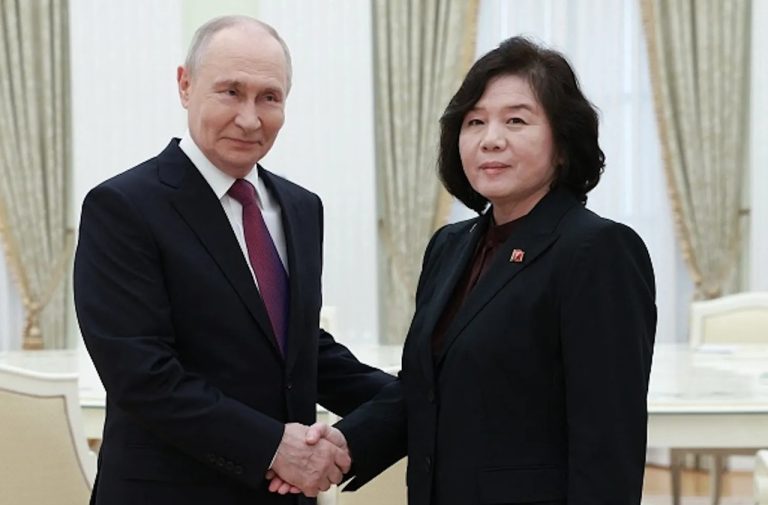
Vladimir Putin shaking hands with an Iranian official in a formal setting.

Hormuz Crisis Elevates Russia’s Role in Iran Diplomacy

Iran is intensifying its diplomatic outreach to Moscow and regional brokers like Oman to navigate the ongoing Hormuz crisis. By prioritizing maritime security and economic stability over immediate nuclear talks, Tehran aims to leverage global energy concerns and Russia’s mediation to counter U.S. pressure and secure long-term regional guarantees.

Read More »
A composite image featuring Ukrainian President Volodymyr Zelenskyy on the left and military intelligence chief Kyrylo Budanov on the right, with the Mother Ukraine monument in Kyiv and the Ukrainian flag in the background.

Budanov’s Rise and the Kremlin’s Coup Narrative: What’s Real in Kyiv

The appointment of Kyrylo Budanov to head Ukraine’s Presidential Office has sparked Russian claims of an impending coup. However, the move is more likely a calculated effort by President Zelensky to neutralize a popular political rival and bolster his administration’s wartime credibility following high-level corruption scandals and domestic pressure.

Read More »
Wide-angle view of the empty United Nations General Assembly hall in New York with the UN emblem on the golden front wall.

The NPT’s Last Chance: Can New York Save Nuclear Diplomacy?

As the 2026 NPT Review Conference opens in New York, the global non-proliferation regime faces its most existential threat since the Cold War. Against a backdrop of active strikes on nuclear sites and the total collapse of U.S.-Russia arms control, diplomats must navigate a perfect storm of regional warfare and systemic mistrust. With Article VI commitments stalled and China’s arsenal surging to 600 warheads, the next four weeks will determine if the NPT remains a pillar of security or becomes a relic of a bypassed era.

Read More »
A large mural on the side of a Chernobyl Power Plant building depicting a hand holding an atom, with wild horses running in a green field.

Chernobyl at 40: The Unthinkable Has Become Routine

Forty years after the world’s worst nuclear disaster, the anniversary of Chernobyl is being marked by active bombardment and a deepening global safety crisis. With the New Safe Confinement damaged by drone strikes and Iran’s Bushehr facility reportedly hit multiple times, the routine targeting of nuclear infrastructure has exposed a fatal gap in international governance. This report examines the “double standards” of nuclear protection and the paralysis of the IAEA in an age where radioactive sites have become geopolitical pawns.

Read More »
Indian Prime Minister Narendra Modi standing between two European leaders, holding their hands up in a gesture of unity.

India’s Balancing Act: Surviving Trump 2.0 Without Picking a Side

The second Trump presidency has stress-tested India’s foreign policy like never before. Faced with tariff shocks and diplomatic friction over Russian oil, New Delhi has doubled down on its doctrine of multi-alignment. From finalizing a landmark EU trade deal to joining the US-led “Pax Silica” initiative while maintaining ties with Moscow and Beijing, India is navigating a fragmented global order by transforming economic pressure into strategic resilience.

Read More »
Viktor Orbán speaking to a crowd of journalists with several microphones in the foreground.

Orban’s Ouster Reshapes Hungary and Europe

In a historic political upheaval, Hungarian voters have ended Viktor Orban’s long-standing grip on power, awarding Peter Magyar’s Tisza party a decisive supermajority. The result reflects deep-seated frustration with economic stagnation and corruption, potentially removing a major obstructionist voice within the EU and reshaping the landscape of European populism.

Read More »