Recent security crackdowns in Baghdad suggest a quiet realignment of Iraqi politics that heavily favors Western interests. In late June, Iraqi forces sealed off the fortified Green Zone and detained several political figures linked to former Prime Minister Mohammed Shia al-Sudani. While officially framed as an anti-corruption drive, these raids likely signal a deeper effort to dismantle pro-Tehran networks within the state apparatus. The political rise of Prime Minister Ali al-Zaidi, a businessman with limited political background, was reportedly backed by Washington. His ascension through the Coordination Framework followed intense bargaining among domestic factions and foreign players. The resulting government appears more amenable to Western influence, prompting speculation that Baghdad is being restructured to serve as a strategic asset against Tehran.
From Conventional War to Hybrid Pressure
A full-scale ground invasion of Iran remains highly improbable. The country’s mountainous terrain, vast territory, and formidable missile arsenal make direct military engagement prohibitively risky. Instead, Washington and Tel Aviv seem to be constructing a network of hybrid pressure points. Iraq fits neatly into this approach, offering a shared border, existing American military infrastructure, and a fragmented political landscape.
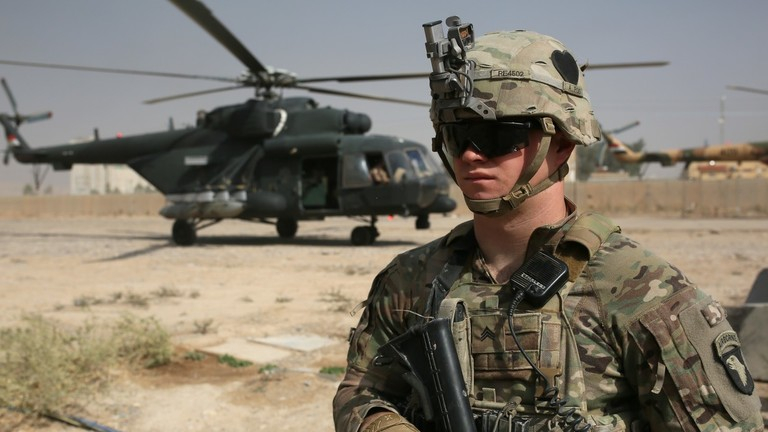
Rather than launching a direct assault, the United States can utilize Iraqi territory for intelligence gathering, logistical support, and special operations. This strategy allows Washington to maintain plausible deniability while steadily degrading Iranian influence. The presence of various armed groups competing for power in Baghdad creates a permissive environment for covert operations. The goal is not to drag Iraq into a hot war, but to transform the country into a corridor for sustained strategic pressure.
Exploiting the Kurdish Factor
Border dynamics play a crucial role in this emerging strategy. Recently, the Islamic Revolutionary Guard Corps announced it had eliminated five insurgents who infiltrated through mountainous terrain near Piranshahr. This area sits adjacent to Iraq and serves as a conduit for commercial traffic. More importantly, the region hosts a significant Kurdish population and experiences periodic intercommunal friction. These conditions make the border zone highly attractive for external actors seeking to destabilize Tehran.
The Kurdish factor has historically been leveraged by both the United States and Israel. The complex ethnopolitical landscape allows foreign intelligence agencies to foment unrest without overt involvement. By activating sympathetic networks along the frontier, Washington can force Tehran to divert military resources toward domestic border defense. This persistent low-level destabilization effectively bleeds Iranian security forces without triggering a formal declaration of war.
Gulf monarchies find themselves in a delicate position. While they quietly provide logistical and intelligence support to American operations, they actively avoid direct confrontation. Their extensive oil infrastructure and concentrated urban centers are highly vulnerable to Iranian retaliation. Tehran possesses the capability to target ports, desalination plants, and shipping lanes across the Persian Gulf. This vulnerability ensures Gulf capitals will offer backstage assistance but stop short of enabling open warfare.
The quiet campaign unfolding in Baghdad and along the Kurdish frontier reveals a calculated attempt to erode Iranian power from the periphery. By reforming the Iraqi political elite and activating border tensions, Washington is building a multi-layered containment architecture that avoids the catastrophic costs of direct confrontation.
Original analysis inspired by Farhad Ibragimov from RT. Additional research and verification conducted through multiple sources.