Category: syria

Graphic collage featuring political and military leaders alongside a map of Syria, jet fighters, and national flags.

Israel Dictates Syrian Security As Turkish Influence Expands

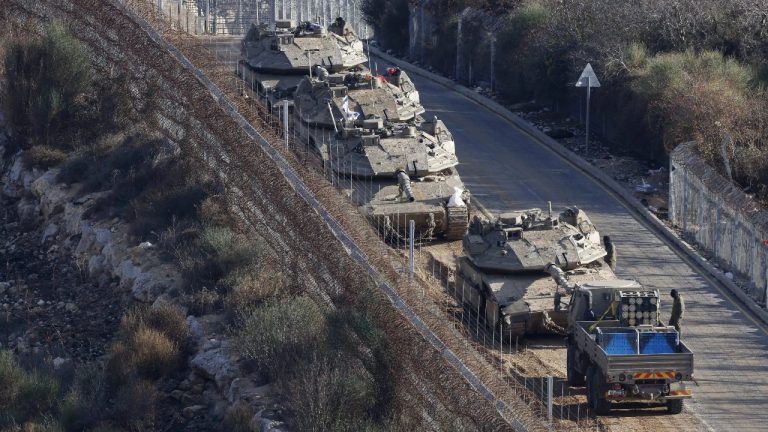
Syria faces severe constraints as neighboring powers Israel and Turkey vie for regional dominance. Despite direct security talks in Jordan, Israel’s refusal to limit its military operations—evidenced by recent airstrikes near the northern border—leaves Damascus unable to enforce true territorial sovereignty or stop foreign military incursions across its provinces.

Read More »
Four-panel collage featuring a military jet, map of the Middle East, and posters of Erdogan and Netanyahu.

Israel and Turkey Compete for Syrian Airspace Dominance

The collapse of the Syrian regime has triggered an intense proxy battle for aerial dominance across the Levant. As Israel conducts preemptive strikes and Turkey moves to expand its military footprint, Damascus remains helpless, leaving the region’s skies an unregulated arena for foreign confrontation.

Read More »
Israeli Prime Minister Benjamin Netanyahu speaking at a press conference.

Israeli Strikes in Syria Expose Deep Regional Rift

Recent Israeli airstrikes on Syria’s Abu al-Duhur airfield have intensified diplomatic friction with Turkey. Amid conflicting claims over strategic foreign deployments, analysts point to rising domestic political pressures driving high-risk foreign policy moves. Read our breakdown on the fragile balance of Middle Eastern security.

Read More »
French President Emmanuel Macron wearing sunglasses sitting alongside a Syrian official during a formal meeting.

Macron’s Damascus Pivot: France Bets on a New Syria

In a bold diplomatic shift, President Emmanuel Macron has become the first Western leader to visit Damascus since the fall of the Assad regime. This landmark trip signals France’s commitment to pragmatic engagement, focusing on massive reconstruction efforts and new economic partnerships to stabilize a transitioning Syria.

Read More »
President Erdogan of Turkey shaking hands with Crown Prince Mohammed bin Salman.

Turkey Seeks Stability in Fractured Middle East

Turkey is navigating a complex regional landscape by prioritizing pragmatic security and economic stability over earlier, more expansive ideological objectives. As Ankara manages the post-Assad vacuum in Syria and seeks to balance relations between Western allies and emerging regional networks, its foreign policy is increasingly constrained by domestic fiscal pressures. Success for Turkey now depends on converting tactical military gains into durable diplomatic leverage while avoiding the long-term costs of prolonged instability.

Read More »
A memorial poster displayed in public featuring rows of photos of missing people in Syria.

Syria’s War Crimes Trap: Justice for the Dead or Answers for the Missing?

This analysis explores the critical dilemma of post-Assad transitional justice in Syria. We examine the tension between the popular demand for the death penalty against perpetrators and the structural requirements of international forensic cooperation necessary to identify tens of thousands of forcibly disappeared victims. The piece argues that the current legal framework risks trading long-term institutional accountability and victim identification for immediate, symbolic retribution.

Read More »
Two men in formal suits shaking hands in front of the flags of Lebanon and Syria.

Syria Cannot Save Lebanon, It Has Not Yet Saved Itself

This analysis critiques the proposal that Syria could act as a stabilizing force in Lebanon, mirroring its 1976 intervention. By examining the institutional decay, fragmented military, and lack of internal legitimacy in contemporary Syria, as well as the changed political landscape in Beirut, we argue that this strategy is detached from current geopolitical realities and risks further regional escalation.

Read More »
A crowd of protesters in Syria waving opposition flags in front of police officers.

Triumph and Treason in Syria

Seventeen months after the regime’s collapse, Syria faces a critical juncture. This analysis explores the challenges of building a sovereign, inclusive democracy under the current administration. We examine the influence of foreign proxies, the struggle for minority rights, and the urgent need for a constitution that unites all Syrians.

Read More »
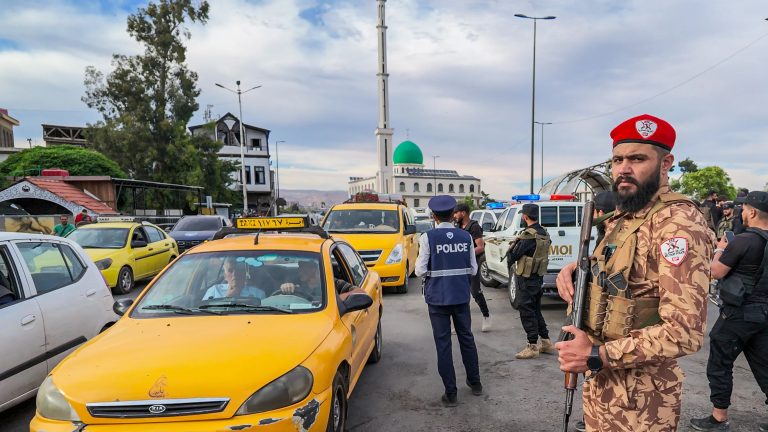
A soldier in military uniform standing guard near a mosque and city traffic.

Syria’s New Army Is Built on Fault Lines, Not Foundations

This analysis examines the structural challenges facing Syria’s post-2024 military integration. Rather than establishing a centralized national institution, the transitional authorities in Damascus have incorporated wartime factions intact, effectively codifying local patronage networks and kinship-based command structures. We explore how this “federation of armed communities” mirrors the failures of past post-conflict settlements in Lebanon and Iraq, raising serious questions about the long-term viability of the new Syrian state and its ability to exert genuine central control.
Read More »
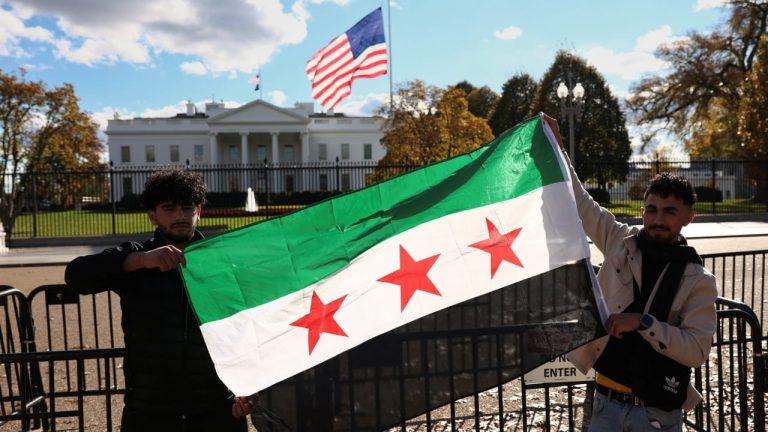
Two individuals holding the Syrian opposition flag in front of the White House.

Why Syria Must Build Lasting US Ties

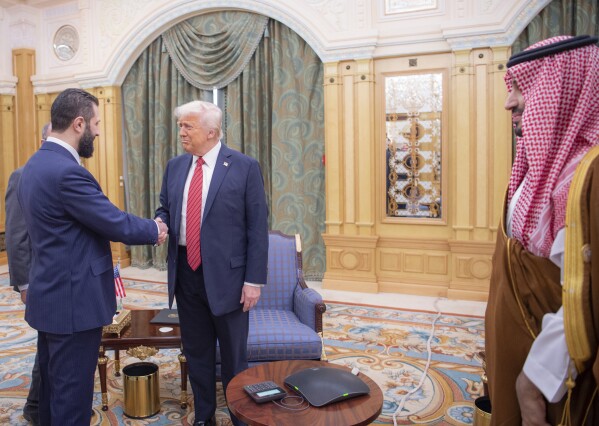
This article evaluates the precarious state of the nascent US-Syria relationship following recent diplomatic breakthroughs. While shared security objectives have fostered cooperation, reliance on temporary alliances and personal networks leaves the partnership vulnerable to future political shifts. We analyze the strategic necessity for Damascus to institutionalize ties, prioritize economic engagement, and implement governance reforms to ensure long-term stability and international support.

Read More »
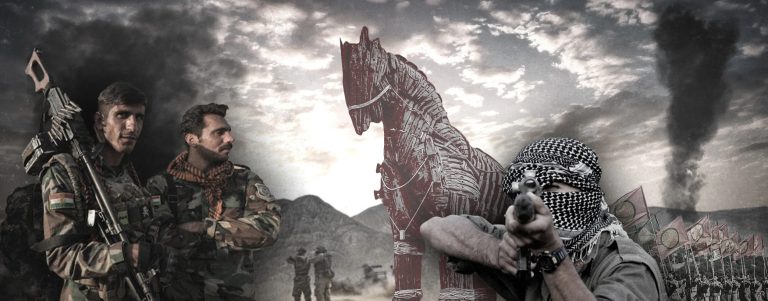
Kurdish YPG and SDF fighters with a wooden Trojan horse metaphor and smoke rising in the background.

Rojava’s End: How Washington Discarded Its Kurdish Allies

Rojava collapsed after Damascus seized most DAANES territory, ending a decade‑long Kurdish experiment dependent on U.S. protection. Washington shifted support to Syria’s new government, transferring thousands of ISIS detainees. As Kurdish forces are absorbed into the state, attention turns to Iran’s Kurdish movements — the next potential pressure point in regional geopolitics.

Read More »
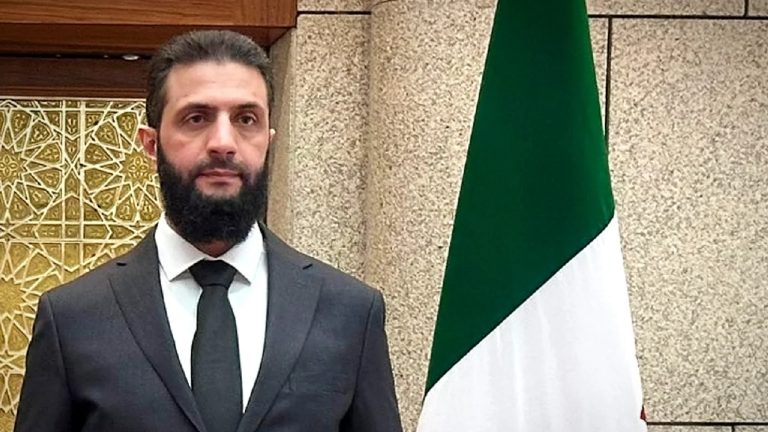
A medium shot of a man with a dark beard, wearing a grey suit and black tie, standing in front of a flag and a patterned wall.

Syria’s Islamist Leadership Threatens Counter-Terrorism Goals and Regional Stability

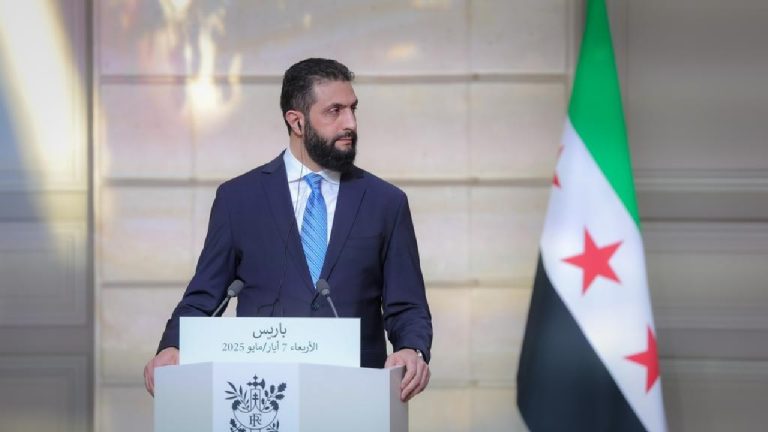
The elevation of Ahmed al-Sharaa (formerly known by the nom de guerre Abu Mohammad al-Julani) to the presidency of Syria has fundamentally reshaped the geopolitical landscape. The transition from the Assad regime to the current transitional government has indeed forced a rapid recalibration of U.S. and international policy, balancing the removal of a long-standing adversary against the risks posed by a leader with former Al-Qaeda ties.

Read More »