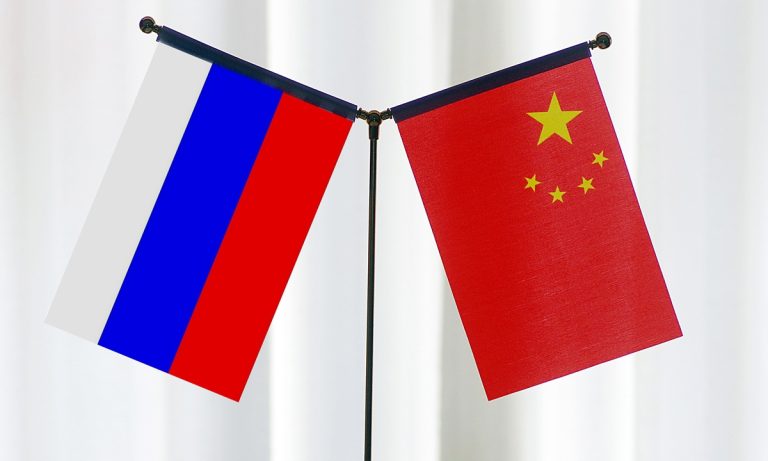
Vladimir Putin arrives in Beijing today for his 25th visit to China as president — just days after Donald Trump departed the same capital following his own high-profile summit with Xi Jinping. The back-to-back scheduling is no accident. It marks the first time China has hosted the leaders of Russia and the United States in the same month outside a multilateral setting, and it tells us something about how Beijing sees itself right now: as the indispensable power broker between two rivals, each in need of Chinese goodwill for very different reasons.
During the visit, around 40 bilateral documents are expected to be signed, covering trade, security, and cooperation across a range of sectors. The trip is timed to mark the 25th anniversary of the Treaty of Good-Neighborliness and Friendly Cooperation, a foundational agreement signed in 2001. But the real drama lies beneath the ceremony. Putin needs reassurance. Xi needs leverage. And the world is watching to see whether their partnership can absorb the pressure of a rapidly shifting geopolitical order.
Energy, Trade, and the Limits of “No Limits”
The economic dimension of the visit will be hard to miss. Putin signaled last week that Russia is close to a “serious” gas and oil deal with China, telling reporters his team is “at a very advanced stage” of finalizing agreements in the energy sector. The long-discussed Power of Siberia 2 gas pipeline — a project that would deepen Moscow’s role as Beijing’s chief energy supplier — is expected to dominate the bilateral agenda.
Yet the trade picture is more complicated than either side publicly acknowledges. After four consecutive years of growth, bilateral trade turnover declined for the first time since the COVID pandemic, falling 6.9% year-on-year to $228 billion in 2025. Falling global oil prices and higher sanction-driven discounts on Russian crude drove down the value of mineral fuel exports, while Chinese car exports to Russia plunged 46% after Moscow raised import tariffs to protect its domestic auto industry. Still, China absorbs more than a quarter of Russia’s exports, making the relationship existentially important for Moscow even in a down year.
China holds “strong leverage” in this summit, according to Andrius Tursa of consultancy Teneo, as its support has become increasingly important to Putin amid mounting economic pressures and military setbacks in Ukraine. Russia slashed its 2026 growth forecast to just 0.4% from 1.3%, a sign of the strain war spending and Western sanctions continue to exact on the economy.
The Shadow of Trump’s Visit
The timing — Putin landing in Beijing barely four days after Trump left — creates an obvious optic. Putin will seek reassurance that any improvement in China’s ties with Washington won’t alter the “strategic triangle” that keeps Beijing and Moscow closer than either is with the United States, said Dennis Wilder, a former U.S. intelligence official now at Georgetown University. Trump’s visit featured a lavish state banquet and yielded several deliverables, including $17 billion in annual agricultural purchases through 2028, a 200-aircraft Boeing order, and a September meeting by Xi in Washington.
Moscow insists the scheduling is purely coincidental. Kremlin aide Yuri Ushakov said the dates were agreed back in February, immediately after a video call between Putin and Xi. Trump’s visit, originally planned for late March, was postponed to mid-May because of the Iran crisis, creating the unintended back-to-back sequence.
Yet for analysts, coincidence or not, the juxtaposition exposes Beijing’s tightrope walk. On one side sits the Western-led economic system China still depends on for exports and technology. On the other stands a strategic partner whose war in Ukraine has drawn NATO’s ire directly at Beijing. NATO’s 2024 summit communiqué called China a “decisive enabler” of Russia’s war, citing its supply of weapons components and defense industrial inputs to Moscow.
What Both Sides Want
Xi’s calculus is relatively clear: keep Russia close enough to serve as a strategic counterweight to Washington, but avoid being dragged into the costs of Moscow’s conflicts. Xi told Russian Foreign Minister Sergey Lavrov in April that the certainty of China-Russia relations was particularly “precious” in an international order marked by chaos. Wang Yi, China’s foreign minister, described the partnership as “strategically independent,” where both sides respect each other’s core interests without forming alliances or targeting third parties.
Putin’s needs are more urgent. With revenue shrinking, Western sanctions tightening, and the Ukraine war grinding through its fourth year, Russia’s dependence on Chinese economic support has never been greater. This week’s trip is Putin’s 25th to China across more than two decades as president — a frequency that itself tells the story of where Moscow’s foreign policy center of gravity now sits.
The broader message from Beijing this week is one of dual management: entertain Washington on Monday, embrace Moscow on Tuesday, and project strength through the appearance of indispensability. Whether that balancing act can hold — as sanctions pressure rises, trade friction deepens, and both Trump and Putin test Beijing’s limits — remains the defining question of Chinese foreign policy in 2026.
Original analysis inspired by Global Times Editorial Board from Global Times. Additional research and verification conducted through multiple sources.