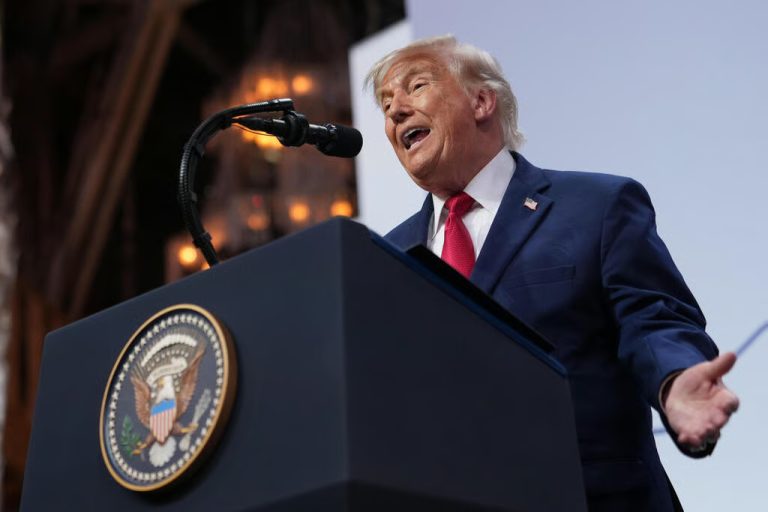
October 9, 2026 is circled on calendars across Washington, Jerusalem, and Oslo. That is when the Norwegian Nobel Committee will announce its annual Peace Prize laureate — and, according to a growing chorus of analysts and Israeli officials, it is the date quietly organizing Donald Trump’s approach to the Iran ceasefire negotiations. The argument is uncomfortable precisely because it is plausible. A president facing midterm elections on November 3, historically low approval ratings, and a war that has consumed more munitions and political capital than anyone anticipated has a powerful short-term incentive to produce a diplomatic trophy before voters go to the polls. A Nobel Prize announcement two weeks before election day would be exactly that.
Trump has not been shy about his interest in the prize. Venezuelan opposition leader María Corina Machado publicly presented him with a replica Nobel medal in May — an event the White House publicized. He has floated the idea of nomination in public remarks and privately encouraged allies to push his candidacy. None of that is disqualifying, but it raises a question that serious analysts are beginning to ask openly: is the pace and substance of the current framework deal being shaped by a diplomatic calendar, or by a security assessment?
What the CIA Said, and What Happened Next
The tension at the center of the current framework is not rhetorical — it is evidentiary. CIA Director John Ratcliffe has reportedly warned that Iran has no intention of honoring any agreement it signs, a judgment consistent with Tehran’s track record of using negotiating pauses to rebuild rather than concede. Iran has now survived two rounds of joint Israeli-U.S. strikes on its nuclear and missile infrastructure. Its new leadership, drawn from the IRGC’s hardened core, watched the regime endure sustained bombardment and concluded that resistance works. The logical inference is not that Iran will negotiate in good faith under a 60-day framework — it is that Iran will use 60 days to consolidate, rebuild, and position itself more favorably for whatever comes next.
The MoU itself reflects this asymmetry. Iran retains its ballistic missile program, its proxy network, and its nuclear enrichment capability. It receives sanctions relief, a $300 billion reconstruction fund commitment, and joint administration of the Strait of Hormuz alongside Oman — a permanent institutionalization of the leverage it demonstrated during the war. In exchange, Washington receives a temporary halt to hostilities and the diplomatic optics of a deal. The gap between what was promised before Operation Epic Fury and what the framework delivers is vast, and it cannot be fully explained by military necessity or strategic recalibration.
The Nobel Calculation and Its Costs
Nobel Peace Prizes have been awarded for agreements that paused conflicts rather than resolved them. The 1973 prize went to Henry Kissinger and Lê Đức Thọ for the Paris Peace Accords — a deal that collapsed within two years and left Vietnam in renewed war. The 1994 prize went to Yasser Arafat, Shimon Peres, and Yitzhak Rabin for the Oslo Accords, whose final status framework was never implemented. Prizes for incomplete peace agreements are not unusual. What is unusual is a ceasefire framework whose primary critics include the CIA director, the Israeli war cabinet, Republican senators, and the military commanders who burned through half of America’s THAAD and Patriot interceptor inventory to achieve it.
For Israel, the stakes are existential in a way they are not for Washington. The country has lost thousands of soldiers and sustained civilian casualties over three years of conflict beginning with October 7, 2023. It has watched its deterrence erode, its international standing collapse, and its primary ally negotiate a deal over its explicit objections. The Lebanese front — which Israel had pressed aggressively as a core security requirement — was folded into the framework against Netanyahu’s stated position. Iranian proxy networks that were supposed to be dismantled remain operational. A stronger, sanctions-relieved Iran backed by Russian technology, Chinese investment, and Qatari financial channels is not a hypothetical future threat. It is the predictable consequence of the current framework if the 60-day negotiations produce what most analysts expect — another incomplete agreement.
History will assess whether Trump’s approach represented a genuine diplomatic achievement or a personal gamble dressed as strategy. The Nobel Committee may well reward the optics of a ceasefire regardless of its durability. What is harder to award after the fact — and harder to rebuild once spent — is deterrence, alliance trust, and the credibility that comes from following through on stated objectives. Those are the currencies that actually keep adversaries cautious. A certificate from Oslo does not replace them.
Original analysis inspired by Dr. Ruth Kabbesa from Ynet News. Additional research and verification conducted through multiple sources.
By ThinkTanksMonitor