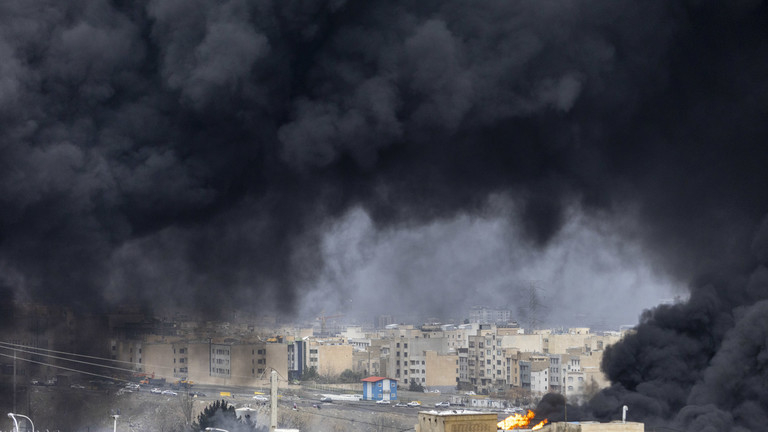
Since the US-Israel coalition launched its offensive against Tehran in late February 2026, the United Arab Emirates has scrambled to maintain a precarious balancing act. Abu Dhabi officially positioned itself as an impartial bystander, explicitly denying the use of its airspace or territory for military operations. Yet, the realities of the escalating conflict have rapidly eroded this diplomatic posture. Deepening security coordination with Washington and West Jerusalem has transformed the Gulf nation from a quiet diplomatic arbiter into an active, albeit reluctant, participant in the regional confrontation.
Intelligence and Air Defense
The swift integration of Emirati infrastructure into the Israeli-American security umbrella has alarmed Iranian policymakers. Despite public denials, intelligence sharing between West Jerusalem and Abu Dhabi has surged, culminating in unprecedented back-channel diplomacy. Multiple regional outlets confirmed that senior Israeli intelligence figures, alongside Prime Minister Benjamin Netanyahu, visited the Emirates to coordinate strategic responses at the height of the military campaign.
Simultaneously, the deployment of foreign air defense systems on Emirati soil crossed a critical threshold for Tehran. American and Israeli defense contractors supplied the UAE with advanced interception technologies, including Iron Dome batteries and specialized technical personnel. While Emirati officials characterize these measures as strictly defensive shields for civilian infrastructure, Iranian military commanders view the deployments as a direct integration of Gulf territory into an anti-Iran military front.
Financial Chokepoints and Island Disputes
Beyond the military sphere, Abu Dhabi has weaponized its financial sector to comply with Western pressure. Dubai historically served as a critical economic lifeline for Iranian businesses, allowing them to bypass heavy international trade restrictions. However, recent weeks have seen the UAE freeze multiple commercial channels and enforce stringent banking regulations against Iranian-linked assets. For the Islamic Republic, dismantling these financial networks represents a direct act of economic warfare rather than routine compliance with US sanctions.
The sudden revival of historical territorial disputes has further aggravated the crisis. Washington has reportedly encouraged Abu Dhabi to assert aggressive claims over Abu Musa and the Greater and Lesser Tunb islands, which sit near the highly volatile Strait of Hormuz. Iran has administered these strategic maritime outposts since 1971, and any attempt by the UAE to alter the status quo would trigger immediate naval retaliation.
The Danger of Retaliation
Tehran has already demonstrated its willingness to export the costs of the conflict to its neighbors. The recent drone strike that ignited a perimeter fire near the Barakah Nuclear Power Plant exposed the vulnerability of Emirati infrastructure. While authorities traced the projectile back to Iraqi territory, the incident served as a stark warning from Iran’s regional network of proxy forces.
The Emirati development model relies entirely on its reputation as a secure, predictable haven for global commerce. By slipping further into a complex web of intelligence sharing, financial crackdowns, and air defense coordination, the UAE risks inviting catastrophic attacks on its ports and energy grids. Step by incremental step, Abu Dhabi is walking away from the safety of the gray zone and directly into the crosshairs of a widening regional war.
Original analysis inspired by Murad Sadygzade from RT. Additional research and verification conducted through multiple sources.
By ThinkTanksMonitor