Tag: UAE

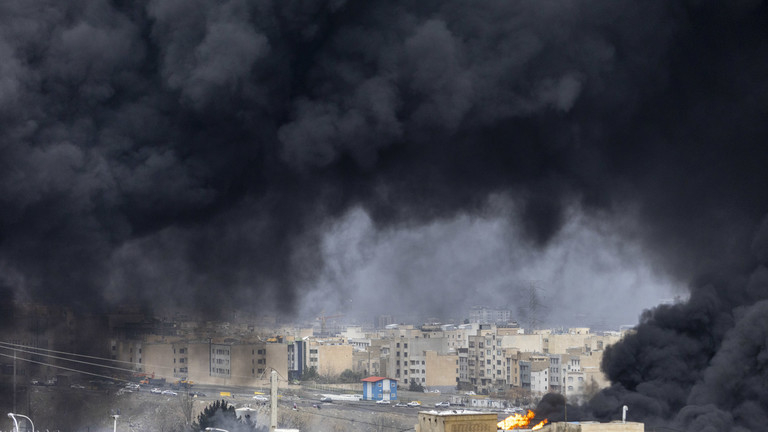
A city skyline engulfed in thick, dark smoke from an industrial fire or explosion.

UAE’s Facade of Neutrality Crumbles in US-Iran War

This analysis examines the erosion of the United Arab Emirates’ neutrality during the 2026 US-Iran conflict. By detailing the UAE’s secret military participation, integration into regional air defense networks, and the subsequent economic and security vulnerabilities created by these choices, we explore how Abu Dhabi has moved from a regional arbiter to a direct, and exposed, participant in the ongoing regional war.

Read More »
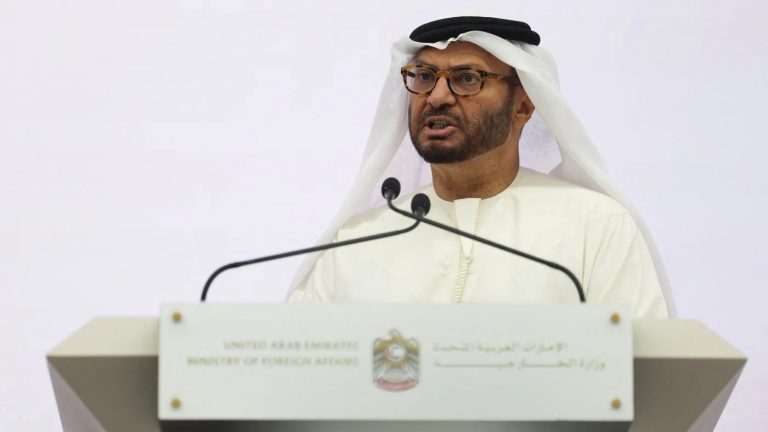
A man in traditional Emirati attire and glasses speaking behind a white podium featuring the United Arab Emirates Ministry of Foreign Affairs emblem.

UAE’s Legal Rhetoric Faces a Credibility Test

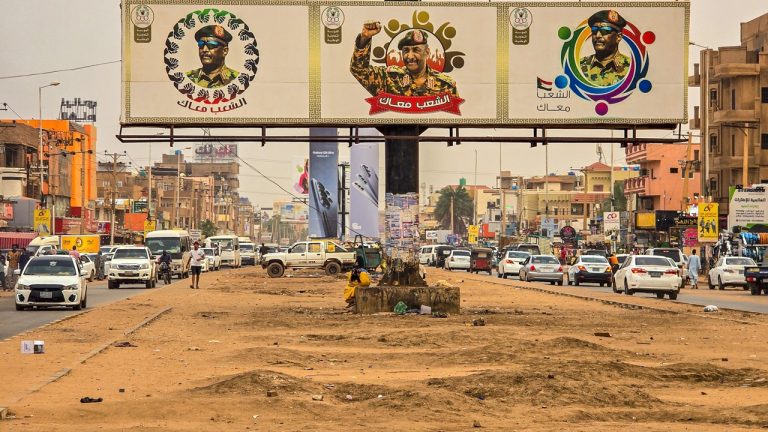
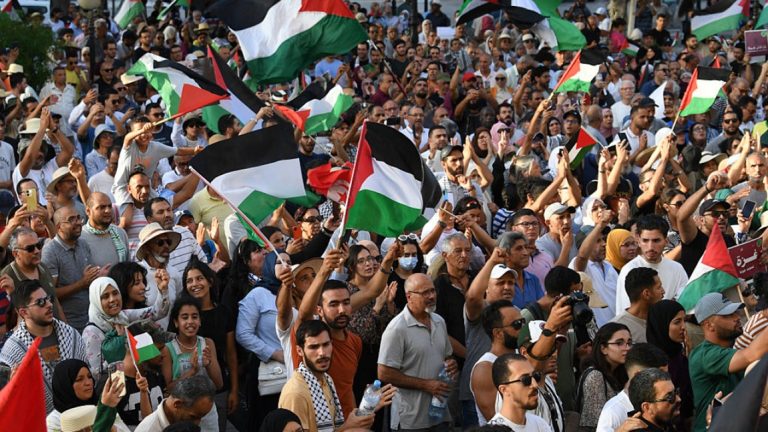
This analysis examines the growing contradiction between the United Arab Emirates’ diplomatic rhetoric championing international law and its controversial regional foreign policy. By evaluating Emirati involvement in Yemen, Sudan, and the Gaza conflict, the article highlights the credibility test Abu Dhabi faces in balancing strategic interests with global accountability.

Read More »
Military speedboat approaching a large container ship at dusk.

Iran’s Hormuz Gambit Demands Fresh Energy Strategy

The ongoing blockade of the Strait of Hormuz has exposed critical vulnerabilities in global energy security, driving U.S. gasoline prices past $4.40. As military standoffs continue, experts urge a shift toward diversified supply routes, including Saudi Arabia’s East-West pipeline, and a renewed focus on domestic resilience and long-term energy innovation.

Read More »

UAE’s OPEC Exit Targets Iran’s War Economy

The UAE has announced its exit from OPEC effective May 1, 2026, signaling a major shift in Gulf energy politics. Abu Dhabi plans to increase oil production, aiming to weaken Iran’s revenue base during escalating regional tensions. The move could reshape OPEC dynamics and global energy markets.

Read More »
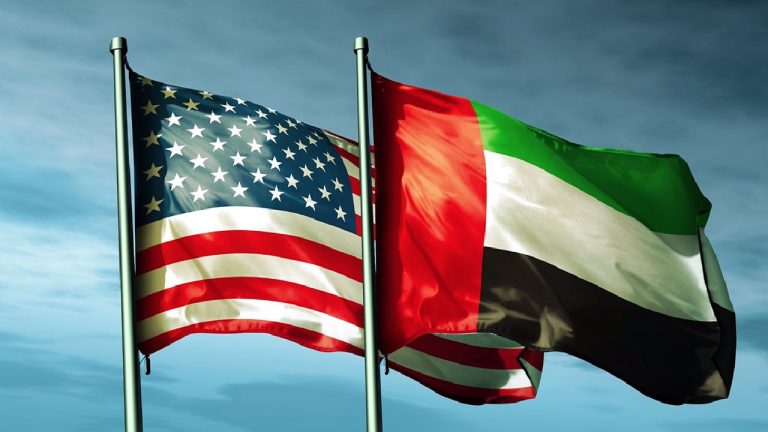
The national flags of the United States of America and the United Arab Emirates flying side-by-side against a blue sky with soft clouds.

Technology Partnerships and Diplomatic Intermediaries: A Framework for Peace Implementation

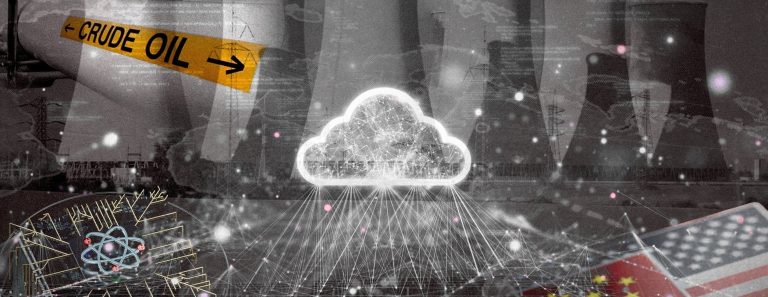
This analysis examines how the U.S.-UAE strategic partnership leverages a $1.4 trillion investment framework to replace traditional military dominance with AI-backed “Data-Driven Diplomacy.” By combining Microsoft’s $15.2 billion AI commitment with the UAE’s unique credibility in Moscow and Washington, this model offers a pragmatic, verifiable architecture for resolving complex global conflicts.

Read More »
Two men in formal attire standing in a modern hall, looking at a large architectural model of a city.

The Changing Dynamics of Middle Eastern Alliances: A Battle Between Abrahamic and Islamic Coalitions

In early 2026, the Middle East has moved beyond the simple “Sunni vs. Shia” binary. Instead, the region is now fractured into two competing ideological and strategic blocs: the Abrahamic Coalition—focused on secular-leaning economic integration and high-tech defense—and the Islamic Coalition, which prioritizes sovereign statehood, Islamic solidarity, and a more cautious distance from Israel.

Read More »
A collection of various Iranian newspapers spread out on a wooden table, featuring headlines in Persian and a prominent photograph of Donald Trump on one of the front pages.

Iran’s Battle for Survival is the Arab World’s Fight Too

In early 2026, the Middle East has entered what analysts describe as a state of “Exhausted Realignment.” Following the kinetic “12-Day War” between Israel and Iran in June 2025 and the fall of the Assad regime in Syria in December 2024, the region is now caught between a “Maximum Pressure 2.0” campaign from Washington and a desperate diplomatic “hedging” strategy by the Gulf states.

Read More »
Leaders of the Gulf Cooperation Council (GCC) at a summit, symbolizing the growing economic and political competition between Saudi Arabia and the UAE.

Saudi-UAE Regional Competition: Economic Hub Rivalry and Political Divergence Risk Gulf Stability

The competition between Riyadh and Abu Dhabi has shifted from healthy rivalry to a high-stakes struggle for regional gravity. As Saudi Arabia lures 675 global headquarters with tax incentives, it directly challenges the UAE’s hub model. This economic friction, mirrored in political clashes over Sudan and Yemen, threatens to destabilize Gulf integration and overall regional security.

Read More »