Tag: Proxy War

Donald Trump standing outdoors in a suit and red tie with the White House in the background.

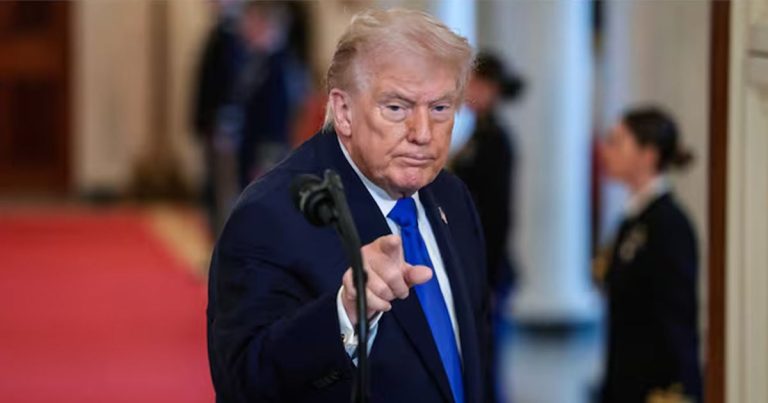
Trump’s Path to Stabilizing US-Iran Ceasefire

As the US-Iran ceasefire holds, the Trump administration faces a critical window to stabilize global energy markets and address domestic economic pressures. By prioritizing the reopening of the Strait of Hormuz and coordinating with regional allies, Washington seeks to convert recent military leverage into a durable strategic settlement before the upcoming midterm elections.

Read More »
A digital collage featuring Donald Trump, the Iranian flag, and a military missile.

Trump’s Iran Moves Accelerate Shift in Global Power

The recent US-Iran conflict has exposed the limitations of unilateral military pressure in a multipolar world. While a ceasefire holds, the rise of a new regional quartet—Turkey, Pakistan, Saudi Arabia, and Egypt—alongside China’s increasing diplomatic role, suggests a significant decline in traditional American dominance over Middle Eastern security dynamics.

Read More »
Recep Tayyip Erdoğan shaking hands with Hassan Sheikh Mohamud in front of a historical mural.

Turkey in Somalia: Partner, Protector or Something Else?

What began as a 2011 famine relief mission has evolved into Turkey’s most ambitious geopolitical project. With its largest overseas military base, a newly deployed F-16 wing, and the “SOMTURK” joint venture controlling maritime resources, Ankara has become Somalia’s indispensable security guarantor. However, as the UAE, China, and Israel (via its recognition of Somaliland) jostle for influence, questions of Somali sovereignty and the lopsided terms of hydrocarbon deals are beginning to spark domestic and regional friction.

Read More »
An open Persian children's storybook featuring an illustration of a group of birds attacking an elephant.

What Iran Teaches Its Children and Why Washington Never Listened

Understanding Iran’s wartime behavior requires looking at its classrooms, not just its missile silos. For decades, Iran’s national curriculum has fused Islamic values with ancient Persian resilience, teaching generations that collective resistance against a “superior elephant” is the only moral response. Washington’s failure to grasp this cultural foundation explains why 40 days of strikes have consolidated national identity instead of fracturing it, as the “sparrow vs. crocodile” mindset remains the heart of Tehran’s asymmetric doctrine.

Read More »
A protester holding a crumpled photo of Donald Trump and Benjamin Netanyahu with a red 'X' over it.

The War Americans Didn’t Want

A profound disconnect has emerged between the White House and the American public over the war in Iran. With 59% of citizens calling the military action a mistake and a record-breaking 8 million people joining the “No Kings” protests, the conflict is no longer just a foreign policy issue but a domestic crisis. As the November midterms approach, the rising costs of fuel and the perception that the war serves foreign interests over American ones are reshaping the political landscape across both parties.

Read More »
A large Iranian flag waving in an urban square with a man holding the flagpole.

Six Reasons the Iran Ceasefire Could Collapse Before It Holds

The Pakistan-brokered ceasefire is already fracturing as Israel’s “Operation Eternal Darkness” hits 100+ targets in Lebanon. Beyond the immediate violence, six fundamental “fault lines”—including clashing victory narratives, unresolved nuclear enrichment, and Iran’s intact proxy networks—suggest that the Islamabad talks may struggle to turn this 14-day pause into a lasting peace.

Read More »

A War Both Sides Expected to Win Quickly, Neither Did

The conflict, now entering its sixth week, has evolved into a “Cost-Asymmetry Trap” that neither Washington nor Tehran originally envisioned. The war has reached a critical “Ultimatum Hour” that could determine if the region faces total systemic collapse or a forced diplomatic off-ramp.

Read More »
Satellite map of the Persian Gulf with red trajectories crossing through the Strait of Hormuz and a large red 'X'.

Washington’s Retreat From the Strait of Hormuz

The strategic withdrawal of the United States from the Strait of Hormuz—once the bedrock of global energy security—has reached a tipping point. President Trump’s “Go Take It” directive has effectively dismantled the Carter Doctrine, leaving a 40-nation coalition to manage a waterway that has become the world’s most dangerous “insurance trap.”

Read More »
Soldiers in military gear during a coastal landing operation with a transport vessel.

Iran’s Special Forces: A Decentralized Defense Strategy

The Iranian military response to Operation Epic Fury has confirmed what many analysts suspected: the “Mosaic Defense” doctrine is not just a theoretical framework, but a functional, decentralized reality. While Western intelligence spent decades focused on the Quds Force, the first month of the 2026 war has demonstrated that Iran’s true resilience lies in its provincial special forces and maritime commandos.

Read More »
A soldier in full camouflage gear and tactical equipment running across a sandy, uneven terrain.

Why a Ground War in Iran Would Break the U.S. Military

The Pentagon’s reported shift toward “limited ground operations” marks the most dangerous inflection point of the war. After a month of air supremacy has failed to break the blockade of the Strait of Hormuz, Washington is considering a move that military historians warn could lead to a strategic collapse of the U.S. armed forces.

Read More »
Donald Trump wearing a USA hat sitting at a briefing table with a military map labeled Operation Epic Fury in the background.

America May Win Every Battle in Iran and Still Lose the War

Operation Epic Fury, launched without UN or congressional approval, faces a deepening legitimacy crisis following the resignation of a top U.S. counterterrorism official. Despite tactical military gains, Washington’s reliance on a recycled 15-point peace plan and mounting economic costs suggest a desperate search for a strategic exit from a conflict Iran is winning simply by not losing.

Read More »