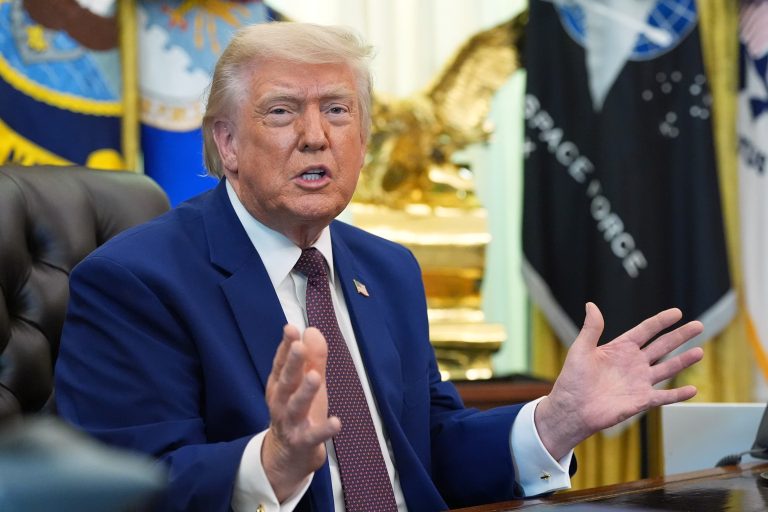
The House of Representatives voted 215 to 208 on Wednesday to block President Donald Trump from conducting fresh strikes on Iran — a result that would have been nearly unthinkable six months ago. Four Republicans crossed the aisle to hand the president a direct legislative rebuke on his signature foreign policy venture, and the margin tells its own story. A five-seat House majority absorbs very little defection before it becomes a governing liability. The Iran war, launched with near-unanimous Republican support in late February, has become the fault line along which that majority is beginning to fracture.
The vote did not emerge from nowhere. Trump’s recent decision to endorse primary challengers against Senators Bill Cassidy and John Cornyn — a show of force intended to discipline the caucus — produced an outcome he did not anticipate. Both incumbents survived their primaries with enough margin to demonstrate that intra-party intimidation has limits, and their survival has signaled to other Republicans that breaking with the president on Iran carries less political risk than staying tethered to a war that is dragging down his approval ratings and their own reelection prospects. Loyalty on a one-way street, as several Republicans are now calculating, is simply political self-destruction at a different pace.
A War Nobody Wants to Own
The political geometry surrounding the Iran conflict has shifted in ways that are making both escalation and clean exit equally difficult for the White House. At his Wednesday press conference, Trump suggested the ceasefire was “doing well,” offering what he described as a more elastic definition of the term appropriate to “that part of the world.” This statement was delivered on the same day that Iranian strikes knocked Kuwait’s main airport out of commission — a detail that the president appeared either unaware of or unwilling to address directly. The gap between Trump’s public characterization of the military situation and the operational reality that Gulf states are absorbing daily has become too wide to close with press conference language.
The Strait of Hormuz remains partially blocked, gasoline prices are elevated well above their pre-war levels, and the domestic economic toll is increasingly visible to the voters whose support Trump needs most. A Fox News poll found that Democratic challenger Sherrod Brown leads incumbent Republican Senator Jon Husted by eight points in Ohio — a state that Trump carried convincingly in 2024. If that lead holds, it represents the kind of structural erosion in traditional Republican territory that no amount of primary endorsements can reverse.
Domestic Theater as Foreign Policy Substitute
What was most revealing about Wednesday’s press conference was not what Trump said about Iran but what he chose to prioritize instead. He devoted considerable energy to denouncing federal judges, defending his proposed fund for January 6 defendants, and attacking CNN anchor Kaitlan Collins before she had posed a single question. The Washington Post reported that the administration had hired Elias Irizarry — video footage shows him entering the Capitol on January 6 while carrying a metal pole — to serve in the Pentagon’s Special Operations and Low Intensity Conflict office. The juxtaposition of that hire with an ongoing Middle East war speaks to an administration whose domestic and foreign policy impulses are increasingly difficult to disentangle.
A president who is simultaneously managing a stalled war, a fractious congressional caucus, sagging approval ratings, and a midterm environment that looks increasingly hostile to Republicans is a president with rapidly narrowing political options. The House vote to block further Iran strikes has not ended the conflict, but it has constrained the executive’s freedom of action in a way that will complicate any return to intensive military operations. Should Democrats capture both chambers in November — a scenario that polling now treats as a genuine possibility rather than a long-shot — Trump would enter the final two years of his term facing the kind of institutional opposition that would make major military initiatives politically inoperable.
The combination of a faltering war effort, a defecting caucus, and an approaching midterm reckoning has produced something relatively rare in Trump’s political career: a situation where none of the available moves are obviously good ones. Escalating in Iran risks deepening the economic pain that is driving voters away. Settling for a deal that leaves Iran’s nuclear infrastructure intact risks vindicating every critic who argued the war achieved less than its architects promised. Doing neither leaves the status quo — a grinding ceasefire, elevated gas prices, and a regional powder keg — as the backdrop for November campaigning.
Original analysis inspired by Jacob Heilbrunn from The National Interest. Additional research and verification conducted through multiple sources.