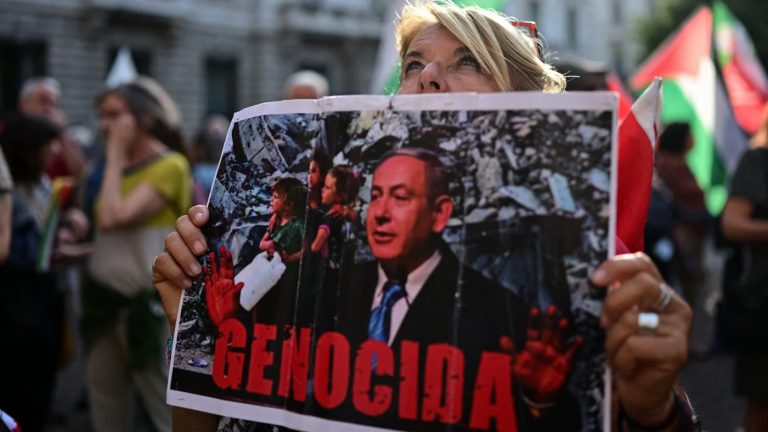
Benjamin Netanyahu has never treated diplomacy as an alternative to war. Throughout his career, he has used military escalation as a political instrument — to preserve Israeli strategic dominance, to outmaneuver domestic opponents, and to foreclose diplomatic outcomes that leave adversaries intact. The US-Iran memorandum of understanding now taking shape represents precisely the kind of outcome he has spent years trying to prevent: a framework that leaves the Islamic Republic standing, economically revived, and in possession of enough leverage to constrain Israeli freedom of action for years to come. Every military escalation Israel has launched since the ceasefire began needs to be read against that strategic context.
The framework that Washington and Tehran are negotiating reportedly covers a 60-day multi-front suspension of hostilities including Lebanon, a phased reopening of the Strait of Hormuz, partial access to frozen Iranian assets, and a deferral of the nuclear dismantlement question in favor of an Iranian commitment not to pursue weapons during ongoing talks. For Netanyahu, each element of that package is a strategic defeat. The strait reopening removes Iran’s most powerful economic coercion tool from the negotiating table before any binding nuclear concessions are locked in. The asset releases give Tehran fiscal breathing room that will outlast the truce itself. And the deferral of enrichment questions acknowledges implicitly that zero enrichment — Israel’s stated red line — is not achievable through the current diplomatic process.
The Gap Between Destruction and Victory
Israel’s military record in the current conflict has produced enormous destruction without producing the political outcomes that would justify it strategically. Gaza has been devastated on a scale that has shifted global opinion against Israel more sharply than any previous conflict. Hezbollah has reasserted itself militarily in southern Lebanon despite heavy losses, contesting Israeli border moves and inflicting weekly casualties on IDF forces. The Iran campaign damaged Iranian infrastructure without dismantling its nuclear knowledge, its missile arsenal, or its regional network of allied forces. Netanyahu’s doctrine of absolute victory — requiring the disarmament of Hamas and Islamic Jihad, the dismantlement of Hezbollah, and the neutralization of Iran — has confronted the same fundamental limit that every maximalist military campaign eventually hits: force can destroy but cannot dictate political outcomes to adversaries willing to absorb punishment and deny the enemy a clean win.
The Suez analogy that serious strategists are increasingly invoking is not melodramatic. In 1956, Britain and France discovered that military success in the Sinai and along the canal could not prevent the collapse of their political position once the United States declined to back them. The structural parallel for Washington in 2026 is that military superiority — demonstrated repeatedly across the 39-day campaign — could not force Iranian capitulation, reopen the Strait of Hormuz on American terms, or produce the regional realignment that the operation was implicitly meant to deliver.
Trump’s Narrowing Options
The tension between Washington and Jerusalem has become visible enough that both governments have struggled to contain it publicly. Trump has personally intervened to prevent Netanyahu from launching a wider ground invasion of Lebanon, calculating that further escalation there would collapse the fragile negotiating track and extend the Hormuz disruption indefinitely. That intervention is itself a concession — it signals that Washington’s support for Israeli military operations is now conditioned on those operations not threatening a diplomatic outcome Trump needs for domestic political survival.
The domestic arithmetic is relentless. Gas prices are running well above pre-war levels. Interceptor stockpiles including Patriot and THAAD systems have been significantly depleted, with the Pentagon warning that full replenishment could take years. The House has voted to block fresh strikes. A Fox News poll shows a Democratic candidate leading in Ohio by eight points. Every week that the Hormuz closure continues is another week of economic pressure that translates directly into midterm vulnerability.
Netanyahu understands all of this and has calibrated his actions accordingly. The recent bombardment of Beirut’s Dahiyeh suburb, the ground expansion past the Litani River, and the mass evacuation orders affecting hundreds of thousands of Lebanese civilians are not the actions of a government trying to create conditions for diplomacy. They are the actions of a government racing to make the diplomatic environment unmanageable before Washington can close a deal. If Netanyahu cannot block the memorandum of understanding outright, his next move is to make its implementation impossible — through Lebanon, through Gaza provocations, or through whatever combination of escalation produces the crisis that breaks the truce before it can solidify into something durable. Whether Trump will continue absorbing those maneuvers, or eventually force compliance at a political cost to both men, is the central question of the next several weeks.
Original analysis inspired by Sami Al-Arian from Middle East Eye. Additional research and verification conducted through multiple sources.