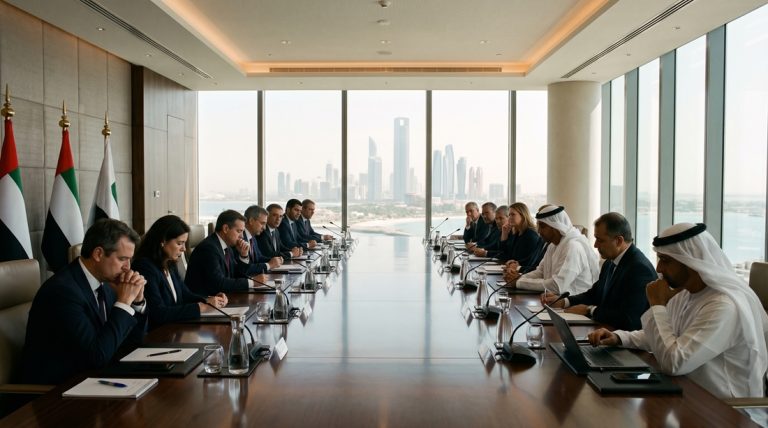
Recent US mediated peace talks in Abu Dhabi have exposed a widening strategic gap between Moscow’s diplomatic playbook and Western expectations. When Russian, Ukrainian, and American delegations resumed negotiations in early November, Washington hoped to secure a framework for an immediate ceasefire in Ukraine. Instead, Russian negotiators steered the agenda toward bilateral talks with the United States over the future security architecture of all Europe. By sidelining European capitals from the negotiating table, Moscow has effectively reframed the conflict on its own strategic terms.
Following the Abu Dhabi sessions, American envoys met separately with Russian President Vladimir Putin and Ukrainian President Volodymyr Zelenskyy to salvage momentum. Yet battlefield assessments indicate that the Kremlin refused to soften its core territorial and political demands during those discussions. Moscow views a settlement in Ukraine not as an isolated ceasefire, but as an opportunity to roll back Western influence across Eastern Europe.
Western Divisions Aid Moscow’s Diplomatic Framing
Washington’s willingness to entertain broad bilateral security discussions with the Kremlin has alarmed European allies who feel excluded from decisions affecting their own borders. Policy experts analyzed the Abu Dhabi outcome as a warning sign that transatlantic unity is fracturing under diplomatic pressure. While European governments remain Kyiv’s primary financial backers, internal disagreements have prevented them from presenting a cohesive counterproposal.
Former diplomats have argued that Russia consistently outmaneuvers Western interlocutors by exploiting their desire for quick diplomatic wins and their reluctance to impose decisive costs. Relying on rhetorical warnings without unified strategic leverage allows Moscow to treat ceasefires as tactical pauses rather than permanent compromises. Unless Europe translates its economic weight into coherent diplomatic and military agency, future negotiations will continue to unfold on Russia’s preferred terms.
Original analysis inspired by Boris Bondarev from The Moscow Times. Additional research and verification conducted through multiple sources.