Tag: European Union

Container ship crossing between the US and Chinese flags representing global trade tensions.

Global Trade Caught Between American Chaos and Chinese Calm

Global trade is being squeezed between U.S. tariff volatility and China’s projection of stability. Trump’s rapid tariff shifts froze the EU’s Turnberry deal and rattled partners from India to ASEAN. Meanwhile, China’s record surplus masks weak domestic demand. For third countries, the real choice is between American policy whiplash and Chinese dependency.

Read More »
A conceptual digital illustration of a gray world map background with two large puzzle pieces in the center; the left puzzle piece displays the blue flag and yellow stars of the European Union, and the right piece displays the stars and stripes of the United States flag.

US and EU in the Middle East: Allies With Different Playbooks

Washington and Brussels still share the same core goals in the Middle East: prevent nuclear proliferation, avoid regional war, stabilize energy flows, and suppress jihadist networks. But they now pursue those goals with different playbooks, shaped by diverging political cultures, institutional habits, and strategic priorities.

Read More »
A medium shot of Marco Rubio speaking at a podium, wearing a dark navy suit and a patterned purple tie, with a white background featuring logos for the "Munich Security Conference" and "BR24."

Europe’s Defense Awakening: Ready for War Without Washington?

Munich 2026 revealed a continent in transition: spending more, planning further ahead, and finally treating defense as a core function of statehood rather than a budgetary inconvenience. But it also revealed a Europe still psychologically tethered to Washington, even as Washington signals that its patience, priorities, and commitments are no longer what they once were.

Read More »
A close-up portrait of Christine Lagarde speaking at a podium, wearing a dark blue suit and a patterned scarf, with a large blue background featuring a yellow "msc" logo and the text "Munich Security Conference."

Europe’s Hard Pivot Toward Financial and Digital Sovereignty

For decades, Europe treated American digital infrastructure and financial networks as neutral utilities. That illusion has collapsed. The combination of extraterritorial U.S. laws, sanctions used as administrative weapons, and the growing willingness of Washington to threaten allies has forced European governments to confront a simple truth: dependency equals vulnerability.

Read More »
Benjamin Netanyahu and Federica Mogherini standing behind blue podiums with the European Council logo during a press conference, with Israeli and EU flags in the middle.

Evolving Diplomatic Dynamics: European-Israeli Relations Under Pressure

Rising tensions over Gaza and West Bank settlements have forced a reassessment of the EU-Israel Association Agreement. While Spain, Ireland, and Norway’s recognition of Palestine marks a diplomatic rift, the EU remains Israel’s largest trading partner. Future cooperation faces a deadlock between legal obligations to the ICJ and internal opposition from pro-Israel members like Germany and Hungary.

Read More »
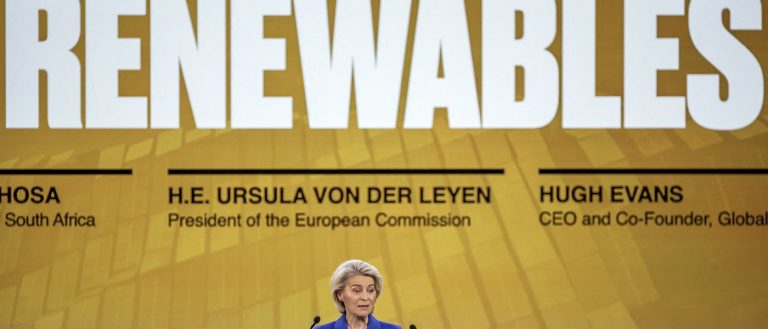
European Commission President Ursula von der Leyen speaking at the Global Gateway Forum in Brussels

Brussels’ Global Gateway Faces Credibility Crisis as Developing Nations Seek Substantive Partnerships

European attempts to build strategic partnerships with developing nations face significant skepticism, particularly as major initiatives like the €300 billion Global Gateway program are criticized for failing to produce expected changes. Global South partners express doubts that Brussels is offering new resources for infrastructure and development, instead viewing these efforts as a mere rebranding of existing commitments in contrast to China’s Belt and Road Initiative.

Read More »
Large group of protesters holding up the red and white flag of Georgia during a nighttime demonstration on a city street

Tbilisi Weaponizes American Political Language to Attack Western Institutions

Georgia’s ruling party, Georgian Dream, has shifted from being a nominal Western partner to a systematic antagonist by using rhetoric that criticizes European and American diplomats, such as “Deep State” and “Global War Party.” This strategy aims to consolidate power domestically and allows for geopolitical maneuvering toward Russia and China, framing the party as a defender of sovereignty against foreign interference.

Read More »