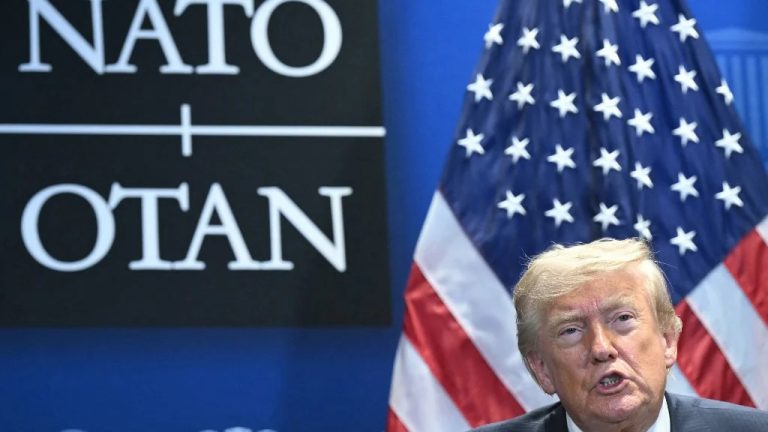
Beneath the veneer of unity at the recent NATO summit in Ankara, a deep and perhaps irreversible fracture is widening within the transatlantic alliance. The gathering took place in the shadow of a U.S.-led war on Iran that Europe refused to join, a grinding conflict in Ukraine, and a clear divergence of interests between Washington and its allies. This crisis of purpose, however, has not led to a decrease in military fervor. Instead, it is fueling a massive surge in defense spending, creating a permanent war economy that benefits a select few while locking the continent into a cycle of perpetual insecurity.
The fundamental contradiction at the heart of NATO—whether it is a collective defense pact or an instrument of American foreign policy—was laid bare by the war on Iran. The U.S. launched a unilateral offensive without consulting its European partners, then expressed fury when they declined to participate. This demonstrated to European leaders that they are viewed not as partners, but as subordinates expected to fall in line. The conflict sent energy prices soaring and choked global shipping, yet Europe had no power to stop it, exposing a profound strategic impotence.
The Permanent War Economy
Despite this deep rift, the alliance is committing to unprecedented levels of military expenditure. NATO members have pledged billions in new aid for Ukraine and are on a path to dramatically increase their national defense budgets, with some leaders pushing for targets as high as 5% of GDP. This massive influx of cash is justified by the persistent threat of a revanchist Russia, a danger that is both real and politically useful. Warnings that Russia could be ready to attack NATO territory by the end of the decade serve as the political lubricant for a defense-industrial machine that is now more powerful than ever.
The Ankara summit was not just a meeting of heads of state; it was also a major trade show for the continent’s arms industry. The parallel NATO Summit Defence Industry Forum brought together government leaders and weapons manufacturers to discuss “production, investment and innovation.” This highlights how the cycle of threat perception and rearmament has become self-sustaining. The crisis in Ukraine and the instability in the Middle East are not just security challenges; they are business opportunities for a defense sector that thrives on insecurity, embedding itself ever deeper into the political process.
The Turkish Wildcard and European Autonomy
The summit’s host, Turkey, perfectly embodies the alliance’s new, fragmented reality. President Recep Tayyip Erdogan has positioned his country as an indispensable but fiercely independent actor. Turkey is simultaneously a NATO member, a mediator in the Ukraine conflict, a major arms exporter, and an active military power pursuing its own interests from Africa to the Caucasus. By playing all sides, Ankara has gained significant leverage, demonstrating that the old rules of alliance cohesion no longer apply.
The stark lesson from the Iran war—that Washington can drag the region into conflict without consultation—has accelerated Europe’s push for “strategic autonomy.” The question is no longer whether Europe needs to be able to act independently, but how. The current answer, however, seems to be a panicked rush to rearm, a solution that enriches the arms lobby without addressing the root causes of instability. The challenge for Europe is to build a security framework that is not merely a smaller version of the American model, but one grounded in diplomacy and genuine collective security, breaking the cycle of manufactured threats and profitable wars.
Original analysis inspired by Anas Altikriti from Middle East Eye. Additional research and verification conducted through multiple sources.