A dangerous pattern of normalized military aggression now threatens to dismantle the international legal order established after the Second World War. From Eastern Europe to the Middle East, unilateral strikes and eroding diplomatic norms have pushed major powers closer to systemic confrontation. Spanish Prime Minister Pedro Sánchez recently rebuked governments that undermine global institutions and slash development assistance while armed conflicts multiply. Without renewed commitment to collective rules, technological acceleration and geopolitical rivalry could ignite a far broader global crisis.
The simultaneous escalation of Russia’s campaign in Ukraine and the armed conflict involving the United States, Israel, and Iran illustrates how rapidly regional hostilities can destabilize entire continents. Rapid advances in artificial intelligence and autonomous weapons systems further compress decision timelines during military standoffs, leaving little margin for diplomatic miscalculation. Rather than retreating into competing power blocs, medium and major powers must rebuild shared guardrails before crisis management collapses altogether.
Rebuilding Universal Multilateralism
Madrid has consistently advocated a model of universal cooperation that rejects selective adherence to international law. Under this framework, states cannot condemn territorial violations in one region while excusing civilian harm or unilateral force in another. Consistent enforcement of rulings by the International Criminal Court and respect for United Nations charters remain essential to preserving credibility across the Global South.
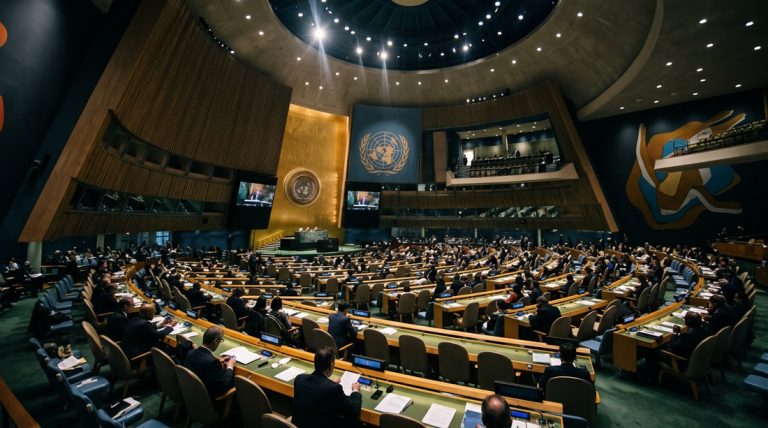
Institutional reform inside global bodies also demands urgent attention if multilateralism is to regain public legitimacy. During the 81st United Nations General Assembly, Spanish leadership called for appointing the organization’s first female secretary general to modernize global governance. Broadening representation and accountability within international agencies would signal that global rules serve all nations rather than a handful of dominant capitals.
Balancing Security Spending With Social Resilience
Rising defense budgets across Europe and North America risk diverting vital public resources away from healthcare, climate adaptation, and social cohesion. European leaders recently urged greater continental autonomy grounded in economic resilience rather than unchecked militarization alone. Societies weakened by inequality and domestic polarization ultimately become more vulnerable to external coercion and political extremism.
Preventing another global catastrophe requires pairing credible deterrence with sustained investment in diplomacy and international justice. As global tensions intensify, European and middle power governments have warned that abandoning universal institutions invites a return to unchecked great power conflict. Only an inclusive security architecture anchored in enforceable international law can steer the world away from wider war.
Original analysis inspired by Pedro Sánchez from Foreign Affairs. Additional research and verification conducted through multiple sources.