Tag: NATO

Soldiers in military uniforms carrying a large European Union flag in front of the European Parliament building with various national flags in the background.

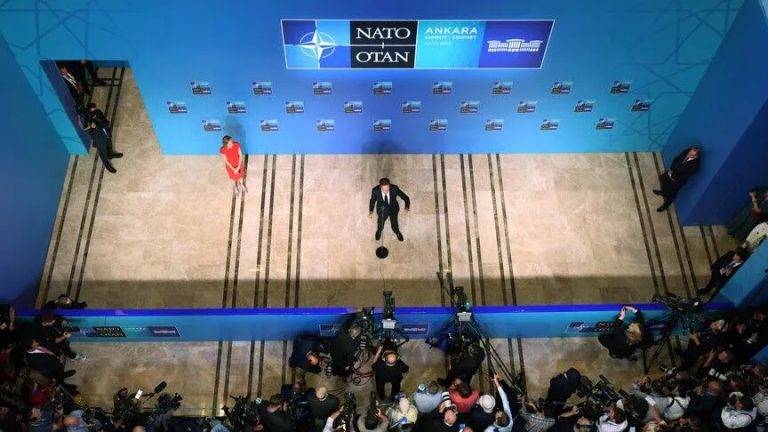
Europe Can’t Defend Itself Without Turkey

Europe’s pursuit of strategic autonomy faces a harsh reality: its defense architecture is mathematically incomplete without Turkey. From drone supremacy to providing NATO’s deepest missile warning via Kürecik, Ankara offers the scale and industrial speed that the EU currently lacks. As Turkey prepares to command NATO’s Allied Reaction Force in 2028, Brussels must bridge political friction with strategic necessity to ensure a credible defense against regional threats.

Read More »
A classic oil painting illustration of Uncle Sam looking stressed while leaning over a world map with European politicians around him.

Europe Tests Limits of US Influence

The transatlantic relationship is entering a new, more transactional era as European leaders increasingly prioritize domestic stability over unconditional alignment with U.S. foreign policy. Prime Minister Keir Starmer’s decision to opt out of the naval blockade against Iran highlights a growing strategic divergence, where European capitals are no longer willing to bear the economic costs of American-led confrontations.

Read More »
JD Vance shaking hands with Shehbaz Sharif during an official diplomatic meeting.

The STEP Quartet: How Four Muslim Nations Are Reshaping the Middle East

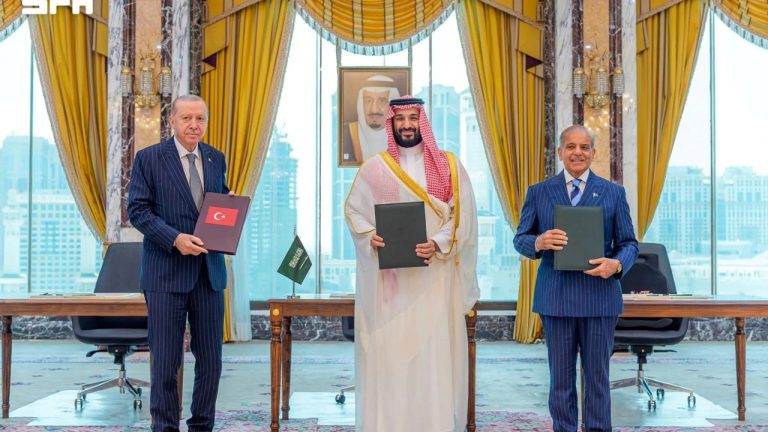
The emergence of the STEP quartet—Saudi Arabia, Turkey, Egypt, and Pakistan—marks a historic shift in Middle Eastern diplomacy. By brokering the Islamabad ceasefire, these four nations have positioned themselves as the primary mediators between Washington and Tehran, signaling a new regional order focused on strategic autonomy and collective security.

Read More »
JD Vance giving a thumbs-up while standing on the stairs of an airplane against a clear blue sky.

Trump’s Military Options Are Shrinking and Iran Knows It

President Trump’s decision to impose a naval blockade on the Strait of Hormuz signals a transition to economic warfare as military options become increasingly unsustainable. Facing $2 billion in daily conflict costs and depleted missile stockpiles, Washington is struggling to maintain pressure while Iran leverages its geographic advantages and strategic patience.

Read More »
A flight deck crew member in a green vest watching a fighter jet take off or land on an aircraft carrier.

What the Iran War Taught the Pentagon About Missiles

Operation Epic Fury has provided the Pentagon with a critical reality check on missile warfare. While interception rates in the Gulf reached an impressive 90%, the “magazine depth” crisis is now a strategic liability. With the U.S. depleting nearly 30% of its Tomahawk arsenal and 40% of its global THAAD inventory in just weeks, the conflict has exposed a dangerous replenishment gap that could compromise deterrence in the Indo-Pacific theater against more sophisticated hypersonic threats.

Read More »
A woman in a kuffiyeh cheering in front of a large billboard featuring the Iranian flag and a portrait of a religious leader.

Operation Epic Fury’s Hidden Ledger: What America Actually Lost

Beyond the military scorecard, the 40-day war with Iran has left Washington in a structurally weaker position. With $65 billion in projected long-term costs and the dangerous depletion of high-demand munitions needed for the Pacific, the conflict failed to resolve the nuclear question while simultaneously fracturing alliances and handing Russia a massive energy windfall.

Read More »
Black and white photo of Donald Trump meeting with European leaders, including Giorgia Meloni and Ursula von der Leyen, in the Oval Office.

US Coercive Diplomacy Accelerates European Strategic Autonomy

The aggressive shift in Washington’s coercive diplomacy has become the catalyst for European strategic autonomy. From threatening blanket tariffs over Greenland to linking NATO guarantees to trade concessions, US pressure is forcing European capitals to diversify partnerships and integrate their defense industrial bases to insulate themselves from transactional American foreign policy.

Read More »
Iranian flags flying at night with a skyline filled with fire and thick smoke in the background.

Hormuz Blockade Strains US Alliances Amid Iran War

The prolonged conflict with Iran and the resulting maritime blockade have triggered a major diplomatic rift. As European and Asian economies face energy paralysis and surging inflation, historical allies are prioritizing national survival over Washington’s unilateral military objectives, signaling a profound structural crisis within NATO and transpacific security architectures.

Read More »
Spanish Prime Minister Pedro Sánchez speaking at a podium during a parliamentary session.

Madrid’s Defiance in the US-Israel War on Iran

The defiant stance of the Sánchez administration in Madrid has become one of the most significant diplomatic obstacles for the U.S.-led coalition. Spain remains the most vocal Western opponent of Operation Epic Fury, citing the “illegal and reckless” nature of the strikes on Iran.

Read More »
Dramatic digital art of a coastal conflict with an American flag in the foreground and a damaged globe.

The Gulf Conflict and the Accelerating Shift to Multipolarity

The second month of the 2026 Iran War marks more than just a regional military crisis; it is the catalyst for a fundamental reordering of global power. The conflict has acted as a “stress test” for 20th-century security models, and the results have accelerated a shift toward a multipolar world where American unilateralism is being replaced by regional self-reliance and alternative financial networks.

Read More »
Close-up portrait of Donald Trump wearing a white "USA" hat with an American flag on the side.

America Lit the Fire and Now 40 Nations Are Cleaning Up

The geopolitical fallout of the Iran war has entered a phase of “fractured leadership.” While the United States remains the primary military aggressor, it has become a secondary actor in the diplomatic and maritime cleanup, leaving a coalition of 40 nations to navigate the chaos left in the wake of Operation Epic Fury.

Read More »
Turkish Foreign Minister Hakan Fidan speaking at the Stratcom Summit '26 podium.

Turkey Warns Iran War Risks Regional Catastrophe

Foreign Minister Hakan Fidan has warned that the Iran war is a “systemic rupture” driving the Middle East toward a regional catastrophe. Speaking at the STRATCOM 2026 summit before emergency talks in Islamabad, Fidan blamed Israeli escalation for the crisis and highlighted Turkey’s unique vulnerability to rising energy deficits, missile spillover, and potential Kurdish mobilization along its borders.

Read More »