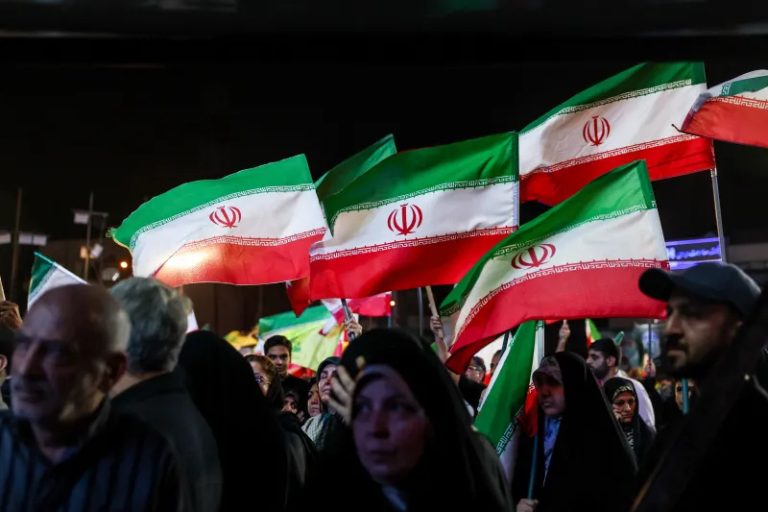
The conventional framing of Iran in the current conflict positions Tehran as a battered state trying to survive American firepower long enough to negotiate its way out. That framing is wrong. Iran’s leadership has concluded that the war is not a catastrophe to be ended but a strategic instrument to be managed — one that is actively improving Tehran’s international position even as it devastates the country’s infrastructure and living standards. Understanding that calculus is essential to understanding why every announced breakthrough in US-Iran negotiations has collapsed, and why any deal that eventually emerges will be far more fragile than its architects will admit.
How the Hard-Liners Won the Internal Argument
Iran’s internal political competition has historically constrained its most confrontational impulses. The 2015 JCPOA was the clearest expression of that dynamic — pragmatists leveraging a democratic mandate to override Ayatollah Khamenei’s deep skepticism about engaging Washington. That equilibrium is gone. The US withdrawal from the nuclear accord in 2018, followed by two military campaigns that killed Khamenei and devastated civilian and military infrastructure, eliminated the political space that pragmatists once occupied. Cautious voices either went quiet or joined the hard-line consensus. The result is a leadership class that is not merely united by ideology but vindicated by events they spent decades predicting.
The hard-liners had long argued that closing the Strait of Hormuz and striking regional infrastructure would generate leverage rather than catastrophic retaliation. Pragmatists held them back for years, fearing that such actions would invite military responses severe enough to destabilize the regime. When Tehran finally acted and the anticipated domestic backlash failed to materialize — replaced instead by something closer to national solidarity — the internal debate shifted permanently. Hard-liners now control the terms of every significant policy discussion, and the political cost of publicly supporting diplomacy inside Iran is rising with each round of failed negotiations.
The Strait as a Strategic Equalizer
For decades, the United States held a structurally superior position in economic warfare against Iran. Washington controlled dollar-denominated financial systems, could impose unilateral sanctions, and could largely prevent Tehran from accessing global markets. Iran had no equivalent tool to impose comparable costs on American consumers or allies. The Strait of Hormuz changed that equation in ways that will outlast the current conflict regardless of how it formally ends.
Approximately 20 percent of global oil and a substantial share of liquefied natural gas transits the strait daily. By demonstrating the ability and willingness to disrupt that flow, Iran has forced Asian governments desperate for energy to plead for safe passage, compelled Arab states to push Washington toward settlement, and driven a measurable shift in European diplomatic positioning. German Chancellor Friedrich Merz, who had previously praised Israel for doing what he called Europe’s “dirty work” against Iran, publicly distanced Berlin from the operations. Emmanuel Macron ruled out any French military deployment. Norwegian diplomats traveled to Tehran seeking a resolution. None of this happened because of Iranian military superiority. It happened because Tehran demonstrated it could impose economic pain on the entire world simultaneously.
Negotiations as a Warfare Tool
Tehran’s approach to the current talks is not diplomatic engagement in any conventional sense. Iran enters negotiations primarily to signal to third parties that it is not the intransigent actor Washington claims, thereby reducing international pressure without actually conceding leverage. It uses talks to control the tempo of military exchanges, stepping back from the brink when escalation costs rise and stepping forward again when tactical opportunity presents itself. The model is, by Tehran’s own elites’ admission, deliberately modeled on Washington’s approach: be unpredictable, negotiate exclusively from strength, and demand major concessions while offering minimal ones in return.
The positions remain structurally incompatible. Washington [suspicious link removed] complete dismantlement of enrichment infrastructure, surrender of all enriched uranium, an end to regional proxy support, and strait reopening. Iran insists on recognized sovereignty over the strait, compensation for wartime damages, a ceasefire in Lebanon, and asset unfreezing before any other concessions are entertained. Neither position is a negotiating posture that can be split down the middle. They describe two fundamentally different post-war regional orders, and only one of them leaves Iran with the strategic gains it has accumulated through the conflict.
The regime’s 90 million citizens are bearing the cost of this strategy in devastated industries, fuel shortages, and collapsed living standards. The steel, gas, and petrochemical sectors have suffered damage that will take years to reverse. Tehran has decided those costs are acceptable so long as the regime remains cohesive, functional, and internationally feared. A government that can single-handedly weaken the global economy has, by its own logic, proven it is a pole in the multipolar order it aspires to inhabit — regardless of the suffering that proof requires.
Original analysis inspired by Mohammad Ayatollahi Tabaar from Foreign Affairs. Additional research and verification conducted through multiple sources.