For three decades, Washington maintained a consistent posture toward Myanmar — imperfect and often inadequate, but oriented toward democracy and human rights. Sanctions, refugee programs, and media funding formed the architecture of a policy built around accountability. That architecture has been dismantled in a matter of months. The Trump administration has pivoted from democracy promotion to mineral extraction, and the cast of characters now driving US-Myanmar engagement tells you everything you need to know about how far the shift has gone.
Humanitarian Programs Gutted, Junta Engagement Begun
When USAID was effectively shut down earlier this year, the consequences inside Myanmar arrived immediately. Food rations at refugee camps stopped. Local clinics serving displaced communities closed overnight, leaving patients without access to basic medicines. Voice of America and Radio Free Asia, which had documented the junta’s atrocities for years, went dark, severing one of the few reliable information channels in a country under military censorship. Thousands of refugees cleared for resettlement to the United States were told their cases no longer applied. Nearly 4,000 Myanmar nationals already living in the US lost their temporary protected status.
The State Department, when asked, [suspicious link removed] with language about peace and stability. But the operational reality points in a different direction. While humanitarian programs were being gutted, the Defense Department was quietly expanding its budget for critical mineral recovery, with contractors facing a January 2027 deadline to remove Chinese rare earths from their supply chains. That deadline concentrated minds on Myanmar, one of the world’s primary sources of heavy rare earth elements including terbium and dysprosium — materials essential for advanced military hardware, electric vehicles, and semiconductors.
A Pipe Dream With a Lobby Shop
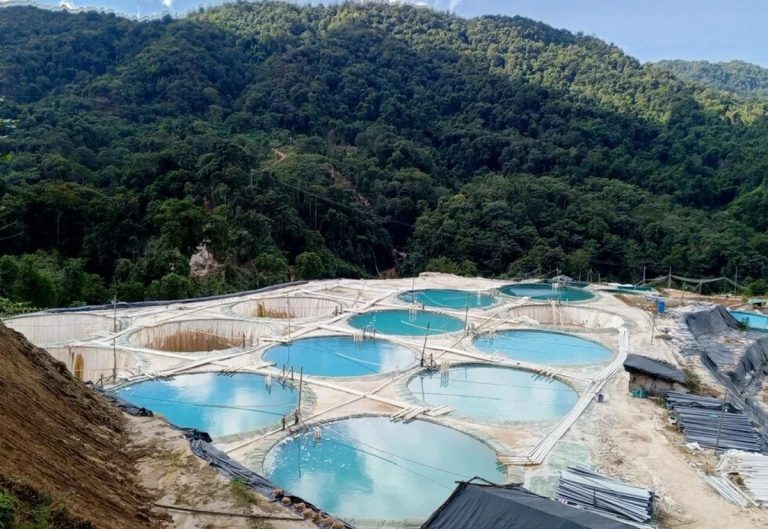
Myanmar’s rare earth deposits are significant on paper. The country has emerged as a critical source of heavy rare earths globally, accounting for a substantial share of Chinese rare earth imports. The problem is geography and control. Most deposits of interest to Washington sit in territory held not by the junta but by ethnic armed organizations, many of which receive weapons, logistics support, and financial ties directly from Beijing. China has embedded itself so deeply into the extraction networks that any American attempt to redirect mineral flows would require those same armed groups to choose Washington over a patron that controls their supply chains.
Logistics compounds the problem. Moving minerals from extraction sites requires transiting both regime and non-regime territory, passing through multiple armed checkpoints, each demanding payment. Former US Embassy head of mission Susan Stevenson put it plainly: what once required payment to one checkpoint now requires payments to eight. The economics of that reality alone make large-scale American mineral imports from Myanmar almost unworkable in the near term.
None of this has deterred the entrepreneurs who have moved into the vacuum left by career diplomats. Roger Stone is being paid $50,000 a month by the military government to rebuild relations with Washington. Brock Pierce, the former child actor turned cryptocurrency entrepreneur, describes himself as being tapped on the minerals question and pitches his China experience as a diplomatic asset. The former head of the US Chamber of Commerce in Yangon has been working Vance’s office. One Washington insider described the atmosphere bluntly: “This is Shark Tank, and everyone is pitching.”
What Abandonment Looks Like From the Inside
The shift in US posture has not, remarkably, ended the democratic opposition’s orientation toward Washington. Opposition groups, civic organizations, and exiled activists still identify the United States as their best external partner — even as they describe feeling abandoned, unreliable, and deprioritized. That gap between what Washington once represented and what it now signals is itself a strategic liability. The credibility erosion is not contained to Myanmar. Every pro-democracy movement watching how Washington treats its former partners is drawing conclusions about the durability of American support.
The minerals may never arrive. The diplomatic normalization with the junta may never solidify. But the damage to Washington’s democratic credibility in Southeast Asia has already been done — at the precise moment that China is offering infrastructure, investment, and non-interference without conditions.
Original analysis inspired by Michael Haack from Foreign Policy. Additional research and verification conducted through multiple sources.