Category: Europe

Two political leaders in suits shaking hands during an official diplomatic meeting outdoors.

South Caucasus Strengthens Role in Eurasian Trade Routes

Kazakhstan and its South Caucasus partners are rapidly modernizing the Middle Corridor to create a resilient Eurasian trade artery. With significant investments in Georgia’s Poti terminal and digital coordination with Azerbaijan, transit times from China have dropped to 11 days, positioning the region as a strategic alternative to traditional northern routes.

Read More »
Two Iranian military speedboats patrolling near a large cargo ship or oil tanker at sea.

Russia’s Influence Fades Across Central Asia

Moscow’s influence across Central Asia is steadily eroding due to the economic strains of war and sanctions. Regional powers are now diversifying their strategic partnerships, prioritizing the Middle Corridor and Chinese investment over traditional Russian ties to secure long-term infrastructure, energy reliability, and economic independence in a multipolar landscape.

Read More »
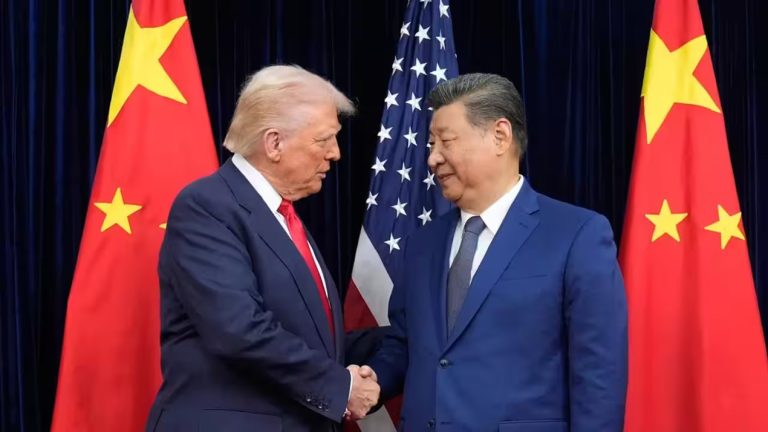
Pedro Sánchez and Xi Jinping shaking hands in front of Spanish and Chinese flags.

Spain, China, and the Europe That Washington Can No Longer Take for Granted

The deepening rift between Washington and Madrid has pushed Spain toward a landmark strategic alignment with China. Faced with U.S. threats of a total trade cutoff over the use of military bases, Prime Minister Sánchez has accelerated cooperation with Beijing in green energy and EV manufacturing. This shift represents a broader European trend: redefining “Western” loyalty in an era where strategic autonomy and energy security outweigh unilateral demands from the Oval Office.

Read More »
Viktor Orbán and JD Vance standing together on stage during a political event with Hungarian and US flags.

Hungary Election Tests Orban’s Hold and European Unity

The Hungarian election has become a critical litmus test for European cohesion and the future of regional security. Prime Minister Viktor Orban, backed by a unique alignment of JD Vance and Vladimir Putin, faces his toughest challenge yet from Peter Magyar. The result will determine whether Budapest continues to leverage its veto power over Ukraine’s €90 billion loan or pivots toward a more cooperative, transparent role within the European Union.

Read More »
Donald Trump speaking at a podium with the White House logo in the background.

Global Flashpoints Shaping 2026

Halfway through 2026, global stability is under siege. From the $100 billion annual funding gap in Ukraine to the dangerous vacuum in nuclear arms control, nations are scrambling to adapt. Rising tariffs, the race for critical minerals, and deep cuts in foreign aid are redefining geopolitical alliances and forcing a shift toward a fragmented, multipolar reality.

Read More »
Black and white photo of Donald Trump meeting with European leaders, including Giorgia Meloni and Ursula von der Leyen, in the Oval Office.

US Coercive Diplomacy Accelerates European Strategic Autonomy

The aggressive shift in Washington’s coercive diplomacy has become the catalyst for European strategic autonomy. From threatening blanket tariffs over Greenland to linking NATO guarantees to trade concessions, US pressure is forcing European capitals to diversify partnerships and integrate their defense industrial bases to insulate themselves from transactional American foreign policy.

Read More »
Iranian flags flying at night with a skyline filled with fire and thick smoke in the background.

Hormuz Blockade Strains US Alliances Amid Iran War

The prolonged conflict with Iran and the resulting maritime blockade have triggered a major diplomatic rift. As European and Asian economies face energy paralysis and surging inflation, historical allies are prioritizing national survival over Washington’s unilateral military objectives, signaling a profound structural crisis within NATO and transpacific security architectures.

Read More »
Spanish Prime Minister Pedro Sánchez speaking at a podium during a parliamentary session.

Madrid’s Defiance in the US-Israel War on Iran

The defiant stance of the Sánchez administration in Madrid has become one of the most significant diplomatic obstacles for the U.S.-led coalition. Spain remains the most vocal Western opponent of Operation Epic Fury, citing the “illegal and reckless” nature of the strikes on Iran.

Read More »
Ursula von der Leyen speaking at a podium with a large "RENEWABLES" sign in the background.

Europe’s Iran Shock Demands a Wartime Economic Response

Europe faces its second major energy crisis in four years, with the closure of the Strait of Hormuz triggering what the IEA calls the largest supply disruption in history. With Brent crude surpassing €100 and gas storage at critical lows, analysts warn of impending stagflation and technical recessions in Germany and Italy, leading to urgent calls for a pandemic-scale fiscal response to accelerate electrification as a national security imperative.

Read More »
Turkish Foreign Minister Hakan Fidan speaking at the Stratcom Summit '26 podium.

Turkey Warns Iran War Risks Regional Catastrophe

Foreign Minister Hakan Fidan has warned that the Iran war is a “systemic rupture” driving the Middle East toward a regional catastrophe. Speaking at the STRATCOM 2026 summit before emergency talks in Islamabad, Fidan blamed Israeli escalation for the crisis and highlighted Turkey’s unique vulnerability to rising energy deficits, missile spillover, and potential Kurdish mobilization along its borders.

Read More »
Vladimir Putin presiding over a high-level government meeting at a long wooden table with Russian flags in the background.

Russia’s Iran War Windfall Masks Deeper Trouble

Russia has emerged as the war’s primary economic beneficiary, with oil export earnings surging to €388 million daily as global sanctions ease to maintain supply. However, this windfall masks long-term strategic erosion, including a stalled Ukraine peace process and a declining global influence as Moscow remains sidelined from Middle East diplomacy.

Read More »