When Israeli voters head to the polls later this year, polling stations will open across the West Bank — in Hebron, Ariel, and dozens of other settlements. The roughly 500,000 Jewish settlers living there will cast ballots for the Knesset, the parliament that controls nearly every aspect of life in the territory. The three million Palestinians living alongside them, under the same regime but governed by military law rather than civil code, will not. That single fact — two populations, one territory, two entirely different sets of rights — is the structural core of what a growing roster of international bodies now calls apartheid.
The word still provokes fierce debate inside Israel. But outside its borders, the legal consensus has shifted dramatically. In a historic July 2024 advisory opinion, the International Court of Justice found “multiple and serious international law violations by Israel towards Palestinians in the Occupied Palestinian Territory, including, for the first time, finding Israel responsible for apartheid.” A January 2026 UN Human Rights Office report reinforced the finding, detailing what High Commissioner Volker Türk called “a particularly severe form of racial discrimination and segregation” that violates international law requiring states to “prohibit and eradicate racial segregation and apartheid.” Major Israeli, Palestinian, and international human rights groups — including Human Rights Watch, Amnesty International, and B’Tselem — have reached the same conclusion.
The Democracy That Isn’t
The upcoming Israeli election exposes the contradiction in real time. All resident Israeli citizens, including the country’s Palestinian minority, may vote. Israeli settlers in territories that have not been formally annexed may also vote. But roughly 5.5 million Palestinians living in the territories occupied since 1967 — about 3.5 million in the West Bank and some 2 million in the Gaza Strip — are barred from voting for the Knesset and have no representation in the political institutions that dictate their lives.
Israel maintains the fiction that West Bank Palestinians participate in their own political system through the Palestinian Authority. It has used this framework to perpetuate an illusion that political power is divided, with settlers voting for the Knesset and Palestinians for the PA. But the PA controls only limited aspects of daily life in urban centers, usually requiring Israeli permission even for that. Israel retains authority over the use of force, incarceration, the justice system, planning and building, freedom of movement, resources, and the population registry. Palestinians in the West Bank and Gaza do not have the right to vote in Israeli elections, and the PA itself has not held a presidential election since 2005.
The parallel to South Africa is uncomfortable but precise. Apartheid-era Pretoria also maintained that Black South Africans had political representation — through the Bantustans, nominally self-governing homelands whose “independence” no other country recognized. The arrangement allowed the white minority government to claim democratic legitimacy while denying millions any meaningful say in the system that actually governed them.
Annexation by Another Name
The trajectory under the current Israeli government makes the comparison harder to dismiss. Finance Minister Bezalel Smotrich called at a Jerusalem Day rally on May 14 to annex the entirety of the West Bank, boasting that his government had “organized all the new young settlements and approved more than a hundred new settlements” along with 60,000 housing units. His comprehensive plan would absorb 82% of the West Bank into Israel while leaving Palestinian population centers as isolated enclaves — a map that critics say resembles a modern Bantustan system.
The government approved a plan to claim large areas of the West Bank as “state property” if Palestinians cannot prove ownership, prompting regional outcry. Over 1,500 Palestinians were displaced in the first ten weeks of 2026 alone, and eight were killed by settlers. Former Shin Bet officials and human rights organizations argue that settler violence is not an aberration but a central component of a systematic campaign to drive Palestinians out of most of the West Bank.
Smotrich’s own language leaves little room for interpretation. His stated principle for applying sovereignty is “maximum territory with minimum Arabs.” His 2017 “Decisive Plan” offered Palestinians three options: leave, accept Israeli domination, or face annihilation. Amnesty International has warned that proposed death penalty legislation would “further entrench Israel’s apartheid system” against Palestinians, with the punishment explicitly reserved for Palestinian defendants.
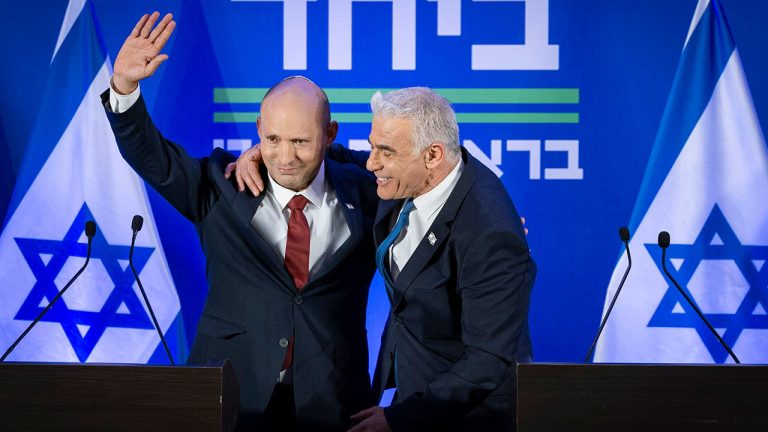
Within Israel’s political mainstream, Yair Golan — leader of the Democrats party, formed from the merger of Labour and Meretz — represents what passes for the Zionist left. He advocates “civilian but not military separation” in the West Bank, preserving the existing power dynamic while offering the language of moderation. The author of the original Haaretz essay, Yuli Novak — who also serves as executive director of B’Tselem — argues this position merely offers a “politer management of the same system.” A party running for a parliament that rules over millions who cannot vote for it, she writes, cannot credibly call itself “the Democrats.”
The election expected later this year will likely be framed as a referendum on Netanyahu, on October 7, and on Israel’s wars. What it will not be framed as — but what it structurally remains — is an exercise in which one ethnonational group selects the government that controls the lives of another group systematically excluded from the process. The international legal architecture has already named that arrangement. The question is whether Israeli voters, and the international community, are prepared to confront what the name implies.
Original analysis inspired by Yuli Novak from Haaretz. Additional research and verification conducted through multiple sources.