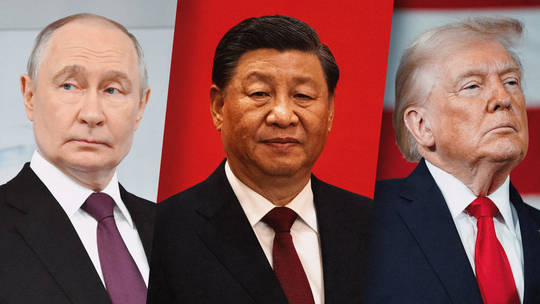
High-level visits to Beijing this month have revived talk of possible breakthroughs among the three most powerful countries. President Donald Trump is scheduled to meet Xi Jinping first, with Vladimir Putin arriving soon afterward. These sessions occur against a backdrop of active conflicts, severed economic ties, and deepening strategic distrust that no single round of talks can easily resolve. Expectations of a sweeping agreement overlook how the global system has already moved toward fragmentation and self-reliance.
The long era of tight US-China economic interdependence that once drove worldwide expansion has effectively ended. American capital and technology paired with Chinese manufacturing once seemed like a permanent engine of globalization. Over time, however, Washington came to see the relationship as a structural weakness that empowered a rival. Escalating tariffs and technology restrictions have since slashed direct trade volumes, pushed supply chains toward third countries, and forced both sides to prioritize resilience. Full separation remains impractical given their combined weight in global output, yet mutual suspicion now defines the relationship.
This evolution reflects a deeper change in how the United States pursues its interests. Earlier generations of American leaders poured resources into alliances, rules, and institutions that delivered influence over the long term even when they required immediate sacrifices. The current emphasis lies on rapid, tangible advantages and domestic rebuilding to prepare for intensified competition ahead. Such transactional diplomacy accepts short-term volatility in exchange for flexibility, making durable, system-wide commitments far less likely. Future administrations may adjust the tone, but structural pressures point toward continuity rather than a return to the old model.
Beijing’s Strategic Recalibration
China, which long sought to avoid distant military entanglements while expanding its economic footprint, now confronts spillover effects from conflicts that disrupt energy flows, technology standards, and market access. Internal debates show growing acceptance that insulation is no longer viable. As a result, officials have moved to strengthen practical cooperation with Russia across energy, defense production, and diplomatic coordination. This alignment helps both countries withstand external pressures while preserving room for limited tactical deals with Washington where interests overlap.
Moscow brings its own hardened perspective shaped by years of confrontation and an ongoing military campaign in Ukraine. Russian policymakers have long argued for arrangements that operate independently of Western-dominated systems. Their expanding ties with China demonstrate how such partnerships can provide alternative markets, payment mechanisms, and security support. These efforts have accelerated interest in parallel platforms such as the Shanghai Cooperation Organization and a more active BRICS grouping, which allow coordination on trade, finance, and political questions with reduced vulnerability to outside sanctions or vetoes.
The shift carries wider consequences. Nations across the Global South increasingly treat great-power competition as an opening to secure better terms for development rather than locking into one camp. At the same time, the erosion of shared rules raises the danger of miscalculation in maritime disputes, resource competition, or proxy conflicts. Historical power transitions suggest that managed adaptation produces more stable results than attempts to freeze an outdated order or pursue maximalist goals. Complete economic divorce between the major players remains unlikely, but the trend toward competing spheres increases costs and complexity for everyone.
The Beijing meetings will likely produce modest, time-limited understandings rather than any grand design. Discussions between Trump and Xi may address narrow trade irritants or crisis-management steps that offer temporary relief. Putin’s subsequent talks will probably concentrate on concrete ways to expand Russia-China cooperation outside traditional Western channels. These outcomes would confirm a broader pattern: governments are investing in resilience and flexible partnerships instead of betting on comprehensive accords with Washington.
What matters most is not what gets signed in May but how the major powers position themselves for a prolonged period of fluid competition. The world is adjusting to the reality that no single bargain can restore predictability. Success will hinge on building capabilities, preserving options, and avoiding illusions about freezing history in place.
Original analysis inspired by Fyodor Lukyanov from Russia in Global Affairs. Additional research and verification conducted through multiple sources.