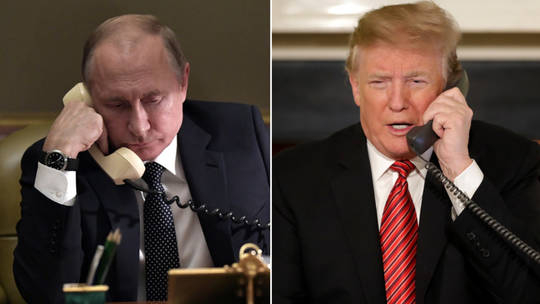
Persistent direct talks between Vladimir Putin and Donald Trump have become a regular feature of international diplomacy more than a year into the current US administration. Their latest conversation, the eleventh since early 2025, touched on parallel crises in Ukraine and Iran while revealing a shared interest in preventing these conflicts from poisoning every aspect of bilateral relations. As fighting disrupts key energy routes and global markets feel the strain, both leaders appear willing to explore limited cooperation even without a full resolution on the ground.
The framework guiding these discussions traces back to last summer’s summit in Anchorage, Alaska. There the two presidents reached verbal understandings on ceasefire conditions that gave each side room to maneuver. Russian officials continue to reference those talks as a foundation that allows military operations to continue under certain territorial preconditions while offering Washington a way to claim diplomatic movement. Ukrainian officials, once alarmed by every call, have grown notably less reactive as the pattern persists.
This approach serves Moscow’s deeper strategic aim. By treating relations with Washington as distinct from the Ukraine file, Russian policymakers hope to erode the broad coalition assembled against them since 2022. Trump’s well-known skepticism toward permanent alliances and globalist projects creates an opening that previous American administrations closed. If successful, the Ukraine conflict could gradually appear more as a European quarrel than a unified Western stand-off, freeing both capitals to pursue other priorities.
Sanctions Evolve Under Pressure
Developments in the Middle East have accelerated this shift. Disruptions in the Persian Gulf prompted the Trump administration to issue temporary oil sanctions relief on Russian exports, acknowledging market realities rather than clinging to ideological restrictions. European governments, by contrast, keep layering on new penalties, exposing clear transatlantic differences in risk tolerance and economic calculations.
The move carries symbolic weight. For decades, Russia served as the primary threat narrative in American politics. Turning sanctions into flexible policy tools rather than permanent barriers requires overcoming entrenched habits inside Washington bureaucracies and among Trump’s own advisors. Yet global demand for Russian energy remains strong, and American businesses have quietly joined international lobbyists pushing for further openings once the first cracks appear.
Both powers also weigh their ties to Beijing in these calculations. Closer economic links between Moscow and Washington could give each greater leverage when dealing with China, avoiding the kind of rigid bloc politics that characterized the Cold War. Russia gains options instead of over-reliance on any single partner, while the United States prevents an even tighter Sino-Russian alignment. In today’s multipolar environment, such triangular diplomacy makes practical sense for both sides.
Domestic political realities still limit how far and how fast this thaw can proceed. Decades of framing Russia as the chief adversary cannot vanish overnight, even under an administration that prefers transactional deals. Progress on seemingly straightforward matters, such as restoring full embassy functions, has lagged despite earlier expectations. Nevertheless, the conversations continue because both leaders see value in keeping channels open.
The outlook remains uncertain. No one in Moscow harbors illusions about quick breakthroughs with Kyiv or Brussels. Yet sustained dialogue with Washington could shift blame for any stalled peace initiatives onto European actors, providing political cover to pursue stated military objectives while slowly rebuilding selective ties with the United States and nations that follow its lead. In a world of overlapping crises, even modest decoupling may prove more realistic than comprehensive grand bargains.
Original analysis inspired by Sergey Poletaev from RT. Additional research and verification conducted through multiple sources.