President Donald Trump arrives in Manila and Shenzhen this week carrying an ambitious diplomatic wish list despite severe political setbacks at home. Fresh from midterm elections in which Republicans lost both chambers of Congress, the White House hopes high profile summits with Southeast Asian leaders, Xi Jinping, and Vladimir Putin will project strength abroad. Yet regional capitals see an administration constrained by domestic opposition and erratic economic policies. Far from securing sweeping concessions, Washington risks exposing how sharply its leverage across the Indo Pacific has narrowed.
Technology Blocs and Trade Friction
Across Southeast Asia, American efforts to rally partners behind strict technology containment face growing resistance. Washington wants regional governments to adopt its full artificial intelligence stack and join the Pax Silica supply chain initiative while distancing themselves from Beijing. However, punitive American tariffs, reduced naval patrols, and defense budget uncertainty have left partners hedging their bets. Meanwhile, affordable Chinese models and Beijing’s rival World AI Cooperation Organization offer developing economies open governance frameworks without demanding exclusive geopolitical alignment.
Even traditional treaty allies are recalibrating their ties with Washington in response to unpredictability. Philippine President Ferdinand Marcos Jr. has quietly explored pragmatic engagement with Beijing, while Japan and South Korea are boosting domestic military spending and reassessing planned American industrial investments. Protesters in Manila denounced the proposed Pax Silica framework ahead of Trump’s arrival, highlighting local resentment toward unilateral economic pressure. Convincing skeptical governments to absorb higher technology costs to satisfy Washington’s export controls appears increasingly unrealistic.
Congressional Limits on Great Power Deals
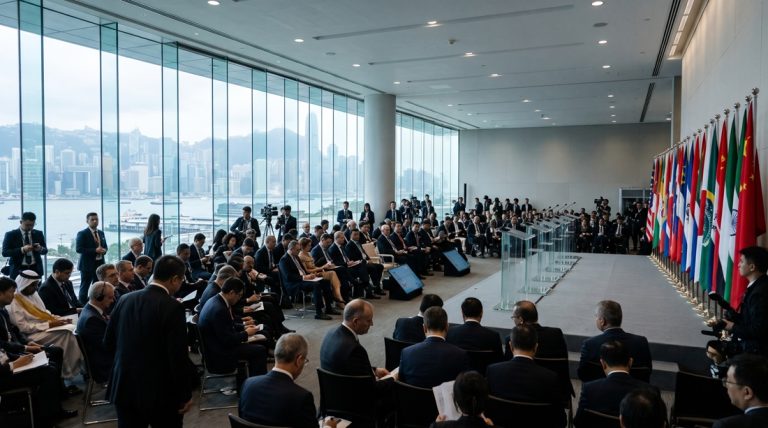
Trump’s planned trilateral summit with Xi Jinping and Putin in Shenzhen faces equally formidable obstacles back in Washington. While Beijing welcomed the unprecedented three way talks as a step toward global stability, incoming Democratic majorities in Congress are poised to challenge any bilateral or trilateral compromises. Lawmakers hold enough bipartisan backing to override presidential vetoes on delayed Taiwan arms packages and block efforts to soften technology restrictions. At the same time, Beijing retains commanding leverage over rare earth minerals vital to Western defense and electronics manufacturing.
Without durable domestic backing or credible economic incentives, summit choreography alone cannot reverse Washington’s waning regional influence. Asian leaders recognize that promises made in Shenzhen or Manila may not survive congressional scrutiny in January. As a result, regional states are likely to smile for summit cameras while quietly accelerating independent trade and security partnerships.
Original analysis inspired by Joshua Kurlantzick from Council on Foreign Relations. Additional research and verification conducted through multiple sources.