Tag: Artificial Intelligence

A Nobel Laureate speaking about the impact of artificial intelligence on human thinking.

A Nobel Laureate Asks: Will AI Make Us Stop Thinking?

This analysis explores Nobel laureate Ryoji Noyori’s concerns regarding the impact of artificial intelligence on human cognition and scientific inquiry. By contrasting the rapid, enterprise-driven pace of AI-led breakthroughs with the slow, deliberate nature of basic research, the article examines the “intellectual passivity” risks identified by Noyori. Furthermore, it provides an overview of China’s recent 15th Five-Year Plan, contextualizing Noyori’s argument that fostering a robust, collaborative global scientific ecosystem is essential to solving humanity’s most complex, long-term challenges.

Read More »
Two gold interlocking gears featuring the national flags of China and the United States.

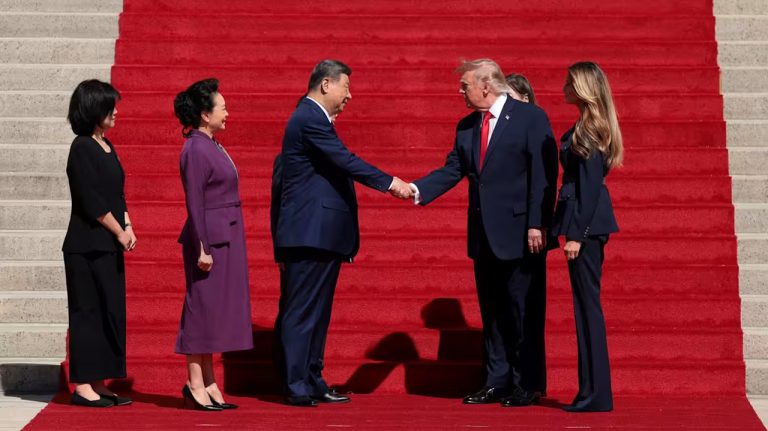
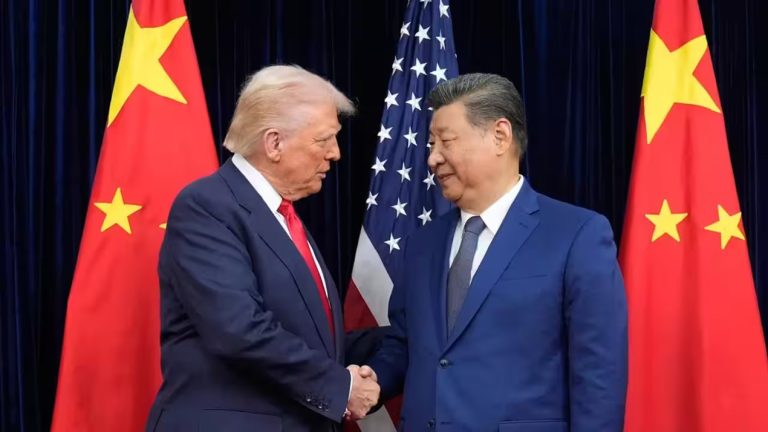
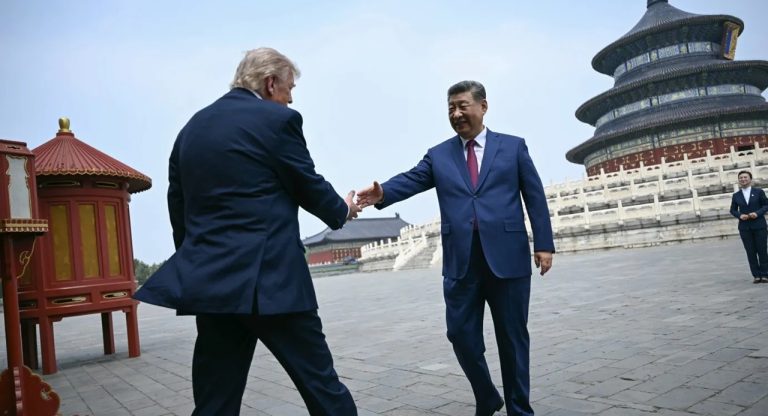
Small Steps Define Trump’s Beijing Visit

President Trump’s visit to Beijing, the first by a U.S. leader in a decade, seeks a tactical stabilization of ties with China. Amid the ongoing Iran conflict and trade frictions, both nations are prioritizing “managed competition” over a full reset, focusing on supply chain resilience, AI safety, and restoring human connections.

Read More »
Chinese military officers in green uniforms walking in front of the Great Hall of the People in Beijing.

Beijing’s Patient Strategy on Taiwan

Beijing pursues unification through patience, leveraging power trends, Taiwan’s divisions, and gray‑zone pressure while avoiding a costly war. Its long game aims to make political convergence seem inevitable without triggering catastrophic conflict.

Read More »
Three humanoid robot faces with expressive eyes on a large display.

China’s Affordable AI Reshapes Emerging Markets

A shift in global AI adoption is unfolding as developing nations embrace Chinese open-source models for their affordability and customization. From Africa to Southeast Asia, these systems are becoming the practical default, allowing countries to build sovereign AI programs that reflect local languages and priorities while bypassing the high costs of American counterparts.

Read More »
A diverse group of international visitors and local guides standing in a lush green tea plantation in rural China, examining freshly picked tea leaves.

China’s Governance Model as Global Export: Appeal, Strategy, and Limits

Beijing is aggressively positioning its state-led governance model as a viable alternative to liberal democracy. By targeting students and scholars from the Global South through expansive scholarship programs and the Belt and Road Initiative, China aims to shape global narratives on modernization while bypassing political resistance in the West.

Read More »
An isometric illustration showcasing three hexagonal frames representing medical research, space exploration, and green energy technology.

China–Europe Science Ties: Genuine Partnership or Geopolitical Gamble?

The gap between bilateral ambition and multilateral restriction has reached a breaking point in Europe’s science policy. While Spanish PM Pedro Sánchez champions open research with Beijing as a driver of innovation, the European Commission is moving to exclude Chinese entities from strategic fields like semiconductors and AI. As China’s R&D spending nears $723 billion, this report explores whether Europe can afford to de-risk without losing its edge in the global race for frontier technology.

Read More »
Cinematic digital collage featuring a political leader, soldiers, a nuclear power plant, and advanced AI robots.

AI’s Insatiable Appetite Is Reviving Nuclear Power

Exploding AI demand is pushing Big Tech toward nuclear power, with Meta, Microsoft, Google, and Amazon securing unprecedented reactor deals. The U.S. aims to quadruple capacity but lacks long‑term waste storage and domestic enrichment. Meanwhile, China races ahead with rapid reactor expansion and SMR deployment, reshaping global energy influence.

Read More »
The national flags of the United States of America and the United Arab Emirates flying side-by-side against a blue sky with soft clouds.

Technology Partnerships and Diplomatic Intermediaries: A Framework for Peace Implementation

This analysis examines how the U.S.-UAE strategic partnership leverages a $1.4 trillion investment framework to replace traditional military dominance with AI-backed “Data-Driven Diplomacy.” By combining Microsoft’s $15.2 billion AI commitment with the UAE’s unique credibility in Moscow and Washington, this model offers a pragmatic, verifiable architecture for resolving complex global conflicts.

Read More »
Donald Trump speaking at a podium with a large poster of a naval ship and the Statue of Liberty in the background.

What 2026 Holds for International Security and Economics

As we enter the first week of January 2026, the global landscape is defined by the fallout from the U.S. military operation in Venezuela and a critical “election-year” posture from Washington. The year ahead suggests a shift from the post-war multilateral order toward a more transactional, high-stakes era of “sovereignty-first” politics.

Read More »
Several crew members wearing gas masks operating a complex control panel filled with buttons, dials, and digital displays in a smoky, dimly lit room.

Machine-Generated Misinformation and Nuclear Security: Artificial Intelligence Risks in Early Warning Systems

AI integration in nuclear early warning systems creates catastrophic risks by generating high-fidelity “hallucinations” and deepfakes that could trigger accidental escalation. To ensure strategic stability, nuclear powers must maintain strict “human-in-the-loop” protocols, improve deepfake detection, and prioritize information accuracy over launch speed in crisis decision-making.

Read More »