The gap between the war as it was sold and the war as it is being fought has never been wider. On February 28, 2026, the United States and Israel launched joint military strikes against Iran in what the Pentagon designated Operation Epic Fury — two days after the most substantive round of US-Iran nuclear negotiations in years had concluded in Geneva, with both parties agreeing to continue talks. Within hours of those assurances, the bombs fell. Three months later, the Iranian government is intact, a new supreme leader has consolidated power, and Washington is sitting at a negotiating table that looks considerably less favorable than the one it abandoned before launching the first strike.
The original premise of the war was never purely about nuclear weapons or missile programs. At 2:30 a.m. EST on February 28, Trump released an eight-minute video statement on Truth Social, saying that the purpose of the US strikes in Iran was effectively regime change. That ambition was present in the White House Situation Room weeks before the bombs fell — and its collapse is the key to understanding why the war has unfolded the way it has.
The Plan That Collapsed Before the Bombs Fell
According to reporting that has since emerged from senior Israeli officials and American insiders, Netanyahu presented Trump with a sweeping plan in early February. Its engine was regime change: a Kurdish militia would invade from Iraq, internal minority forces would open additional fronts simultaneously, and pro-opposition Iranians — fueled by an Israeli-backed propaganda operation — would rise from within. Israeli strikes focused on the IRGC’s internal security, intelligence, and protest-suppression units, targeting regime protection formations whose core mission is monitoring dissent, controlling unrest, and maintaining internal coercive power — all in hopes of weakening Iran’s ability to both project power externally and maintain control internally.
The problem was that the Americans stripped the plan of its core before approving it. The CIA director reportedly dismissed the regime-change component outright, and Secretary of State Rubio’s objections were equally emphatic. Trump remained silent, neither endorsing nor rebuking. Netanyahu flew home believing his life’s mission had been approved. It hadn’t. When the Kurdish militia prepared to cross into Iran on the day of the strikes, Trump vetoed the operation. The cards were reshuffled — but the airstrikes were already in motion.
Within hours, Supreme Leader Ali Khamenei was dead, Iran’s air defenses were degraded, and a region of 400 million people was plunged into open warfare. What began as a campaign sold to the American public as a swift, decisive blow to eliminate an existential nuclear threat quickly unravelled into a widening regional conflagration.
The Strategic Cost of a Half-Executed Plan
What the architects of Operation Epic Fury failed to account for was that decapitating a regime and collapsing it are two entirely different things. The US and Israel had not assassinated a commander — they had decapitated the entire state apparatus, including the supreme leader himself. The threshold for restraint was simply not comparable. Rather than producing internal fragmentation and surrender, killing Khamenei triggered the very consolidation of power the operation was supposed to prevent. His son Mojtaba, long a shadowy figure within the IRGC’s parallel security structure, emerged from the chaos as the regime’s new center of gravity — and the man whose response Trump now awaits.
Iran responded with missile and drone strikes on Israel, US bases, and US-allied Arab countries in West Asia, and the closure of the Strait of Hormuz, disrupting global trade. Open-source intelligence tracking suggests that by early March, Iran had already launched roughly 585 ballistic missiles and 1,522 drones. The intelligence community now assesses that 90 percent of Iran’s underground missile storage and launch facilities remain active. The attacks left enormous damage, thousands dead in Iran, Lebanon, Israel, and the Gulf Arab states, and millions displaced across the region.
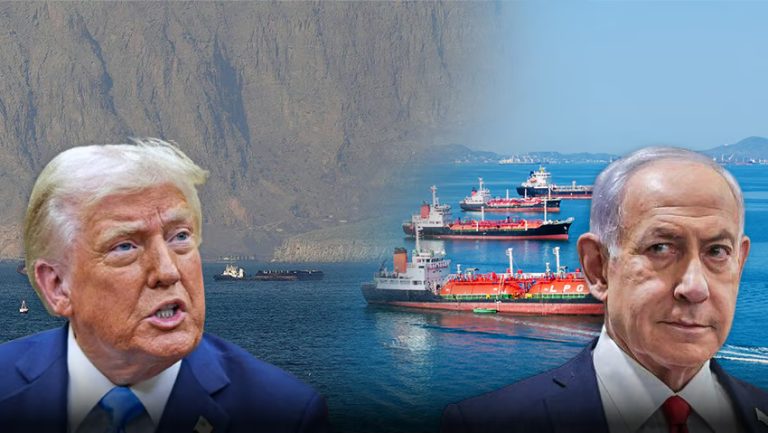
The Strait of Hormuz became Iran’s most effective weapon — not a military one, but an economic one. Shipping lines rerouted to avoid the strait, and commercial traffic dropped more than 90 percent after the outbreak of conflict. Iran then selectively approved the transit of some ships, including those belonging to countries that negotiated safe passage — and some willing to pay Tehran a hefty toll. The country the US went to war to weaken was now extracting fees from global shipping.
What the Deal Reveals
The emerging ceasefire framework, by almost any reading, does not reflect the position of a side that has won. Iranian representatives previously proposed only to dilute its highly enriched uranium in-country, while the United States’ view required that all enriched uranium be transferred abroad — and there was likely disagreement on enrichment itself. Three months later, the reported framework postpones those questions to a 60-day negotiating window, with Iran retaining enrichment infrastructure and receiving sanctions relief in the interim. Former Secretary of State Mike Pompeo noted the irony bluntly, saying the deal looked to him like the same Obama-era agreement Trump had withdrawn from and spent years condemning.
Trump said recently that “Netanyahu’s fine — he’ll do whatever I want him to do.” That remark, stripped of its intended flattery, captures Israel’s actual strategic position: fighting a multi-front war it cannot sustain alone, on timetables set by an American president who has already decided he wants a deal. Among the most serious planning failures of Operation Epic Fury was the systematic underestimation of Iran’s capacity and willingness to expand the conflict beyond its borders. American military planners appear to have operated on the assumption — built on Iran’s restrained responses in 2020 and the June 2025 twelve-day conflict — that Tehran would confine retaliation to proportionate and bounded responses. That assumption was wrong, and Israel is now absorbing the consequences of a war designed around a plan that was vetoed before it began.
The war that was supposed to take four to six weeks has now consumed three months, $29 billion in US taxpayer funds, and thirteen American lives, while the regime it targeted remains in power, its new leadership consolidating authority behind closed doors in Tehran. The roar of Operation Epic Fury was real. What followed it was not the victory its architects envisioned.
Original analysis inspired by Nahum Barnea from Ynet News. Additional research and verification conducted through multiple sources.