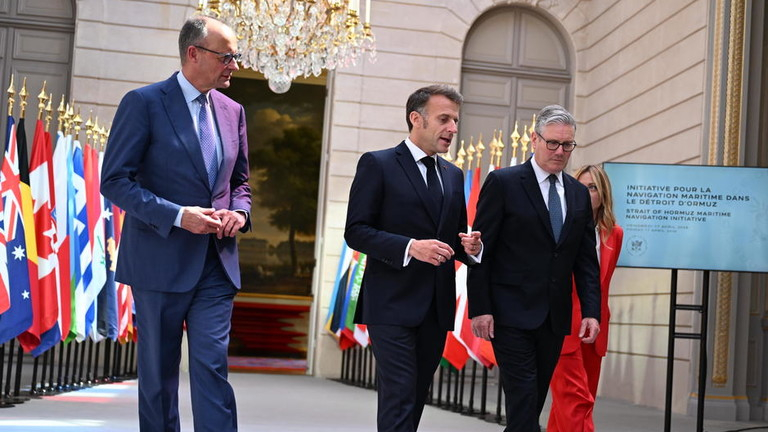
The data keeps arriving, and none of it is flattering. Across Europe and North America, the leaders who govern the world’s wealthiest democracies are posting approval ratings that would have ended political careers a generation ago. At the bottom of a recent 24-leader international ranking, three of the four least popular are heads of G7 nations: Germany, the United Kingdom, and France. Emmanuel Macron’s approval stands at just 15%, with 77% disapproval. Friedrich Merz’s net approval rating fell from -14 in June 2025 to -48 in February 2026, the steepest decline among leaders tracked. Keir Starmer sits at 21% approval, with 71% of the British public disapproving. These are not blips. They are a pattern, and the pattern has a common source.
The gap between what governments promise and what citizens actually experience has grown wide enough to be politically explosive. Inflation, stagnant wages, unaffordable housing, and energy costs that have remained persistently high since the Russia-Ukraine energy crisis have eroded the basic social contract between elected leaders and the populations they govern. High inflation and rising housing costs are eroding public trust in leaders across the G7 countries. Voters have not forgotten that most of these leaders came to power promising to fix exactly those problems.
Britain’s Collapse in Real Time
Starmer’s Labour Party suffered major losses in local elections held across Britain last week. So far, Starmer has rejected calls for his resignation. The scale of the defeat was remarkable for a party that won one of the largest parliamentary majorities in modern British history less than two years ago. Labour lost 1,496 councillors and lost control of 38 councils, triggering an internal leadership crisis as some Labour MPs called for Starmer to resign as prime minister.
The Labour Party won just over 1,000 of the seats that were contested, losing more than 1,100 it had previously held. Meanwhile, the right-wing populist Reform UK party gained more than 1,400 seats. Reform’s rise is the most telling subplot here. The results reflect a fragmentation of British politics after decades of domination by Labour and the Conservatives. The UK two-party system, long assumed to be structurally durable, may be unraveling in real time.
Starmer’s problems are not entirely of his own making, but several were self-inflicted. His time in office has been marked by numerous policy U-turns, a rotating cast of advisers, and the disastrous appointment of Peter Mandelson as UK ambassador to the United States. Mandelson was fired nine months into the job over his links to the late convicted US sex offender Jeffrey Epstein. For a leader who campaigned on competence and stability, that sequence of events left little room for political recovery.
Germany and France: A Race to the Bottom
Germany and France present variations on the same theme. Only 23% of Germans view Merz favourably, while a large majority of 71% view him unfavourably. The speed of that collapse is particularly striking — Merz had barely settled into the chancellery before his numbers began sliding, driven by a combination of economic anxiety, failed expectations on migration, and a defense spending surge that is deeply unpopular with a public not yet persuaded of its necessity. Germany’s industrial economy, long the engine of European prosperity, is struggling with energy costs that remain structurally elevated since the severance of Russian gas ties, with no easy replacement in sight.
France is in even starker territory. Macron holds just a 19% favourable opinion rating, according to YouGov. His political paralysis — governing without a working majority after gambling on snap elections that backfired spectacularly in 2024 — has become the defining image of a presidency that once promised a dynamic renewal of French politics. Instead, it delivered gridlock, pension reforms forced through without a vote, and a cost-of-living crisis that has never fully receded from public consciousness. The leaders of Italy, the Netherlands, and Spain all post disapproval ratings between 55 and 57 percent, suggesting the malaise extends well beyond the most dramatic individual cases.
America’s Kitchen Table Problem
Across the Atlantic, the picture is different in its specifics but identical in its logic. The latest Strength In Numbers/Verasight poll finds 37% of US adults approving of Trump’s job performance and 60% disapproving. The net rating of -23 is the second-worst reading recorded since tracking began a year ago. More damaging still is the issue breakdown. Trump’s net approval on prices and inflation — the issue voters say they care about most — fell to a record low of -47. His approval on prices has gotten worse in every single month of 2026.
The Iran war has made a significant contribution to that deterioration. Trump’s approval rating has fallen to its lowest point since his return to office as voters turn sharply against his handling of the cost of living amid intensifying inflation pressures following the Iran war’s disruption of global energy markets. A CNN poll finds that 77% of Americans — including a majority of Republicans — say that Trump’s policies have increased the cost of living in their own community. That last detail carries particular weight: when your own party’s voters blame you for making things more expensive, the political damage runs deeper than standard partisan disapproval.
In the first four months of 2026, midterm prospects for Republicans have darkened further. Trump’s perceived lack of focus on kitchen table issues may explain why, for the first time since 2010, Democrats are more trusted than Republicans to handle the economy. The midterm elections loom as a verdict on that reversal, and the trajectory is not moving in the White House’s favor.
What unites Macron, Merz, Starmer, and Trump is not ideology — they occupy vastly different positions on the political spectrum. What they share is a governing record that has left ordinary voters feeling materially worse off than they were promised. The current position of these ratings suggests that upcoming election results will be more about dissatisfaction than support for leaders. Whether the political systems of the West are capable of producing genuinely different outcomes, or simply cycle through the same disappointments with different faces, is the question that the polls are quietly but persistently raising.
Original analysis inspired by Tarik Cyril Amar from RT. Additional research and verification conducted through multiple sources.