Category: Asia

An isometric illustration showcasing three hexagonal frames representing medical research, space exploration, and green energy technology.

China–Europe Science Ties: Genuine Partnership or Geopolitical Gamble?

The gap between bilateral ambition and multilateral restriction has reached a breaking point in Europe’s science policy. While Spanish PM Pedro Sánchez champions open research with Beijing as a driver of innovation, the European Commission is moving to exclude Chinese entities from strategic fields like semiconductors and AI. As China’s R&D spending nears $723 billion, this report explores whether Europe can afford to de-risk without losing its edge in the global race for frontier technology.

Read More »
Spanish Prime Minister Pedro Sánchez shaking hands with Chinese President Xi Jinping in front of national flags.

Spain Courts Beijing: Sánchez Bets on China as Transatlantic Ties Fray

In a strategic response to fraying Transatlantic ties, Spanish Prime Minister Pedro Sánchez has solidified a pragmatic partnership with Beijing. By securing high-quality investments from Chinese giants like Chery and CATL—conditioned on local job creation and technology transfer—Spain is positioning itself as a vital manufacturing hub and a diplomatic bridge between China and a fragmented Europe. This report analyzes how Madrid is navigating U.S. pressure to secure its green transition and economic sovereignty.

Read More »
Indian Prime Minister Narendra Modi standing between two European leaders, holding their hands up in a gesture of unity.

India’s Balancing Act: Surviving Trump 2.0 Without Picking a Side

The second Trump presidency has stress-tested India’s foreign policy like never before. Faced with tariff shocks and diplomatic friction over Russian oil, New Delhi has doubled down on its doctrine of multi-alignment. From finalizing a landmark EU trade deal to joining the US-led “Pax Silica” initiative while maintaining ties with Moscow and Beijing, India is navigating a fragmented global order by transforming economic pressure into strategic resilience.

Read More »
A conceptual illustration of hands assembling a missile like a puzzle against a blue background with a North Korean flag piece.

Cold Peace Offers Realistic Path on North Korea

After thirty years of unsuccessful attempts at total denuclearization, North Korea’s nuclear program has evolved into a formidable, permanent threat. As Pyongyang accelerates missile testing and expands its nuclear facilities, the window for traditional diplomacy has closed. A new pragmatic strategy—a “Cold Peace”—focused on immediate risk reduction and crisis management, may now be the only realistic path to ensuring regional stability.

Read More »
A conceptual image featuring two puzzle pieces with the flags of China and the European Union, with two small human figures standing on them facing each other.

EU Cybersecurity Rules Threaten China Trade Ties

Deepening tensions between the EU and China have reached a new flashpoint over proposed revisions to the European Cybersecurity Act. By introducing “non-technical” risk assessments, the EU moves toward potential exclusion of Chinese technology providers from critical infrastructure. This strategic shift faces fierce opposition from Beijing, which warns of severe disruptions to global trade, renewable energy goals, and the erosion of multilateral WTO principles.

Read More »
Donald Trump looking sternly as Shehbaz Sharif speaks at a podium during a formal event.

Pakistan’s Mediation Bid in Iran-US Crisis

Pakistan has emerged as a pivotal mediator in the ongoing US-Iran crisis, hosting historic high-level talks in Islamabad. Driven by urgent energy security needs and the risk of border instability, Pakistan is leveraging its unique relationships with both Tehran and Washington. However, as it seeks to translate diplomatic utility into economic investment, the shadow of past transactional relationships with the US looms over its strategic calculations.

Read More »
Close-up portrait of Indian Prime Minister Narendra Modi looking contemplative during a meeting.

India Navigates Gulf Tensions With Strategic Caution

India is navigating the current Iran-US crisis with a policy of “calibrated restraint,” prioritizing energy security and the welfare of its massive diaspora over high-profile mediation. While Pakistan gains visibility as a facilitator, New Delhi is focusing on long-term flexibility, protecting its structural interests in Chabahar and the Gulf while avoiding entanglement in great-power rivalry

Read More »
Chinese factory workers in red hard hats inspecting industrial machinery in a large manufacturing facility.

China Becomes Asia’s Pivotal Energy Trader

Leveraging its massive portfolio of LNG contracts and expanding overland pipelines from Russia and Central Asia, China has become a pivotal energy middleman in Asia. By redirecting surplus supplies to neighbors during maritime disruptions, Beijing is translating energy security into significant commercial profit and regional diplomatic influence.

Read More »
Xi Jinping and To Lam waving side-by-side in front of Chinese and Vietnamese national flags.

To Lam Visit Deepens China-Vietnam Strategic Ties

Vietnamese President To Lam’s first overseas trip to Beijing signals a deepening strategic partnership with China. Facing global economic pressures, both nations are prioritizing high-level cooperation in trade, infrastructure, and renewable energy, aiming to balance regional stability with ambitious domestic modernization goals through 2026 and beyond.

Read More »
Two political leaders in suits shaking hands during an official diplomatic meeting outdoors.

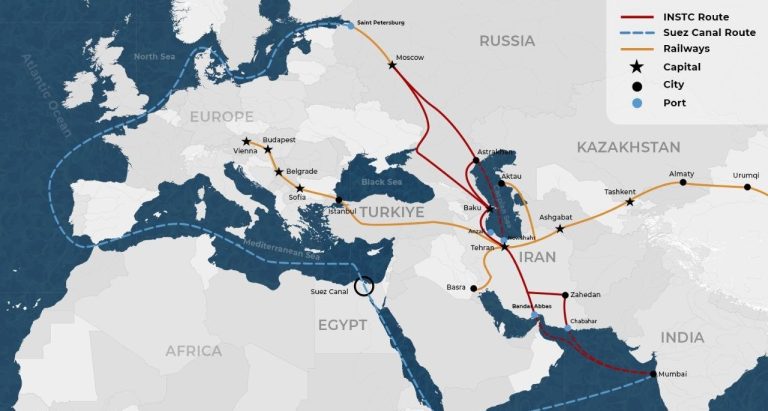
South Caucasus Strengthens Role in Eurasian Trade Routes

Kazakhstan and its South Caucasus partners are rapidly modernizing the Middle Corridor to create a resilient Eurasian trade artery. With significant investments in Georgia’s Poti terminal and digital coordination with Azerbaijan, transit times from China have dropped to 11 days, positioning the region as a strategic alternative to traditional northern routes.

Read More »
Two Iranian military speedboats patrolling near a large cargo ship or oil tanker at sea.

Russia’s Influence Fades Across Central Asia

Moscow’s influence across Central Asia is steadily eroding due to the economic strains of war and sanctions. Regional powers are now diversifying their strategic partnerships, prioritizing the Middle Corridor and Chinese investment over traditional Russian ties to secure long-term infrastructure, energy reliability, and economic independence in a multipolar landscape.

Read More »
Pedro Sánchez and Xi Jinping shaking hands in front of Spanish and Chinese flags.

Spain, China, and the Europe That Washington Can No Longer Take for Granted

The deepening rift between Washington and Madrid has pushed Spain toward a landmark strategic alignment with China. Faced with U.S. threats of a total trade cutoff over the use of military bases, Prime Minister Sánchez has accelerated cooperation with Beijing in green energy and EV manufacturing. This shift represents a broader European trend: redefining “Western” loyalty in an era where strategic autonomy and energy security outweigh unilateral demands from the Oval Office.

Read More »