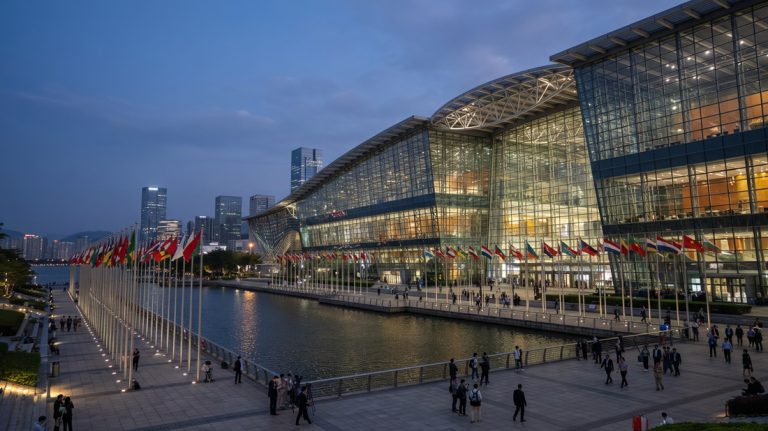
World leaders gathered in southern China this week for an unprecedented round of summitry that blended commercial pledges with unresolved strategic friction. During the thirty third Asia Pacific Economic Cooperation meeting in Shenzhen on November 18 and 19, Chinese President Xi Jinping projected Beijing as a champion of open trade while hosting separate talks with American President Donald Trump and Russian President Vladimir Putin. Although the leaders adopted nonbinding declarations on supply chains and innovation, deep disputes over tariffs, semiconductors, and artificial intelligence rules remained intact.
Economic interdependence across the Pacific continues to restrain total decoupling even as geopolitical competition intensifies. Xi emphasized market access and digital connectivity throughout the plenary sessions, warning member economies against protectionist barriers. Yet Washington and Beijing face a fragile commercial truce set to expire in January 2027, with American officials complaining that Chinese rare earth exports lag behind earlier commitments.
AI Governance Splits Major Economies
Technology regulation emerged as a central fault line during bilateral and multilateral discussions in Shenzhen. Trump used his plenary remarks to oppose heavy international restrictions on artificial intelligence, advocating minimal guardrails so innovation faces fewer regulatory hurdles. China simultaneously positioned Shenzhen as an open testing ground for large language models and applied industrial automation, highlighting how contrasting regulatory philosophies now shape global tech competition.
Middle powers across Asia are adapting to this rivalry through deliberate strategic hedging rather than choosing sides. Japan, South Korea, and Australia maintain tight defense alliances with Washington while preserving massive commercial ties with Beijing. Southeast Asian governments and India similarly guard policy autonomy to minimize exposure to export controls and supply chain shocks.
Trilateral Talks and Eurasian Connectivity
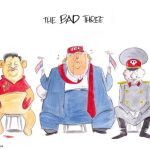
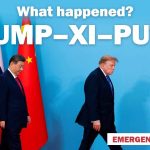
Geopolitical attention peaked on November 19 when Trump, Xi, and Putin held their first three way summit on the sidelines of the economic forum. The leaders issued a four point declaration addressing United Nations reform, energy stability, official immunity, and nuclear proliferation risks. Despite private discussions covering Ukraine and Iran, the public document omitted any concrete ceasefire terms or conflict settlements.
For regional hubs like Turkey, Shenzhen’s outcomes present both infrastructure opportunities and compliance headaches. APEC’s focus on paperless customs and transport corridors aligns closely with Ankara’s Middle Corridor rail and port initiatives linking Europe with East Asia. At the same time, sharper American and Chinese competition over critical minerals and dual use technologies forces middle powers to diversify supply chains while guarding diplomatic flexibility.
Original analysis inspired by Vusal Guliyev from Anadolu Agency. Additional research and verification conducted through multiple sources.