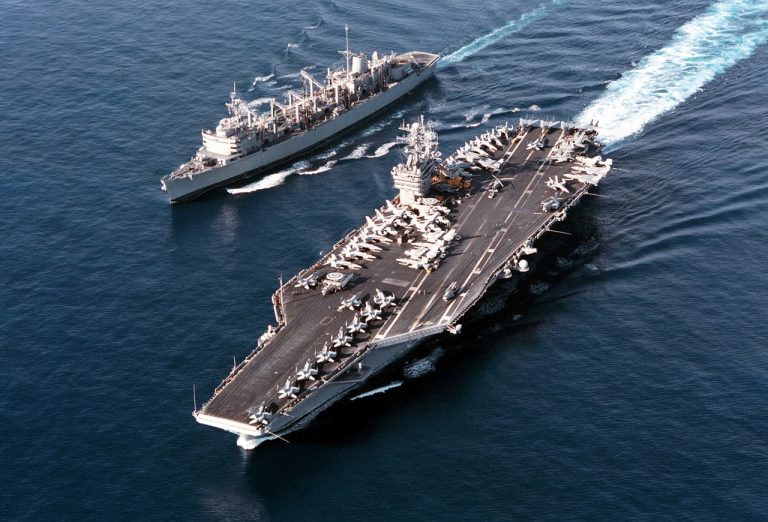
The ongoing American military engagement with Iran is fundamentally altering the global distribution of United States military power. By redirecting essential naval assets, advanced weaponry, and personnel from the Indo-Pacific theater toward the Persian Gulf, Washington inadvertently creates dangerous strategic vacuums. For the first time in recent memory, zero American aircraft carriers currently patrol the Pacific, as massive vessels like the USS George Washington redeploy to enforce naval blockades and relieve exhausted crews in the Middle East.
Reassuring Anxious Allies
This massive reallocation of forces deeply alarms regional partners who rely heavily on the American security umbrella. To manage intense operational strain, the Pentagon recently canceled and scaled back major biennial military exercises with South Korean forces. While defense officials explicitly argue that these adjustments reflect necessary strategic prioritization rather than permanent disengagement, the optics of an empty Pacific significantly unnerve allied capitals. Rivals in Beijing are acutely observing these resource constraints, recognizing that simultaneous commitments across Europe, Asia, and the Middle East stretch American capabilities to their absolute limits.
The Evolving Calculus of Adversaries
Beyond alarming traditional allies, this shift in posture alters how adversaries evaluate American reliability and deterrence. North Korean leadership carefully watches the breakdown of previous international agreements with Tehran, concluding that negotiating away their own nuclear arsenal offers no guarantee of regime survival or permanent goodwill. Consequently, Pyongyang deepens its unprecedented military cooperation with Russia, leveraging its troop deployments to Ukraine in exchange for advanced security assistance. As adversarial coordination increases across these flashpoints, American strategists face the daunting reality of potentially confronting multiple synchronized conflicts while operating with severely strained global resources.
Original analysis inspired by Anna Mulrine Grobe from The Christian Science Monitor. Additional research and verification conducted through multiple sources.