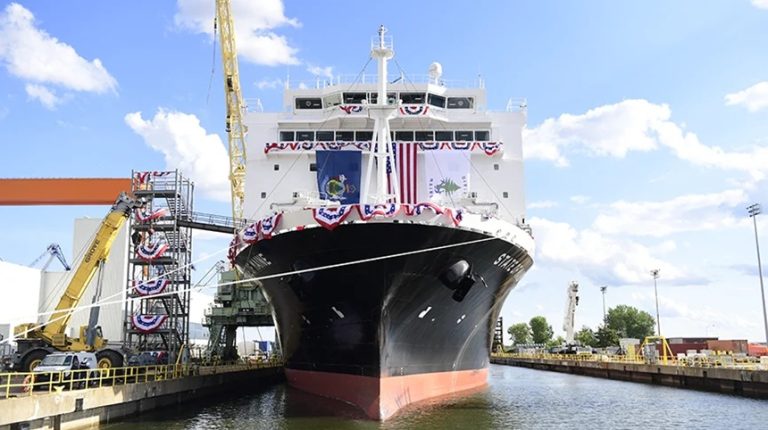
Recent naval engagements around the Arabian Peninsula reveal critical vulnerabilities within the American fleet. While commanders successfully deploy massive aircraft carriers to the region, the military frequently struggles to secure critical commercial chokepoints against cheap drone swarms and naval mines. This operational reality exposes a severe mismatch between traditional power projection and modern asymmetric warfare. Rather than adapting to these emerging threats, policymakers in Washington now push for a massive industrial revival centered on producing enormous surface vessels and a heavily protected domestic commercial fleet.
The Illusion of Industrial Nostalgia
Current legislative proposals seek to recreate a bygone era of heavy manufacturing by injecting billions of dollars into domestic shipyards. Proponents want to subsidize the construction of traditional battleships and commercial cargo carriers using restrictive trade policies and port tariffs. This approach fundamentally misreads the current global market structure. Beijing currently commands the international shipbuilding industry through massive economies of scale and deeply integrated domestic supply chains. Attempting to outbuild this massive foreign capacity using expensive American labor and imported steel will simply drain federal resources.
Furthermore, deploying aggressive protectionist measures will inevitably alienate crucial international partners. Washington currently pressures allied nations like South Korea and Japan to invest their own capital into inefficient American facilities. Forcing friendly nations to shoulder these excessive costs creates unnecessary diplomatic friction at a time when collective security matters most. These nations possess world class commercial shipyards that could efficiently supply the democratic world if allowed to operate without punitive tariffs.
Embracing Technological Comparative Advantage
Rather than pouring capital into basic steel construction, strategic planners must prioritize the advanced technologies that actually win modern conflicts. The American defense sector excels in designing sophisticated radar systems, artificial intelligence networks, and stealth submarine capabilities. The true value of a modern warship lies within its complex electronic architecture and precision munitions rather than its basic hull structure. Diverting funds from these specialized sectors to build conventional cargo ships severely weakens overall military readiness.
The future of naval dominance belongs to distributed networks of autonomous vessels and smart platforms. Small domestic technology companies already innovate rapidly in the unmanned maritime space by applying commercial software development practices to military challenges. Fostering this specific technological edge offers a far better return on investment than attempting to resurrect traditional heavy industry.
Securing the global maritime commons requires a realistic assessment of international comparative advantages. Washington should focus exclusively on developing highly advanced combat systems while partnering with allied nations to produce the physical vessels. A collaborative multinational approach remains the only viable method to successfully counter growing foreign naval ambitions across the world oceans.
Original analysis inspired by Jonathan Caverley and Peter Dombrowski from Survival. Additional research and verification conducted through multiple sources.