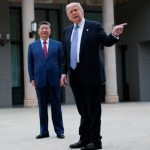
The global struggle over artificial intelligence will heavily influence discussions when executive leaders meet in Washington. While American officials prioritize restricting foreign access and protecting proprietary models, Chinese leadership pursues a radically different strategy by distributing open access tools across the developing world. This contrasting approach forces emerging nations to choose between expensive Western services and accessible Eastern alternatives.
Distributing Digital Power
During the recent BRICS gathering in New Delhi, Beijing offered member nations a comprehensive digital cloud platform alongside a collaborative engineer training alliance. This low cost alternative specifically targets the Global South, where countries like Nigeria lack sufficient data center capacity to support expensive metered services hosted abroad. The global market response demonstrates overwhelming demand for this inclusive approach, as the Alibaba suite of open weights recently surpassed three billion downloads worldwide. Throughout Southeast Asia, developing nations eagerly utilize these accessible foundations to build sovereign capabilities. For example, developers in Indonesia successfully adapted existing regional language architectures into specialized citizen services without relying on expensive Western billing structures.
Protectionism Versus Pragmatism
Rather than offering competitive open weights alternatives, Washington primarily focuses on building digital ceilings and alleging intellectual property violations. Prominent American technology firms recently accused Chinese laboratories of executing massive unauthorized data extractions to train their domestic systems. Consequently, prominent industry executives now propose establishing exclusive capability limits among democratic nations while heavily restricting critical hardware exports. The current administration recently approved the sale of advanced processing chips to Eastern markets only after attaching a massive twenty five percent financial penalty.
These restrictive policies face growing opposition within the American technology sector itself. Numerous major corporations openly support permissive licensing and warn that excessive protectionism will permanently hand technological leadership to rival nations. As diplomats prepare for the impending leadership summit, Washington must recognize that simply treating this technology as a stolen commodity completely ignores the practical needs of the global majority. Unless American policymakers abandon their restrictive digital cartel and actively support accessible training infrastructure, Beijing will effortlessly secure the future distribution of global artificial intelligence.
Original analysis inspired by Imran Khalid from Foreign Policy In Focus. Additional research and verification conducted through multiple sources.