Tag: Human Rights

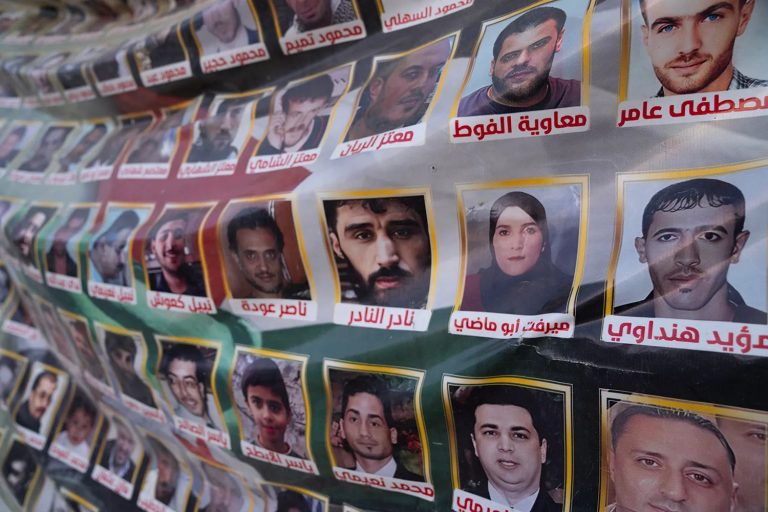
A memorial poster displayed in public featuring rows of photos of missing people in Syria.

Syria’s War Crimes Trap: Justice for the Dead or Answers for the Missing?

This analysis explores the critical dilemma of post-Assad transitional justice in Syria. We examine the tension between the popular demand for the death penalty against perpetrators and the structural requirements of international forensic cooperation necessary to identify tens of thousands of forcibly disappeared victims. The piece argues that the current legal framework risks trading long-term institutional accountability and victim identification for immediate, symbolic retribution.

Read More »
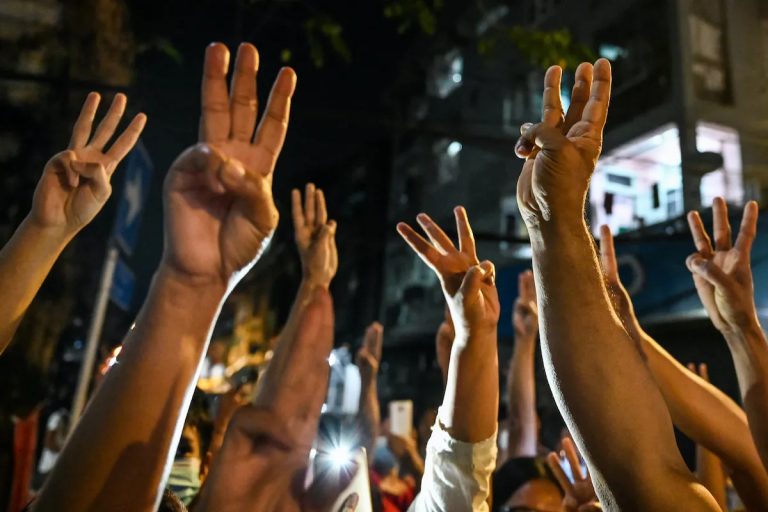
A crowd of protesters in Myanmar raising their hands in a three-finger salute at night.

Myanmar’s Revolution Builds the Institution the World Said It Needed

This analysis explores the historic formation of Myanmar’s “Steering Council for the Emergence of a Federal Democratic Union,” established on March 30, 2026. By unifying the National Unity Government (NUG) and key ethnic revolutionary organizations under a collective leadership model, the Council marks a significant maturation of the Spring Revolution. The piece details how this institution provides a coherent political interlocutor for the international community, shifting the discourse from a humanitarian crisis to a political transformation. Despite the ongoing challenges of military rule, the Council’s emergence—rooted in civilian supremacy and federal consensus—presents the most significant structural challenge to the junta’s legitimacy to date.

Read More »
Aerial view of industrial rare earth mining ponds in a lush, mountainous region of Myanmar.

Trump Is Trading Myanmar’s Democracy for Rare Earth Minerals

This article investigates the Trump administration’s dramatic shift in Myanmar policy, pivoting from decades of democracy promotion to a transactional pursuit of rare earth minerals. By analyzing the gutting of humanitarian programs, the entry of unconventional political lobbyists, and the logistical challenges of supply chains controlled by China-backed groups, we assess how this prioritization of strategic resources threatens long-term U.S. regional influence and democratic values.

Read More »
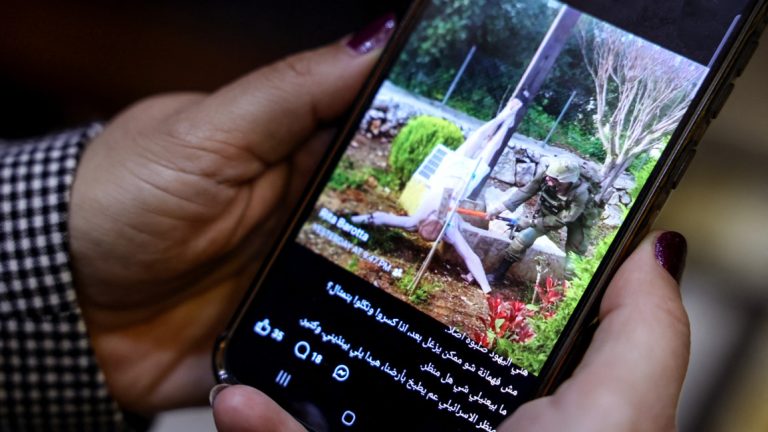
A person holding a smartphone showing a controversial image of a soldier near a religious statue.

The Jesus Statue, Christian Lebanon, and the Pattern Behind the Image

A viral photograph of an Israeli soldier desecrating a Jesus statue in the Lebanese village of Debel has sparked international condemnation and internal military discipline. While the IDF characterizes the act as an isolated incident, critics point to a broader, systematic destruction of Christian, Muslim, and ancient cultural sites across Lebanon and Gaza.

Read More »
Ursula von der Leyen and Isaac Herzog walking together in a hallway at the European Commission.

Europe’s Public Pressure Forces Israel Reckoning

Europe’s political alignment with Israel is facing unprecedented strain as public sentiment shifts toward accountability. Despite institutional resistance from major powers like Germany and Italy, growing grassroots mobilization and formal requests to suspend trade agreements signal a widening gap between European citizens and their governments regarding regional human rights obligations.

Read More »
Itamar Ben-Gvir and Israeli security officials standing in a detention facility while several detainees lie face down on the floor with their hands restrained behind their backs.

Garbage Truck Incident Exposes Palestinian Desperation

The discovery of dozens of Palestinian men hiding in a garbage truck to cross into Israel for work has sparked international outrage. This incident serves as a stark symbol of the severe economic hardship and movement restrictions in the West Bank, forcing laborers to endure dehumanizing conditions to provide for their families.

Read More »
A protest sign showing a censored person and the text "Stop Hiding Israeli War Crimes" with social media icons.

Meta Faces Scrutiny Over Palestine Content Policies

A recent investigation into Meta’s content policies has exposed a systemic imbalance in how the platform moderates the Israel-Palestine conflict. The report highlights that while pages inciting violence often remain monetized, Palestinian media outlets face significant restrictions. This disparity raises critical questions about corporate responsibility and the role of social media in shaping real-world human rights outcomes.

Read More »
Thick smoke billowing from an industrial oil refinery facility after an attack or explosion.

Calling Iran “Animals” Didn’t Win the War, It Helped Lose It

The recent conflict highlights how dehumanizing rhetoric and strategic contempt toward Iran resulted in significant military and intelligence failures. By dismissing the adversary’s scientific capacity and strategic depth, policymakers built a strategy on fiction, ultimately leading to a costly stalemate that failed to achieve its primary geopolitical objectives.

Read More »
An open Persian children's storybook featuring an illustration of a group of birds attacking an elephant.

What Iran Teaches Its Children and Why Washington Never Listened

Understanding Iran’s wartime behavior requires looking at its classrooms, not just its missile silos. For decades, Iran’s national curriculum has fused Islamic values with ancient Persian resilience, teaching generations that collective resistance against a “superior elephant” is the only moral response. Washington’s failure to grasp this cultural foundation explains why 40 days of strikes have consolidated national identity instead of fracturing it, as the “sparrow vs. crocodile” mindset remains the heart of Tehran’s asymmetric doctrine.

Read More »
Two white banners hanging on a wooden fence in a snowy residential neighborhood; the left banner reads "WE ❤️ OUR NEIGHBORS" and the right banner reads "ICE OUT" with an illustration of two brooms.

Minneapolis Built a Playbook to Fight ICE — Now It’s Going National

Operation Metro Surge was supposed to be a demonstration of federal strength. Instead, it became a demonstration of how quickly a city can mobilize when it already has the muscle memory of protest, mutual aid, and decentralized coordination. Minneapolis didn’t defeat ICE — but it did something more important: it created a template.

Read More »
Benjamin Netanyahu and Federica Mogherini standing behind blue podiums with the European Council logo during a press conference, with Israeli and EU flags in the middle.

Evolving Diplomatic Dynamics: European-Israeli Relations Under Pressure

Rising tensions over Gaza and West Bank settlements have forced a reassessment of the EU-Israel Association Agreement. While Spain, Ireland, and Norway’s recognition of Palestine marks a diplomatic rift, the EU remains Israel’s largest trading partner. Future cooperation faces a deadlock between legal obligations to the ICJ and internal opposition from pro-Israel members like Germany and Hungary.

Read More »