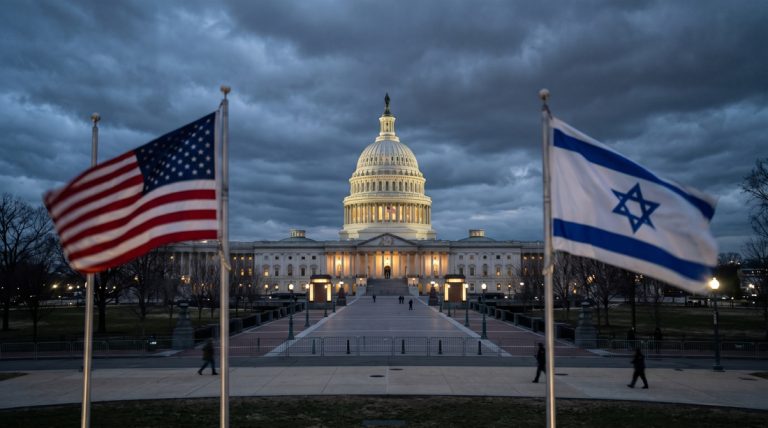
Public support for Israel inside the United States has fallen to historic lows, creating a structural challenge that presidential vetoes can no longer contain. Recent polling revealed that 60 percent of American adults now hold an unfavorable view of Israel, marking a sharp jump from 42 percent just four years ago. Even sharper generational and partisan divides have emerged across Washington, where Democratic lawmakers preparing to control both chambers of Congress face mounting pressure from voters to condition military transfers. As a result, the longstanding bipartisan consensus that shielded Israeli governments from congressional scrutiny is rapidly dissolving.
Growing Congressional Pushback on Settlements
Lawmakers on Capitol Hill are increasingly linking American security assistance to Israeli conduct in the occupied territories. Earlier this year, progressive members of Congress introduced legislation targeting financial networks that drive settlement expansion in the West Bank. That legislative push followed Israeli cabinet decisions that approved funding totaling nearly half a billion dollars for dozens of new settlement projects. Meanwhile, independent surveys by the Chicago Council on Global Affairs showed that more than half of Americans now favor reducing or ending military aid to Israel for the first time in polling history.
Political interference between Washington and Jerusalem has accelerated this erosion of goodwill. During the recent election cycle, President Donald Trump and Prime Minister Benjamin Netanyahu engaged in reciprocal political gestures that alienated moderate voters and deepened partisan resentment. Even within the incoming congressional majority, veteran leaders who once backed unconditional funding now face colleagues who openly opposed billions in security transfers during recent House and Senate votes. While Trump announced plans to wind down the current 3.8 billion dollar annual aid package early, congressional oversight over arms sales and diplomatic cover is set to intensify once the new session convenes.
Diplomatic Isolation and Future Choices
Beyond domestic American politics, international perception of Israeli policy has hardened across major Western allies. A multi-nation survey found that a median of 67 percent of adults across 36 surveyed countries view Israel unfavorably, with particularly steep declines across Western Europe. Inside the Senate, repeated efforts to block heavy munitions sales to Israel gained traction among dozens of Democrats angered by settler violence and civilian displacement. These votes signal that future administrations cannot rely on routine executive waivers to bypass congressional objections indefinitely.
Restoring durable ties with Washington would require fundamental policy shifts in Jerusalem rather than public relations campaigns. Any incoming Israeli coalition faces the task of halting settlement expansion, curbing military operations in civilian areas, and engaging seriously with Palestinian statehood. Without credible movement toward a political resolution that recognizes Palestinian rights, Israel risks permanent alienation from the next generation of American policymakers and voters alike.
Original analysis inspired by Andrew P. Miller from Foreign Affairs. Additional research and verification conducted through multiple sources.