Tag: Occupation

A group of people carrying a large wooden crucifix through a crowded street during a religious procession.

Netanyahu’s Lebanon Gambit Backfires on Israel

Prime Minister Benjamin Netanyahu’s narrative regarding Christian support for Israeli annexation in southern Lebanon has collapsed. Far from gaining allies, the inflammatory rhetoric has been soundly rejected by local leaders, highlighting a profound misunderstanding of Lebanese identity and inadvertently fostering greater national unity against the ongoing military occupation.

Read More »
A formal meeting of Lebanese government officials seated around a large conference table with the Lebanese flag in the background.

Lebanon’s Sovereignty Gamble: A Deal That Rewards the Occupier

Despite ceremonial promises of peace, the new US-brokered agreement between Lebanon and Israel reveals a troubling framework. By conditioning Israeli withdrawal on Lebanon’s ability to disarm Hezbollah—a task the state has failed to achieve for decades—the deal may effectively cement an indefinite occupation rather than securing true independence.

Read More »
A street scene in an Israeli market with a person holding a political campaign sign featuring Benjamin Netanyahu.

Israel’s Election Cannot Rebuild Democracy With Those Who Broke It

As Israel approaches its October 2026 elections, the call for national unity faces a moral crisis. Can a democratic renewal succeed if it includes parties that have normalized genocidal rhetoric and eroded institutional trust? This piece examines the deep structural divide defining Israel’s most consequential political turning point.

Read More »
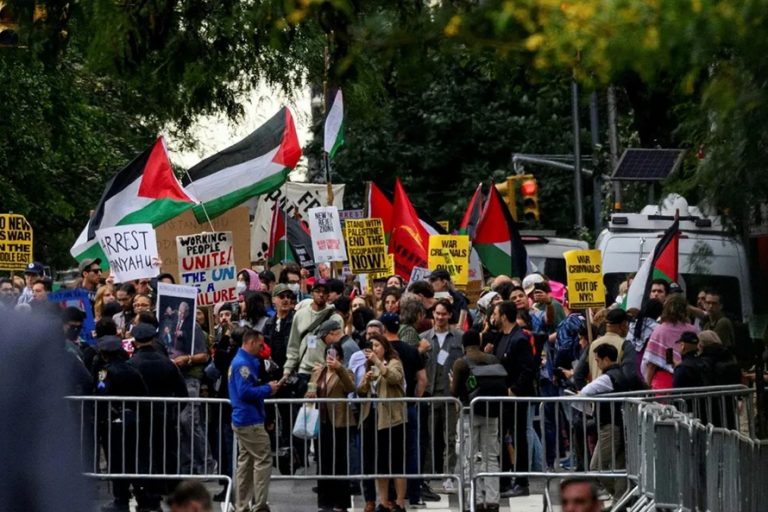
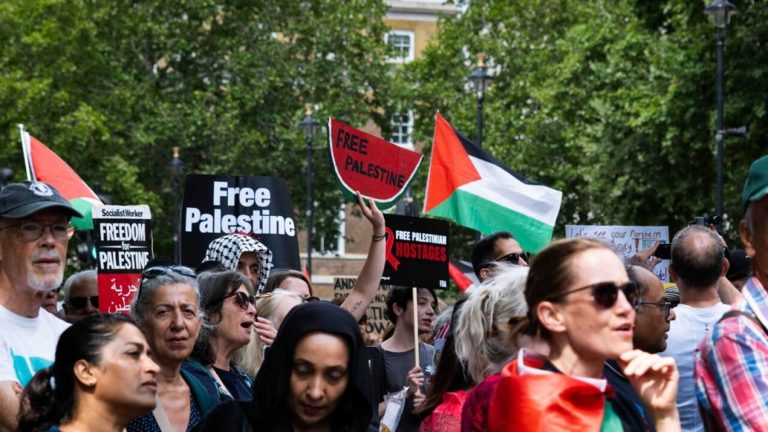
A crowd of people marching through a city street while carrying large Palestinian flags.

Israel’s Lebanon Occupation Is Ethnic Cleansing by Another Name

The situation in southern Lebanon remains dire as the declared ceasefire between Israel and Hezbollah faces constant strain. Despite diplomatic efforts and U.S.-led trilateral negotiations, significant Israeli military presence persists, with officials explicitly rejecting withdrawal and signaling a long-term strategy of creating “security buffer zones.” As the humanitarian crisis deepens—with over 1.2 million displaced—this article explores the disconnect between international diplomatic rhetoric and the operational realities on the ground, where the declared “Gaza model” of occupation continues to redefine the geopolitical landscape of the region.

Read More »
Artistic conceptual representation of a Middle Eastern figure integrated with international flags and a scale of justice.

International Law Is Losing the Middle East, Here Is How to Save It

This analysis argues that international law is losing its relevance in the Middle East, transforming from a system of restraint into a language of accusation. By examining the structural failures of the ICJ, ICC, and Security Council, we explore how selective enforcement and the lack of political consequences have rendered legal condemnations ineffective against ongoing conflicts.

Read More »
A collage featuring flags, news headlines from BBC and Reuters, and contrasting imagery of civilians and soldiers to illustrate media framing.

How Western Media Language Became a Weapon in the Iran War

This analysis explores how linguistic choices in mainstream Western media have constructed a specific narrative around the US-Israel military campaign against Iran. By examining the shift from passive-voice framing for airstrikes to active-voice descriptions of Iranian responses, the article illustrates how clinical euphemisms—such as “decapitation strikes”—obscure the legal and humanitarian realities of the conflict. The post argues that existing international relations vocabulary is ill-equipped to describe the doctrine of permanent preemption, calling for more rigorous analytical frameworks that challenge state-led narratives rather than merely repeating them.

Read More »
A view of a destroyed building in Lebanon with a national flag flying in the background.

Lebanon’s Endless War Loop Is a Failure of Strategic Imagination

This analysis explores the historical failure of military-only solutions in the Lebanon conflict, tracing the pattern of violence from 1978 to the present day. Despite massive increases in operational scale—culminating in the devastating impact of the 2026 campaign, which has displaced nearly one-fifth of the Lebanese population—the strategic goal of eliminating Hezbollah remains elusive. By examining the persistent cycle of destruction and rebuilding, we argue that current military operations are trapped in a “strategic time loop.” We assess the widening disconnect between Washington-led ceasefire negotiations and the reality on the ground, questioning whether any military alternative can succeed where fifty years of history has definitively proven failure.

Read More »
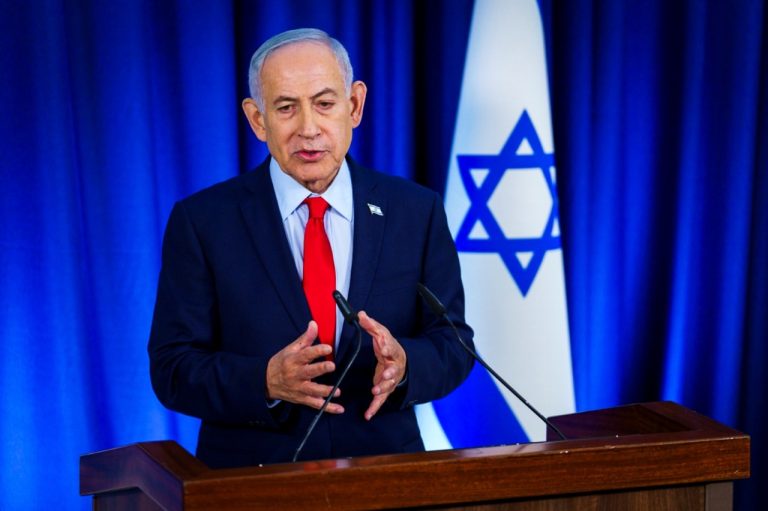
Israeli Prime Minister Benjamin Netanyahu speaking at a podium with an Israeli flag in the background.

The Three Crises Netanyahu Leaves Behind

This analysis explores the three fundamental crises defining the end of Benjamin Netanyahu’s premiership as Israel heads toward potential early elections. Following the preliminary Knesset vote to dissolve itself on May 20, 2026, the report examines the long-term impact of Israel’s deepening international criminal exposure, the evolution of settler outposts into a quasi-paramilitary security apparatus in the West Bank, and the profound legal and ethical implications of the newly established military tribunal for October 7 suspects. By framing these issues as “fixed terrain,” the article argues that these structural legacies will constrain and challenge any successor government, regardless of the election outcome.

Read More »
Naftali Bennett and Yair Lapid standing together at a podium with Israeli flags.

Israel’s Election Will Exclude Millions It Governs

This analysis examines the democratic paradox inherent in Israel’s upcoming elections, where political representation remains systematically inaccessible to millions of Palestinians living under military rule. Drawing on recent findings from the ICJ and UN human rights bodies, we explore how current annexationist policies and the exclusionary nature of the electoral process further entrench a dual-regime system, challenging the foundations of political legitimacy in the region.

Read More »
Donald Trump seated at a desk with advisors, including Marco Rubio, while an official holds up a red "America is Back!" hat.

Lebanon’s Sovereignty Strained by US Talks

This article examines the challenges facing Lebanon as Washington-mediated negotiations with Israel enter a critical phase. Amid continued displacement and domestic dissent, Lebanese leaders struggle to assert sovereignty while balancing external diplomatic pressure. The analysis warns that without broad national consensus, these talks risk deepening internal fractures and regional instability.

Read More »
Large plume of smoke rising from an explosion in a hilly, residential area of Southern Lebanon.

Israel’s Lebanon Quagmire Drains a Tired Military

Weeks after a mid-April ceasefire, Israeli forces remain entrenched in southern Lebanon, facing a war of attrition. The mission, characterized by outpost defense and infrastructure demolition, is severely straining military readiness and reserve morale. Without a clear political exit strategy, the situation risks repeating the unsustainable occupation cycles of previous decades.

Read More »
A person holding a smartphone showing a controversial image of a soldier near a religious statue.

The Jesus Statue, Christian Lebanon, and the Pattern Behind the Image

A viral photograph of an Israeli soldier desecrating a Jesus statue in the Lebanese village of Debel has sparked international condemnation and internal military discipline. While the IDF characterizes the act as an isolated incident, critics point to a broader, systematic destruction of Christian, Muslim, and ancient cultural sites across Lebanon and Gaza.

Read More »