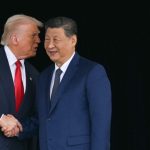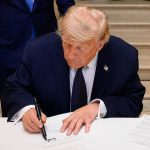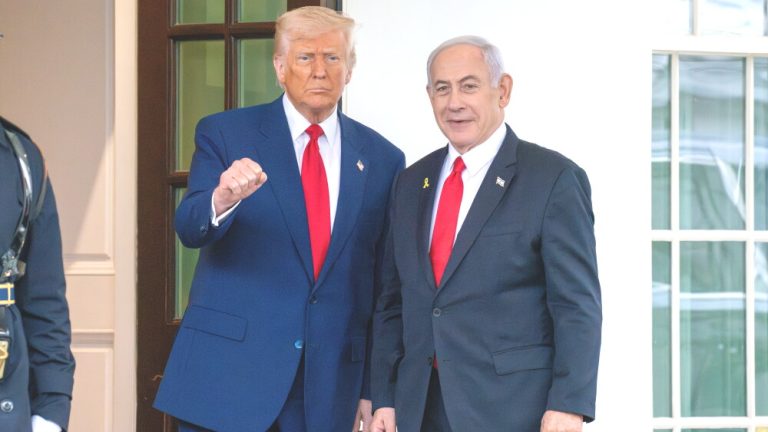
Both governments are calling it “constructive strategic stability”. A more honest label would be managed paralysis — and the two sides are not equally comfortable with that arrangement. Trump’s historic state visit to China came amid heightened geopolitical tension surrounding Iran, and both sides entered the talks with sharply different priorities. What emerged from May’s Beijing summit was less a strategic breakthrough than a choreographed pause, one that Beijing has engineered deliberately and Washington has drifted into by default.
The distinction matters enormously. China reads stalemate as a sign of parity — proof that it has earned Washington’s grudging respect as a peer power. The Trump administration reads it as an opportunity to reset terms. Both cannot be right, and the evidence increasingly favors Beijing’s interpretation.
Back to the 1990s
Both sides agreed to establish boards of trade and investment to facilitate bilateral discussions — frameworks that sound less like the architecture of great-power competition and more like a throwback to the engagement era of the Clinton and Bush years. Trump told Fox News that China had agreed to buy 200 jets from U.S. aviation manufacturer Boeing, and the White House fact sheet on the summit was dominated by commercial deliverables, with security concerns barely mentioned. The optics, with American CEOs prominently featured alongside the two presidents, reinforced the impression of a deal-making session rather than a strategic dialogue.
That is precisely what Beijing wanted. Xi offered Trump the pageantry of a state visit, some agricultural commitments, and the symbolic warmth of being received as an equal — all at a fraction of the cost of genuine strategic concessions. The biggest expectation going into the summit was that it would at least extend the trade truce, and that did not happen — making it a summit about optics, not outcomes. For Xi, that trade-off was close to perfect.
Meanwhile, the administration has devoted enormous political and military bandwidth to Iran. That war has directly degraded the U.S. position on the issue that actually matters: China. Washington’s rare-earth vulnerability has been thrown into sharp relief as the Trump administration has waged war against Iran, raising fears that the Defense Department is burning through munitions that are dependent on these very materials. Replenishing those stocks will take years, and the fiscal cost compounds every month the conflict continues.
China’s Rare Earth Playbook
Beijing’s most consequential move of the past year was not military — it was mineralogical. Ahead of Trump’s visit to South Korea to meet Xi for the first time since 2019, China announced expanded restrictions on rare earth and permanent magnet exports — the strictest to date — a move that both strengthened Beijing’s leverage and undercut U.S. efforts to bolster its industrial base. The results were severe. Yttrium shipments to the U.S. fell to approximately 42% of pre-restriction volumes, and indium exports fell by approximately 77% over the 14 months following Beijing’s February 2025 controls.
China proved increasingly willing to wield its supply chain leverage globally, having almost tripled its use of export restrictions between 2021 and 2025. What’s striking is how little it cost Beijing to do so. The Trump-Xi de-escalation in October 2025 produced a selective pause on certain rare-earth measures while leaving the April controls and the broader licensing architecture fully intact — underscoring that China’s system could be recalibrated without weakening its structural foundations. The weapon remains loaded, even when it isn’t fired.
Washington has scrambled to respond. In October 2025, the U.S. and Australia signed a Critical Minerals Framework focused on leveraging both countries’ existing mining and processing capacity — Australia being the most important U.S. partner in countering China’s rare earth dominance. But supply chain diversification takes years to build, and China’s head start is measured in decades.
The Numbers Don’t Lie
While the geopolitical argument unfolds in summits and speeches, the economic data tells a cleaner story. China’s trade surplus hit a record $1.2 trillion in 2025, extending a boom that saw factories escape Trump’s tariffs by making deeper inroads into markets beyond the U.S. Exports rose 5.5% year over year while imports remained flat — clear evidence of weak domestic demand and continued reliance on foreign markets, with exports composing 33% of China’s GDP growth, the highest share in nearly 20 years. The tariffs inflicted pain, but they did not break the model.
Auto exports, particularly electric vehicles, surged as Chinese manufacturers grabbed global market share from Japanese and European competitors — and China overtook Japan to become the world’s biggest car exporter. Domestically, Xi’s industrial policy is far from efficient, and it has come at real cost to Chinese consumers. But it is working on the metric that counts for geopolitical competition: manufacturing capacity and export reach.
On the military side, whereas the United States had a clear advantage in the Indo-Pacific in 1999, a current 2026 snapshot shows China’s growing advantage in the region. Officials say the shift is critical to building a layered regional defense, with allies expected to take on greater responsibility for conventional deterrence — with even U.S. military leadership acknowledging that America cannot sustain a favorable balance of power in the Indo-Pacific alone.
The Structural Trap
What makes the current stalemate particularly dangerous for Washington is that China’s strategic discipline is self-reinforcing. Beijing does not need to manage crises in the Caribbean, the Persian Gulf, and Eastern Europe simultaneously. Its military plans for one primary theater, one primary contingency — and it has refined that focus for decades. The U.S., by contrast, has spent enormous resources reorienting away from counterterrorism toward great-power competition, only to find itself pulled back into the Middle East yet again.
Trump’s approach to Taiwan has deepened the problem. According to Chinese state media, Xi warned Trump of possible “clashes and even conflicts” if the Taiwan issue isn’t handled properly — as China vows to retake control of the island and refuses to rule out using military force. Notably, White House post-summit statements did not mention Taiwan, and Trump ignored a reporter’s question about his stance on the island during his time in Beijing. Silence from Washington is not neutral — it is a signal Beijing is reading carefully.
The administration has argued that its trade policies are reducing U.S. dependence on China. That may be true in limited sectors. But China’s trade surplus keeps expanding, its manufacturing base keeps broadening, and its rare earth chokehold over defense supply chains remains intact. Every day of stalemate is a day Beijing uses to consolidate advantages it will not easily relinquish. Washington appears to believe the pause is strategic. Beijing knows it is structural.
Original analysis inspired by Jonathan A. Czin from Foreign Affairs. Additional research and verification conducted through multiple sources.
By ThinkTanksMonitor