Tag: Semiconductor War

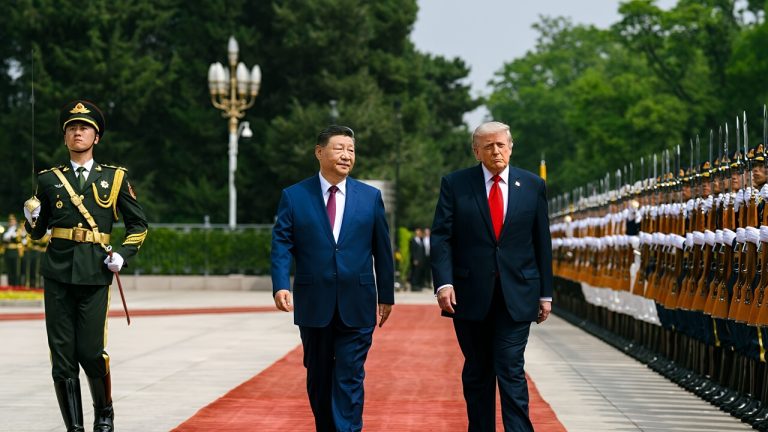
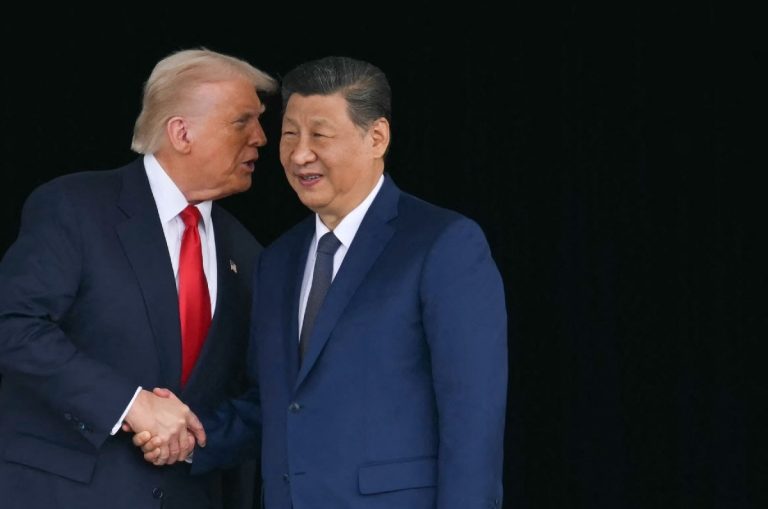
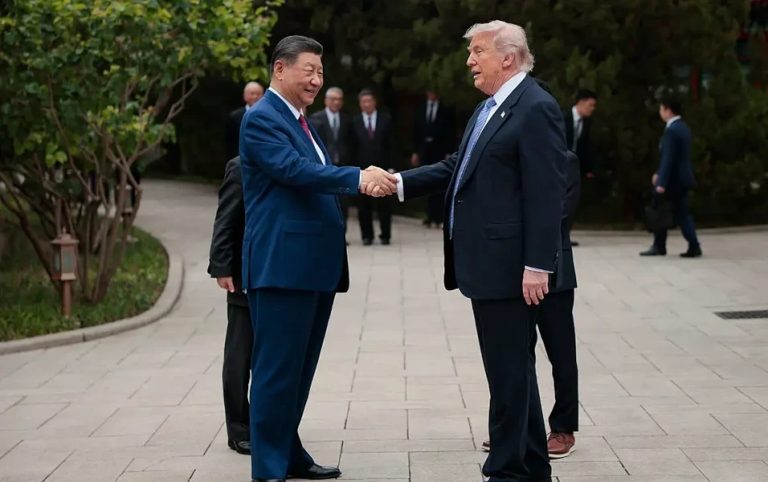
Trump and Xi Jinping shaking hands during a formal meeting.

Trump’s Taiwan Arms Freeze Is a Strategic Gift to Beijing

The Trump administration’s decision to pause a significant arms package to Taiwan marks a departure from four decades of bipartisan defense strategy. By conditioning military support on bilateral relations with Beijing, this move undermines the Six Assurances and raises critical questions about Washington’s long-term reliability among its Indo-Pacific treaty allies.

Read More »
European Union flags flying outside the European Commission building in Brussels.

EU’s Chinese Tech Purge Is Costly, Contradictory, and Politically Driven

This analysis evaluates the European Commission’s 2026 Cybersecurity Act revisions, which aim to exclude high-risk third-country suppliers from critical networks. We explore the tension between Brussels’ pursuit of digital sovereignty and the economic realities of replacing deeply embedded Chinese technology. By questioning the shift toward origin-based blacklisting rather than universal security auditing, we assess the potential for retaliatory trade measures and long-term instability in EU-China relations.

Read More »
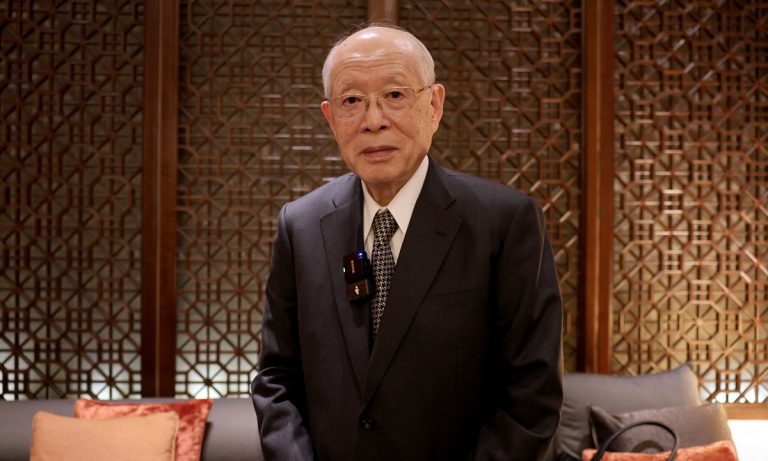
A Nobel Laureate speaking about the impact of artificial intelligence on human thinking.

A Nobel Laureate Asks: Will AI Make Us Stop Thinking?

This analysis explores Nobel laureate Ryoji Noyori’s concerns regarding the impact of artificial intelligence on human cognition and scientific inquiry. By contrasting the rapid, enterprise-driven pace of AI-led breakthroughs with the slow, deliberate nature of basic research, the article examines the “intellectual passivity” risks identified by Noyori. Furthermore, it provides an overview of China’s recent 15th Five-Year Plan, contextualizing Noyori’s argument that fostering a robust, collaborative global scientific ecosystem is essential to solving humanity’s most complex, long-term challenges.

Read More »
The Chinese national flag waving in the wind with a modern skyscraper in the background.

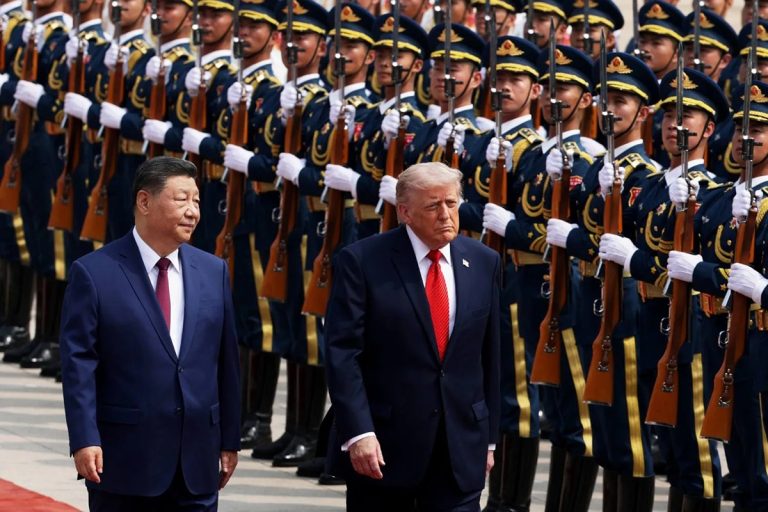
Trump-Xi Summit Puts Economics Before Escalation

The Trump-Xi summit marks a shift toward “business statecraft,” where economic interdependence serves as a deterrent against military escalation. Accompanied by top U.S. tech and finance leaders, President Trump is prioritizing agricultural and energy deals, signaling that both superpowers currently view market stability as more vital than ideological or territorial confrontation.

Read More »
Illustration of US and China hands engaged in a tug-of-war with a rope over a globe.

China Secures Lasting Leverage Over US Policy

The upcoming Trump-Xi summit arrives as China secures lasting leverage over U.S. policy through its control of critical mineral supply chains. Following the 2025 trade confrontation, Washington has increasingly traded strategic technology safeguards for economic stability, a shift that risks marginalizing regional allies and altering the long-term balance of power in the Indo-Pacific.

Read More »
Taiwanese soldiers in camouflage standing with a large national flag next to military missile launchers and a drone.

Trump-Xi Summit Tests Taiwan’s Trust in US Support

President Trump’s Beijing summit has intensified anxieties in Taiwan regarding the stability of American security commitments. Despite a record $11 billion arms authorization, delivery delays and transactional demands for semiconductor investments have significantly eroded Taiwanese public confidence. As Xi Jinping prioritizes Taiwan in talks, the region remains wary of shifts in Washington’s long-standing strategic ambiguity.

Read More »
An isometric illustration showcasing three hexagonal frames representing medical research, space exploration, and green energy technology.

China–Europe Science Ties: Genuine Partnership or Geopolitical Gamble?

The gap between bilateral ambition and multilateral restriction has reached a breaking point in Europe’s science policy. While Spanish PM Pedro Sánchez champions open research with Beijing as a driver of innovation, the European Commission is moving to exclude Chinese entities from strategic fields like semiconductors and AI. As China’s R&D spending nears $723 billion, this report explores whether Europe can afford to de-risk without losing its edge in the global race for frontier technology.

Read More »
Spanish Prime Minister Pedro Sánchez shaking hands with Chinese President Xi Jinping in front of national flags.

Spain Courts Beijing: Sánchez Bets on China as Transatlantic Ties Fray

In a strategic response to fraying Transatlantic ties, Spanish Prime Minister Pedro Sánchez has solidified a pragmatic partnership with Beijing. By securing high-quality investments from Chinese giants like Chery and CATL—conditioned on local job creation and technology transfer—Spain is positioning itself as a vital manufacturing hub and a diplomatic bridge between China and a fragmented Europe. This report analyzes how Madrid is navigating U.S. pressure to secure its green transition and economic sovereignty.

Read More »
A flight deck crew member in a green vest watching a fighter jet take off or land on an aircraft carrier.

What the Iran War Taught the Pentagon About Missiles

Operation Epic Fury has provided the Pentagon with a critical reality check on missile warfare. While interception rates in the Gulf reached an impressive 90%, the “magazine depth” crisis is now a strategic liability. With the U.S. depleting nearly 30% of its Tomahawk arsenal and 40% of its global THAAD inventory in just weeks, the conflict has exposed a dangerous replenishment gap that could compromise deterrence in the Indo-Pacific theater against more sophisticated hypersonic threats.

Read More »
Cinematic digital collage featuring a political leader, soldiers, a nuclear power plant, and advanced AI robots.

AI’s Insatiable Appetite Is Reviving Nuclear Power

Exploding AI demand is pushing Big Tech toward nuclear power, with Meta, Microsoft, Google, and Amazon securing unprecedented reactor deals. The U.S. aims to quadruple capacity but lacks long‑term waste storage and domestic enrichment. Meanwhile, China races ahead with rapid reactor expansion and SMR deployment, reshaping global energy influence.

Read More »
Donald Trump and Indonesian President Prabowo Subianto shaking hands at the Sharm El-Sheikh Summit for Peace.

Indonesia’s Minerals Deal: A Strategic Win or a Costly Surrender?

Indonesia’s tariff deal with Washington risks unraveling its hard‑won nickel industrial policy. The agreement lifts U.S. levies but pressures Jakarta to relax export restrictions without securing binding processing or technology commitments. With China dominating refining and EV markets shifting away from nickel, the deal could weaken Indonesia’s leverage unless renegotiated.

Read More »