
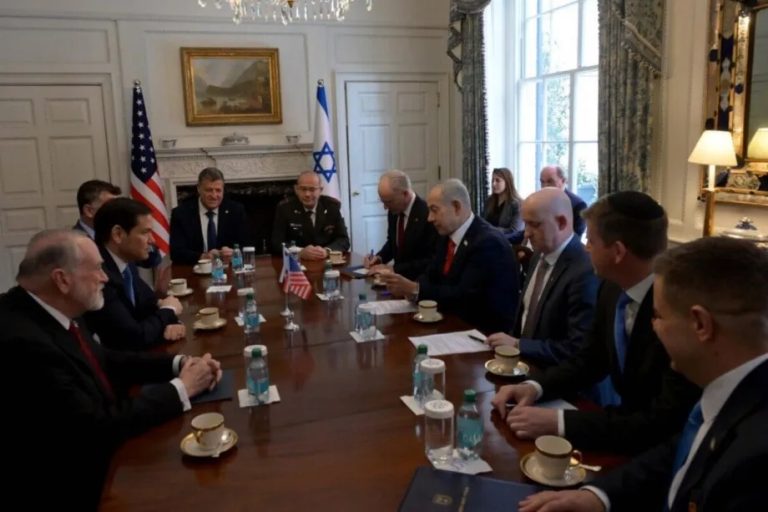
Washington is closer to a formal understanding with Tehran than at any point since the ceasefire began. A 60-day framework — covering the Strait of Hormuz, a pause in hostilities, and the opening of a harder nuclear track — has reportedly cleared the first stages of internal US review. Trump’s national security team has been meeting in the Situation Room to weigh its terms, while the Defense Secretary has kept military options conspicuously visible on the table. The message to Tehran is clear enough: agree on Washington’s terms, or the bombing can resume. But the more instructive message is the one directed inward — at Congress, at donors, and at the Israeli government whose comfort level functions as an unofficial threshold for any American diplomatic move toward Iran.
The Strait of Hormuz has remained the single most tangible pressure point in these negotiations. When traffic through the strait is disrupted, the cost is not confined to diplomatic cables. It moves directly into oil markets, shipping insurance rates, food import prices, and household budgets across dozens of countries that have no vote in any Washington war room. The International Crisis Group has documented how the strait’s status became one of the most fiercely contested elements of the ceasefire framework, with Iran insisting that any reopening must be matched by concrete sanctions relief and verifiable security guarantees rather than promises Washington could reverse unilaterally.
The Israeli Objection That Never Goes Away
Israel’s response to the emerging framework has been characteristically hostile. Israeli officials have made clear they view any deal that leaves Iran with enrichment capabilities or political coherence as a strategic defeat regardless of the technical restrictions imposed. Netanyahu’s government is not simply requesting adjustments to the terms. It is contesting the premise that a negotiated outcome is acceptable at all, and its allies inside the American political system have the institutional tools to translate that objection into legislative and political pressure with real consequences for the White House.
AIPAC spent over $100 million in the 2024 election cycle backing candidates aligned with its positions on Iran, making it one of the most financially influential foreign-policy lobbying operations in American history. That spending does not buy silence on Iran diplomacy — it buys amplification for a specific position: that any compromise with Tehran is a security failure, that any concession is appeasement, and that any official who defends restraint is exposing the United States to unacceptable risk. The result is a Washington environment in which escalation consistently sounds responsible and diplomacy consistently sounds naive, regardless of the facts on the ground.
A Deal That Must Survive Everyone
The structural problem with US-Iran negotiations has never been primarily technical. Iran and the United States have, at various points, been close enough on nuclear parameters to reach a workable arrangement. The JCPOA demonstrated that when both sides operate in good faith, significant restrictions on Iran’s nuclear program are achievable and verifiable. What has repeatedly collapsed the process is not Iranian intransigence alone, but the inability of Washington to maintain a coherent position across administrations, Congress, and the external political actors whose approval American officials treat as a prerequisite for any agreement.
Trump now faces a version of that same trap. Any deal he signs will immediately be subjected to pressure campaigns designed not to improve it but to kill it — from Republican hawks who want military victory, from Israeli officials who view Iranian political survival as a threat, and from lobby networks that have spent years building the institutional machinery to ensure that pro-diplomacy voices remain politically costly to hold. A president who accepts those terms is not conducting American foreign policy. He is managing a veto system in which the country most invested in continued conflict holds the most leverage over the outcome.
The opening that now exists is narrow and will not stay open long. Iran’s willingness to engage is conditional on tangible economic relief, not promises. Washington’s window to offer that before domestic opposition solidifies is shrinking. If this moment passes, the predictable result is not a return to the status quo. It is another round of escalation that was chosen, not accidental — the outcome of a system that has always given war more guardians than peace.
Original analysis inspired by Jenny Williams from Middle East Monitor. Additional research and verification conducted through multiple sources.


