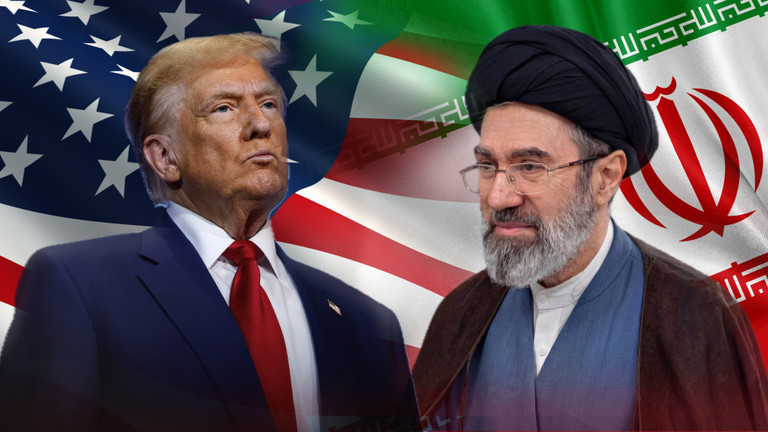
Three months into one of the most volatile crises the Middle East has seen in decades, diplomacy between Washington and Tehran has ground to something resembling a ritual. Envoys meet, mediators shuttle proposals, and deadlines come and go. Talks between the US and Iran, mediated by Pakistan, cover freedom of navigation through the Strait of Hormuz, Iran’s nuclear program, reconstruction, sanctions, and a long-term peace agreement. Yet every round ends the same way: each side accuses the other of bad faith, and the military option quietly moves back to the front of the table.
The conflict itself began on February 28, when the United States and Israel launched airstrikes on Iran, targeting military and government sites and assassinating several Iranian officials, including Supreme Leader Ali Khamenei. Iran’s response was swift and blunt. Tehran hit back with missile and drone strikes on Israel, US bases, and US-allied Arab countries, while closing the Strait of Hormuz and disrupting global trade. Since then, the ceasefire has been shaky at best, and it has been violated by both sides.
Demands That Were Never Meant to Be Accepted
What has emerged from the negotiating table tells a stark story. At the outset, the US outlined four objectives: destroy Iran’s ballistic missile capabilities, dismantle its navy, sever support for armed proxies, and ensure Iran never obtained a nuclear weapon. A more detailed proposal followed, and a 15-point plan delivered to Tehran via Pakistan in late March called for dismantling nuclear facilities at Natanz, Isfahan, and Fordow, handing over highly enriched uranium to the IAEA, and permanently prohibiting nuclear weapons development.
Iran’s counteroffer went in the opposite direction. Tehran’s five-point counter-proposal included an end to US-Israeli attacks on Iran and pro-Iranian forces in Lebanon and Iraq, security guarantees, war reparations, and international recognition of Iranian sovereignty over the Strait of Hormuz. Washington rejected it. The US wants Iran to suspend uranium enrichment for at least a decade and remove its enriched uranium from the country — terms that, according to former US Assistant Secretary of State Mark Kimmitt, are simply not realistic. He told Al Jazeera that if there is anything Tehran will insist upon, it is its right to enrich uranium to the 3.67 percent level permitted under nuclear non-proliferation treaties.
The Hormuz question is equally explosive. Iran has been pressing to keep Hormuz under its control, through which a fifth of global oil and gas supply passes. For Washington, that is a non-starter. US allies in the Gulf, who bore the brunt of Iranian retaliatory strikes, have pushed for the restoration of navigation through the strait without any conditions. When the US briefly tried to force the issue, launching a naval escort operation, Saudi Arabia restricted US access to its bases and airspace in response, then lifted the pause when Trump abruptly suspended the operation.
The Pattern Behind the Pauses
Trump’s behavior over the past several weeks follows a recognizable rhythm. In his own telling, he was an hour away from ordering new strikes on Iran when he announced on social media that he would allow more time for diplomacy. That near-miss on May 19 was not the first. Trump’s decision to back away was the latest example of the president threatening to use force on Iran, only to suddenly switch gears. Each time, a new deadline is set, and each deadline quietly expires.
Behind the public posturing, sources close to Trump told Axios that he had grown increasingly frustrated with negotiations over the past several days, telling Israeli Prime Minister Benjamin Netanyahu on Tuesday that he wanted to give diplomacy another chance, only to lean toward ordering a strike by Thursday night. As of this week, Trump is seriously considering launching new strikes against Iran, barring a last-minute breakthrough in negotiations. A US official described the talks as “agonizing.”
Tehran’s internal dynamics complicate things further. Secretary of State Marco Rubio said Iran’s leadership was “deeply fractured,” complicating efforts to negotiate an end to the war. Iran’s nuclear enrichment program remains a firm red line domestically, and any leader who agreed to hand it over under military pressure would face a severe political backlash at home. Iran’s parliament speaker Mohammad Bagher Ghalibaf said the country would not give in to “surrender” terms from the US.
Meanwhile, while diplomatic outreach continues, the US is deploying marines and airborne units to the region, and the Pentagon has prepared a series of military target plans, including targeted strikes on energy and infrastructure sites in Iran. That combination — active diplomacy alongside accelerating military readiness — is less a contradiction than a strategic hedge.
There is a broader logic at work here. When demands are structured so that the other side cannot realistically accept them, the collapse of talks becomes useful. Washington gets to argue it pursued diplomatic channels in good faith before Tehran walked away. Iran, for its part, uses the pause to regroup and reassert control over the strait, buying time without appearing to capitulate. The prolonged blockade of the Strait of Hormuz is drawing increased criticism from world leaders, with some scrambling to deal with growing public discontent over high fuel prices that have pushed up living costs.
Lifting the blockade and ending the war would remove Trump’s leverage in any future talks to eliminate Iran’s stockpile of enriched uranium and convince Tehran to suspend enrichment — two primary war objectives. That is ultimately why no deal has been struck. The tools each side needs to apply pressure are the same ones any agreement would require them to surrender. Until one party decides the costs of stalemate outweigh the risks of real concessions, the current cycle — threats, pauses, new deadlines, more threats — is likely to continue.
Original analysis inspired by Farhad Ibragimov from RT. Additional research and verification conducted through multiple sources.