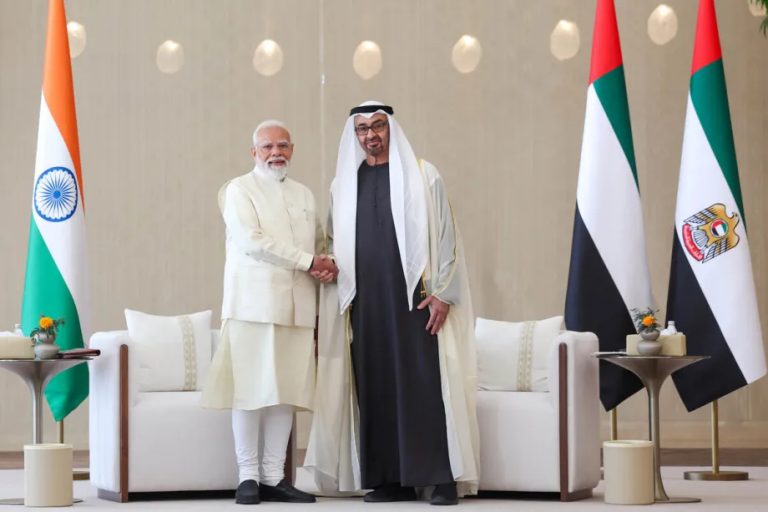
Prime Minister Narendra Modi’s mid-May stop in Abu Dhabi delivered tangible results that capture New Delhi’s current priorities in West Asia. Fresh commitments on energy storage, long-term fuel supplies and a framework for strategic defence cooperation point to a relationship that has moved well past basic trade. The timing matters. Ongoing conflicts have intensified oil price pressures and exposed vulnerabilities in global supply routes, forcing many capitals to lock in reliable partners.
The European portion of the same trip focused on technology ecosystems, semiconductor cooperation and trade modernization. This dual focus is no accident. Indian policymakers increasingly treat economic resilience and strategic flexibility as two sides of the same coin in a world where supply chains keep shifting and traditional power centers show signs of strain.
Deepening Bonds with Abu Dhabi
Few bilateral relationships have matured as rapidly as the one between India and the United Arab Emirates. What started with energy sales and labor flows now spans logistics hubs, financial technology, artificial intelligence projects and joint manufacturing ambitions. Abu Dhabi has become an important node for Indian interests across the broader region, offering capital, diplomatic access and a pragmatic outlook that aligns with New Delhi’s style of engagement.
This partnership sits comfortably within India’s habit of maintaining multiple alignments at once. Leaders in New Delhi avoid formal military blocs while cultivating useful ties wherever they serve practical goals. The Gulf, however, follows a different rhythm. Security guarantees, longstanding loyalties and questions of political legitimacy often matter more than balance sheets.
Saudi Arabia still occupies a unique place that no single neighbor can replace. Its authority in religious matters, dominance in energy coordination and central role in GCC decision-making give it enduring leverage. Recent steps have underscored these realities rather than diminished them.
Pakistan’s deep military and institutional connections to Saudi Arabia gained further formality through a mutual defense understanding reached in 2025. Years of joint exercises, advisory roles and cultural affinity have embedded these links into the fabric of Gulf security thinking. India’s own expanding commercial presence, though substantial through trade volumes and diaspora communities, operates on a largely different track.
Rivalry and Risk in West Asia
China’s activities add persistent pressure. Beijing has poured resources into energy contracts, port developments and infrastructure schemes that have steadily widened its regional role. Academic examinations of India’s Gulf policy note how this expansion, combined with Gulf states’ desire to diversify away from over-reliance on any one partner, has turned the area into a competitive arena for Asian powers.
New Delhi has responded with its own connectivity ideas, including corridors designed to link Indian ports with Gulf hubs and onward to Europe. These efforts seek to offer alternatives rather than direct confrontation. Gulf governments, for their part, appear content to encourage multiple suitors as they hedge against an uncertain global order.
Relations with Iran introduce the most delicate variable. India has sustained pragmatic channels with Tehran for port access and energy diversification even while strengthening bonds with Abu Dhabi and Israel. Any sharp deterioration in Gulf tensions risks pulling New Delhi onto uncomfortable terrain where economic gains could be overshadowed by security complications.
The path ahead remains narrow. Economic interdependence between India and key Gulf states has reached impressive levels, yet translating commercial weight into lasting geopolitical influence requires more than investment flows. The region still runs on security relationships and historical bonds that resist easy disruption. As fragmentation deepens and external powers jockey for position, New Delhi’s ability to preserve genuine autonomy will face repeated tests. Success will depend on clear-eyed management of contradictions that no amount of trade volume can simply wish away.
Original analysis inspired by Saima Afzal from Middle East Monitor. Additional research and verification conducted through multiple sources.