Three months, $29 billion, and thirteen American lives later, the Republican hawks who cheered loudest for the Iran war are now turning on the president who launched it — not because he fought, but because they fear he is about to settle. Key Senate Republicans are raising concerns about a reported peace deal being negotiated with Iran, arguing it would be a disaster for the United States that would make meaningless the war launched by President Trump nearly three months ago. The backlash is striking in a party that has spent years demanding tougher action against Tehran. Now that tougher action may be winding down, the hawks are discovering they want something even tougher still.
Trump wrote on Truth Social that an agreement has been “largely negotiated,” adding that final details of the deal will be “announced shortly.” A regional official with direct knowledge of the Pakistan-led mediation told the Associated Press that under the proposal, the war would come to an end and Iran would reopen the strait and give up its stockpile of highly enriched uranium, with the details and timelines to be worked out during a later 60-day window. That timeline — and its vagueness — is precisely what is driving the revolt on the right.
Hawks Turn on Their Own President
In an unusually public split within the Republican Party, senior lawmakers and former administration officials — including Lindsey Graham, Ted Cruz, Roger Wicker, and former Secretary of State Mike Pompeo — argue that Trump is abandoning the original objectives of Operation Epic Fury and settling for a deal that leaves Iran stronger, wealthier, and strategically intact.
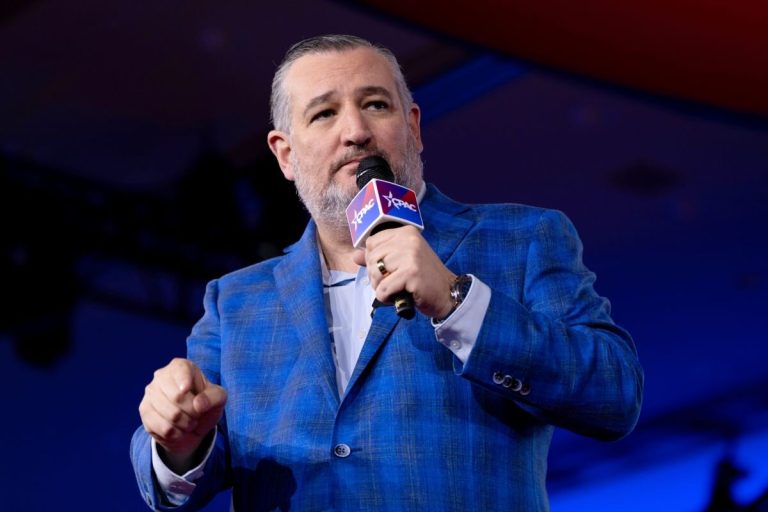
Senator Ted Cruz was among the sharpest. Writing on X, Cruz warned that if the outcome of the war left Iran’s Islamist leadership in power, receiving billions in sanctions relief, retaining the ability to enrich uranium, and holding effective influence over the Strait of Hormuz, the result would be “a disastrous mistake.” Senator Lindsey Graham, one of the most vocal advocates of military action against Iran for years, echoed that concern, saying the proposed concessions “make one wonder why the war started to begin with.”
The greatest source of anger is the deal’s handling of Iran’s nuclear program. Trump had previously declared that forcing Tehran to abandon its nuclear ambitions was a non-negotiable red line. Yet the draft agreement reportedly postpones negotiations over nuclear dismantlement and the disposal of highly enriched uranium for between 30 and 60 days.
Former National Security Advisor John Bolton dismissed the negotiations as a “waste of oxygen,” arguing that the ceasefire has merely given Tehran time to rebuild military capabilities, restart drone production, and recover weapons lost during the fighting. Former Secretary of State Mike Pompeo went further, suggesting the emerging deal looked essentially identical to the Obama-era JCPOA that Trump himself had withdrawn from and repeatedly condemned.
The costs behind the political argument are real and growing. At least 42 United States military aircraft — including fighter jets, drones, refueling tankers, and surveillance planes — were lost or damaged during the war with Iran, according to a report prepared for the US Congress, highlighting the scale and cost of a conflict that Washington initially expected to dominate from the air. During a May 12 hearing, Acting Pentagon Comptroller Jules W. Hurst III testified that the department’s cost estimate for military operations in Iran has increased to $29 billion, with much of that increase coming from “a refined estimate on repair or replacement costs for equipment.”
Iran, meanwhile, has not been idle. Iranian officials have increasingly portrayed the war not as a defeat, but as proof that the Islamic Republic can survive sustained Western military pressure while imposing steep financial and operational costs on its adversaries. After unrelenting bombardment using some of America’s biggest and heaviest bombs, the intelligence community reportedly assesses that 90% of Iran’s underground missile storage and launch facilities are still active.
Trump Pushes Back — and Finds Unlikely Allies
Trump dismissed objections to a deal he said was not “even fully negotiated yet,” telling his critics on social media not to listen to “the losers, who are critical about something they know nothing about.” He insisted the deal being worked out is the exact opposite of the nuclear pact Iran agreed to under Obama — a pact Trump had already pulled out of before attempting to negotiate a new one.
Secretary of State Marco Rubio, speaking from India during a diplomatic mission, defended the administration’s position. Rubio said Trump’s commitment to preventing Iran from obtaining a nuclear weapon “shouldn’t be questioned by anybody,” and called absurd any suggestion that this president “is going to somehow agree to a deal that ultimately winds up putting Iran in a stronger position when it comes to nuclear ambitions.”
Support also came from an unexpected corner of the GOP. Senator Rand Paul, often a thorn in the president’s side, defended the White House’s approach, writing on X that “war virtually always ends with negotiations” and urging critics to “give President Trump the space to find an American First solution.”
The Strait of Hormuz question cuts across all of this. Diplomatic buzz suggests that an accommodation to reopen the strait and ease the US blockade on Iranian ships and ports could be close, which could serve as a starting point for talks on nuclear ambitions — and would be welcomed worldwide as it would come with the hope of eventually easing the energy and economic crises triggered by the war.
Adding to hawks’ frustration is the apparent absence of restrictions on Iran’s ballistic missile program and its continued support for proxy groups such as Hezbollah and Hamas. Republican hawks fear that sanctions relief and renewed oil revenues would ultimately strengthen these organizations, allowing them to expand operations across the Middle East.
The Iran war, like everything else in Washington, is hostage to bitter politics, entrenched ideologies, and politicians seeking to boost their own profiles. Whether Trump can thread the needle between ending an unpopular war and satisfying a base that demanded a decisive outcome remains the defining test. The hawks who wanted this war are now, in effect, demanding that Trump keep fighting it — and Trump, for once, appears to be the one seeking the exit.
Original analysis inspired by Darlene Superville and Matthew Daly from Associated Press. Additional research and verification conducted through multiple sources.