Two very different accounts of Donald Trump’s intentions toward Iran have been circulating among Middle East officials this week — and they do not come from opposing sides of the aisle in Washington. Senior Israeli officials told journalists that another US strike was imminent, framing it as a matter of when, not if. Senior Gulf officials delivered the opposite verdict: Trump would not strike, did not want to strike, and would find a deal instead. As of Sunday, the Gulf reading proved closer to reality. Trump confirmed the US was holding back while “serious negotiations” were underway, and that an agreement had been “largely negotiated.”
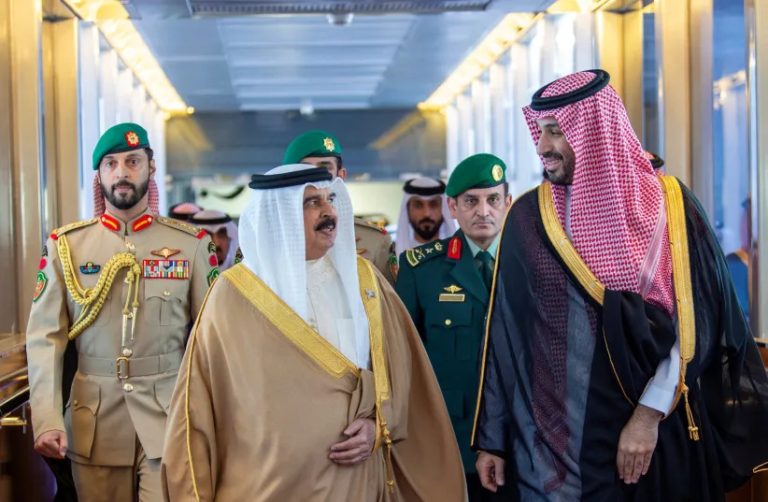
The divergence itself is telling. Israel and the Gulf states are not adversaries in this conflict — both have been aligned with Washington against Iran since February 28. But they are pulling Trump in fundamentally different directions. And right now, the Gulf is winning the argument.
The Economic Calculus Behind the Pause
Gulf states including Saudi Arabia, Qatar, and the UAE have urged Trump to suspend the military assault, fearing Iranian retaliation against the region and further damage to global energy markets. Their concern is not abstract. The conflict has set off what Gulf states called the worst global energy crisis in decades, with higher energy prices in the US feeding rising inflation and expectations that the Federal Reserve may need to increase interest rates. Trump himself signaled he was listening. His comment that “if there’s a deal that’s good for the Gulf states, it’s good for me as well” was widely noted as a sign that he had no intention of taking a harder line than the countries absorbing the consequences most directly.
The political arithmetic back home is equally stark. Opinion polls suggest the conflict is deeply unpopular with the American public, with around 64 percent of voters reportedly believing the decision to enter the war was a mistake. Pentagon estimates put the war’s cost at at least $29 billion, while rising fuel prices are adding to inflationary pressures across the United States — and for many American voters, concerns about the cost of living increasingly outweigh foreign policy considerations. House Speaker Mike Johnson stated the quiet part aloud, predicting that once the deal was done and gas prices came down, “the kitchen table issues are going to decide the midterms.”
CNN reporting cited two sources familiar with US intelligence assessments as saying Tehran had restarted some drone production and was rebuilding certain military capabilities degraded by US-Israeli strikes — meaning a resumption of war would risk even more intense and damaging Iranian retaliation against Gulf states, critical infrastructure, and US forces than the first bout. That assessment alone gives Trump every reason to keep reaching for the diplomatic option rather than the military one.
What a Deal Actually Looks Like
A one-page, 14-point memorandum of understanding is being negotiated between Trump’s envoys Steve Witkoff and Jared Kushner and several Iranian officials, both directly and through mediators, and in its current form would declare an end to the war and the start of a 30-day period of negotiations on a detailed agreement to open the strait, limit Iran’s nuclear program, and lift US sanctions.
The nuclear question remains the most contested piece. US negotiators have sought severe limits on Iran’s ability to enrich uranium, as well as the surrender of its existing stockpile of highly enriched uranium, estimated by the IAEA at 408 kilograms enriched to 60 percent — close to weapons grade. Iran proposed a five-year moratorium on enrichment and the US demanded 20. Iran would also commit to enter negotiations on giving up its stockpile and pause any new enrichment, though Iranian officials have insisted that negotiations about the uranium can only begin once a memorandum ending the war is agreed.
Iran’s semi-official Fars news agency stated that “Iran has made no commitments in this agreement regarding handing over nuclear stockpiles, removing equipment, closing facilities, or even pledging not to build a nuclear bomb.” Tehran and Washington are, in effect, describing two different deals — which may be the point. A vague enough memorandum of understanding lets both sides claim victory in the short term while deferring the genuinely incompatible positions to a later negotiating round.
A potential deal reported by the Financial Times would establish a framework for nuclear talks, ease sanctions on Iran, and unfreeze Tehran’s overseas assets. Iran’s side is no less conditional. With its economy in deep trouble, Iran is demanding the immediate unfreezing of billions of dollars in assets held in banks overseas, insisting that the status of releasing blocked assets must be clarified at the very beginning of the process.
The 60-Day Problem
The deal’s architecture — an initial memorandum followed by a 60-day negotiating window on the hard issues — raises an obvious question that Israeli and Republican hawks have already seized on. If the president was not genuinely interested in starting a war now, with many reasons not to, why would he want to do so 60 days from now, just before midterm elections? The answer, almost certainly, is that he wouldn’t. Which means the 60-day window is less a deadline than a placeholder — a way to extend the current pause while both sides buy time.
Trump administration officials were said to be unwilling to end the ceasefire, with Trump repeatedly issuing deadlines before resumed attacks only to repeatedly back down from them. That pattern has now become the operating logic of the entire negotiation. Each deadline arrives, each deadline passes, and each extension is packaged as evidence of diplomatic progress rather than negotiating stalemate.
Secretary of State Marco Rubio said there was “a pretty solid thing on the table” in terms of Iran’s ability to open up the Strait of Hormuz and enter into “a real significant time-limited negotiation on nuclear matters,” adding that the potential agreement has a lot of support from Gulf states and globally. That support matters enormously, because without it, Trump’s domestic political case for restraint becomes considerably harder to make. The Middle East war has jeopardized Gulf nations’ economic plans aimed at riding the global AI boom, as an extended conflict tests investor confidence, raising questions over energy security and infrastructure resilience, with investment decisions into some data center projects in the region paused or taking longer.
The Strait of Hormuz is the thread that runs through every calculation on every side. For the Gulf states, reopening it is existential. For Trump, it is the clearest metric of whether a deal has actually delivered anything tangible. For Iran, it remains the most powerful card in any negotiation — and Tehran will not give it up cheaply, regardless of what any memorandum of understanding says in the first phase. The gulf between the stated positions of both sides and the economic and political pressure driving them toward a deal is not a contradiction. It is the entire structure of where this negotiation now stands.
Original analysis inspired by Amichai Stein from The Jerusalem Post. Additional research and verification conducted through multiple sources.