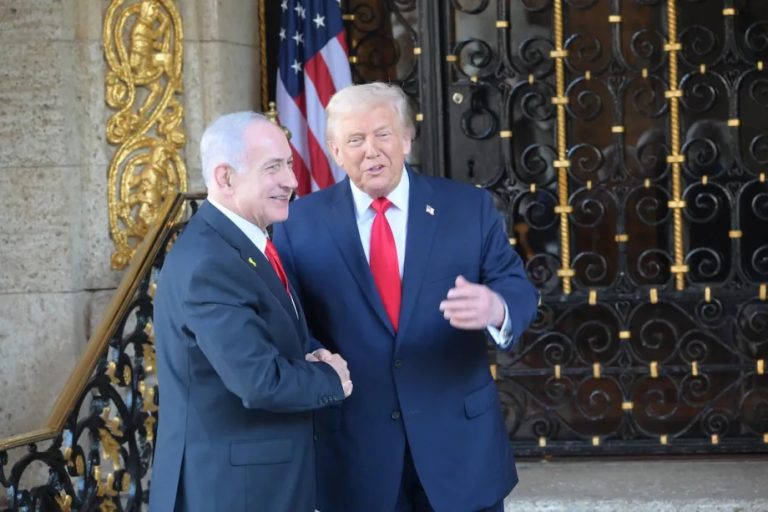
The U.S.-Israel relationship has long been a cornerstone of Middle East policy, built on shared strategic interests and democratic values. But under Donald Trump and Benjamin Netanyahu, this strategic partnership has morphed into a volatile, transactional arrangement driven by the political needs of two leaders. Their alliance is not defined by trust or a shared vision, but by a mutual dependence that holds regional stability hostage to their personal political fortunes.
This partnership of convenience has led both nations down a perilous path. For years, Netanyahu has been the primary architect of a hawkish regional strategy, successfully convincing Trump that complex challenges, like Iran’s nuclear program, could be resolved with brute force. This approach culminated in a direct conflict that, contrary to promises of a swift victory, bogged down and ultimately damaged American interests, leaving Washington to foot the bill for a strategy conceived in Jerusalem.
A Partnership Built on Personal Agendas
The dynamic between the two leaders is less about statecraft and more about political survival. Netanyahu, a prime minister who has long sought to outrun legal challenges and hold together a fragile right-wing coalition, needs perpetual crisis to maintain power. His policy-making is heavily influenced by a playbook that advocated for reshaping the Middle East through preemptive action, a vision where American military power serves as the enforcement arm for Israeli strategic goals.
Trump, in turn, was a receptive audience. Driven by a desire for legacy-defining “wins” and a disdain for diplomatic nuance, he embraced the promise of a decisive victory over Iran. This alignment created a feedback loop where Netanyahu’s strategic ambitions were amplified by Trump’s political instincts. The result was a high-risk foreign policy that prioritized spectacle over stability, a partnership where both men believed they could bend the region to their will.
The Inevitable Fracture
An alliance built on such a fragile foundation was destined to crack. The breaking point reportedly came during a heated phone call over military operations in Lebanon, where Trump unleashed his frustration on Netanyahu. The incident revealed the true nature of their relationship: not a partnership of equals, but a transactional arrangement where loyalty is temporary and subordinate to self-interest. Trump’s fury underscored a simple reality: he would humiliate Netanyahu the moment the prime minister’s actions became a political liability.
This episode is emblematic of a broader pattern that defines Trump’s approach to international relations. For Netanyahu, it was a stark reminder of how much he relies on American diplomatic and military cover, a shield that could be withdrawn at any moment. The Israeli leader’s quiet acquiescence to the president’s demands exposed the limits of his influence when confronted with an enraged patron.
They are locked in a political embrace where mutual need is indistinguishable from mutual threat. Both men face immense domestic pressures and see foreign policy as a tool to distract from their troubles and energize their bases. This creates a dangerous codependence, trapping them together like two scorpions in a jar. Each has the power to deliver a fatal sting, and as their political worlds shrink, the odds of one doing so increase by the day, with the entire Middle East trapped in the glass with them.
Original analysis inspired by Jasim Al-Azzawi from Middle East Monitor. Additional research and verification conducted through multiple sources.
By ThinkTanksMonitor