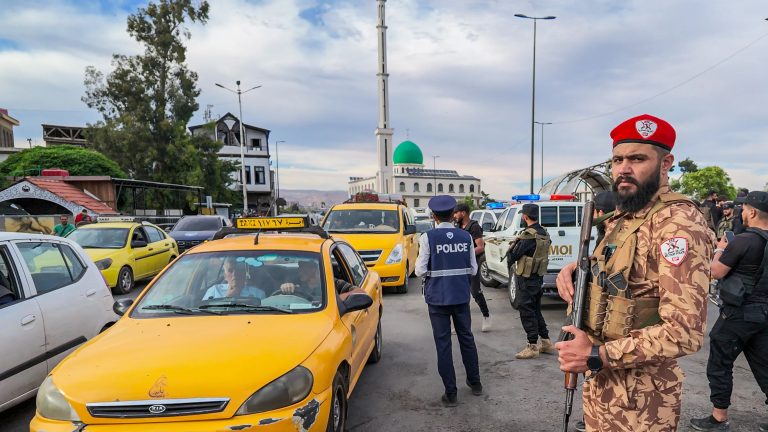
When Bashar al-Assad’s government collapsed in December 2024, Syria’s new leadership inherited a country that had spent fourteen years tearing itself apart along geographic, sectarian, and factional lines. The military it subsequently assembled reflects those fractures more than it resolves them. Rather than rebuilding the armed forces through a conventional top-down institutional process, Damascus has absorbed dozens of wartime factions largely intact, redeploying them to the same territories where they fought, governed, and built local patronage networks during the conflict years. The result is an army that functions less like a national institution and more like a federation of armed communities wearing the same uniform.
A Military That Mirrors Its Society
The new Syrian army currently comprises twenty active divisions drawing on fighters from over sixty military factions. Roughly half of those divisions are led by commanders whose authority is rooted directly in the regions they now administer, a structural choice that reflects both pragmatism and constraint. Ahmad al-Sharaa’s transitional authority lacked the coercive tools, financial resources, and institutional depth to impose a genuinely centralized military hierarchy, so it negotiated integration instead, allowing factions to preserve their internal command structures and leadership in exchange for formal allegiance to Damascus.
The Jaysh al-Islam incorporation into the 70th Division around Douma illustrates the dynamics at play. The faction did not enter the new army as a dissolved military unit absorbed into a neutral institution. It returned as a governing network reconstituting itself within the same neighborhoods it had controlled between 2012 and 2018, where its command structures had previously managed local administration, commercial life, and security simultaneously. Military reintegration and social reconstitution are happening as a single process, not as sequential phases.
The 62nd Division in Hama Governorate offers an even more pointed example of how far factional logic has survived the transition. Multiple brigade-level positions within the division are held by members of the same family, effectively transforming a formal military unit into an institutionalized extension of kinship networks. The Defense Ministry in Damascus may sign the commissions, but the actual lines of authority run through bonds that predate and will likely outlast any formal state structure.
The SDF Bargain and the Southern Exception
Syria’s Kurdish-led Syrian Democratic Forces presented Damascus with its most complex integration challenge. Unlike other factions that joined the new order through the Victory Conference and its pledge of allegiance to al-Sharaa, the SDF required a separate negotiated agreement. The arrangement distributes SDF forces across four brigades in Kobane, Hasakeh, Qamishli, and Malikiyeh, while phasing the transfer of administrative control over oil fields, border crossings, and civil institutions to central authorities. Damascus is not attempting to dissolve the SDF outright. It is disaggregating it into smaller components gradually inserted into the broader military structure, a managed erosion rather than a direct confrontation.
In the south, Suwayda remains outside Damascus’s direct reach entirely, with armed formations drawing on Druze communal legitimacy operating under Sheikh Hikmat al-Hijri’s influence and reinforced by Israeli external support. Reintegrating those formations will require negotiated arrangements analogous to the SDF process — if it happens at all.
Lebanon and Iraq as Warning Mirrors
The historical precedents for this kind of post-conflict military settlement are not reassuring. In Lebanon, the postwar Taif Agreement disarmed most factions but left Hezbollah outside the state’s monopoly on force, while former militia commanders converted ministries and public resources into patronage instruments, effectively preserving the wartime order in institutional clothing. In Iraq, the Popular Mobilization Forces acquired official legal status after 2014 and have since expanded across military, political, and economic arenas in ways their original mandate never envisioned. Syria’s transitional authorities are aware of these trajectories and insist their approach is a temporary emergency measure. The difficulty is that emergency arrangements outlast the emergencies that produce them with uncomfortable regularity.
What Damascus has built is not a Syrian army in any conventional institutional sense. It is a network of locally anchored armed communities granted formal legitimacy by a center that currently lacks the tools to discipline them. Whether that center can consolidate sufficient authority before local structures become too entrenched to restructure may be the defining question of Syria’s next decade.
Original analysis inspired by Kheder Khaddour from Carnegie Endowment. Additional research and verification conducted through multiple sources.