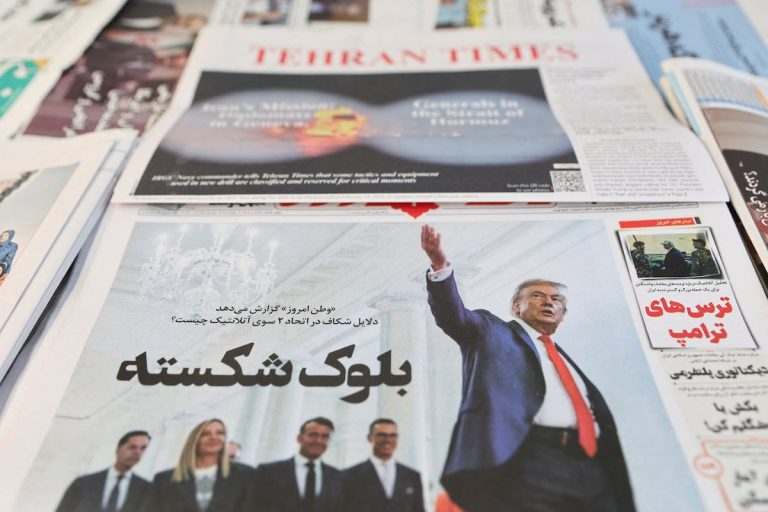
The ceasefire framework arrived with declarations of success from nearly every capital involved. Washington pointed to destroyed infrastructure. Jerusalem cited eliminated leaders. Tehran claimed survival as vindication. The numbers behind each argument are real. What they obscure is that the war produced no strategic winner — only a set of actors who each emerged diminished in ways their public statements refuse to acknowledge. The months of fighting confirmed something that years of regional analysis suggested: in today’s Middle East, any state can impose costs, but none can impose order.
The most counterintuitive outcome belongs to Iran itself. The regime survived, and survival was the baseline goal. But the price paid for that survival has narrowed Tehran’s options in ways that will take years to become fully visible. The war accelerated the collapse of the rial, drove inflation to record levels, and destroyed key industrial capacity including steel plants and power infrastructure. Early estimates suggest more than one million jobs vanished during the conflict — a figure that places the war among the most economically devastating episodes in the Islamic Republic’s history. The regime now faces a choice between rebuilding its military and addressing the economic crisis its population is living through. It cannot credibly do both simultaneously.
Politically, consolidation around the security establishment looks like strength in the short term. It rarely stays that way. Systems dominated by military institutions tend to harden against the economic reforms and political flexibility that recovery demands. Iran exits the war more securitized than before and, paradoxically, more fragile because of it.
The Gulf’s Exposed Underbelly
Arab Gulf leaders had privately opposed a major escalation for years, precisely because they understood that they would bear consequences they could not control. That calculation proved correct. Iran’s closure of the Strait of Hormuz — sustained through mines, drones, and coastal batteries rather than conventional naval power — revealed a geographic vulnerability that sits at the center of every Gulf economic model. Decades of repositioning as global hubs for finance, logistics, and technology depend on the assumption that shipping lanes remain open. That assumption no longer holds automatically.
The trust deficit with Washington deepened during Project Freedom, the short-lived U.S. effort to reopen the strait. When Tehran struck a UAE oil terminal and Washington chose not to respond, Kuwait and Saudi Arabia closed their airspace to U.S. military aircraft within 24 hours. The episode confirmed what Gulf leaders had long suspected: the United United States can punish Iran, but it cannot fully shield Gulf infrastructure from the consequences of doing so. Gulf states must now divert resources toward defensive capacity at precisely the moment their diversification agendas require investment elsewhere.
Russia Gained Little, China Gained Less
Moscow extracted a short-term benefit from rising oil prices and limited sanctions relief. That was the extent of it. Russian air defense systems supplied to Iran performed poorly against U.S. and Israeli strikes, undermining one of Moscow’s most commercially valuable export arguments. Ukraine used the conflict to demonstrate its counterdrone expertise directly to Gulf buyers, signing long-term defense agreements with Saudi Arabia, Qatar, and the UAE — deepening its footprint in a region Russia had treated as its own diplomatic arena. Russia’s decision to veto the UN Security Council resolution calling for the Strait of Hormuz to be reopened infuriated Gulf Arab leaders who expected at minimum a gesture of solidarity with their economic interests.
Beijing faces a more complex reckoning. China appeared measured and restrained throughout the conflict, a contrast to Washington’s direct involvement that played well in the Global South. The Indo-Pacific balance also shifted marginally in China’s favor as the United States burned through munitions that will take years to replace. But China joined Russia in vetoing the Security Council resolution on the strait — exposing the limits of its leverage over Tehran and generating genuine anger among Gulf leaders who had expected Beijing to protect the economic architecture both sides depend on. Chinese investments in Iran under the Belt and Road Initiative suffered significant damage, and the broader precedent — that strategic chokepoints can be weaponized without international consequence — creates risks for a country whose export-dependent economy needs predictable shipping lanes more than most.
The Order That Never Arrived
What the war failed to produce is the element that would have justified its costs: a new regional architecture. No durable security framework emerged, no credible nuclear agreement was secured, and no coalition of powers demonstrated the combined will to enforce stability. Iran’s nuclear ambitions are widely assessed to be more entrenched now than before the fighting started — the logic of deterrence having been reinforced rather than reversed by the experience of regime survival under bombardment. The Islamic Republic watched its conventional forces dismantled while the regime itself endured, and drew the obvious conclusion.
The deeper lesson from the Iran war is structural, not tactical. Every major actor spent down real assets — military stocks, economic stability, diplomatic credibility, regional trust — without gaining a replacement for the order those assets were meant to defend. The Middle East after the ceasefire is not more stable than the Middle East before Operation Epic Fury. It is simply differently unstable, with new vulnerabilities exposed, new resentments hardened, and a new generation of leaders in Tehran, Riyadh, and Beijing recalibrating what American military dominance actually means when its political foundations keep shifting.
Original analysis inspired by Will Todman from Foreign Policy. Additional research and verification conducted through multiple sources.
By ThinkTanksMonitor