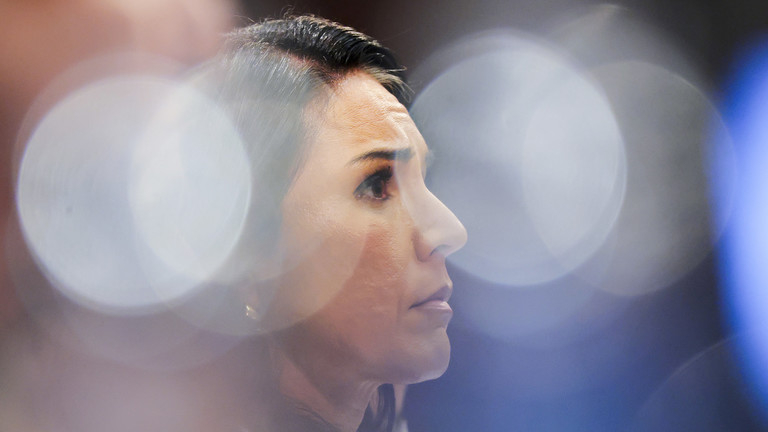
Tulsi Gabbard spent 18 months as America’s top intelligence official doing something increasingly rare in Washington — telling the truth even when it was inconvenient. She announced her resignation on Friday, effective June 30, 2026, citing her husband’s diagnosis with cancer. In her letter posted on X, Gabbard said her husband, Abraham Williams, was recently diagnosed with a serious and rare form of bone cancer. The personal dimension of her departure is not in doubt. But the professional story of how she got there — and why her time in office was so turbulent — reveals something more significant about how the Trump White House treats intelligence it doesn’t want to hear.
Gabbard’s 18-month tenure is defined as much by her lack of involvement in Trump’s military actions as it is for her willingness to pursue some of Trump’s biggest grievances. That tension was present from the start. She was an unconventional pick for a role that traditionally demands both bureaucratic acumen and the kind of establishment credibility she had never cultivated. Her confirmation did not receive bipartisan support, and former Republican leader Mitch McConnell voted against it. Yet she was confirmed and sworn in, carrying with her a reputation for blunt assessments and a deep skepticism of military adventurism — qualities that would eventually define her time in the role.
The Iran Fault Line
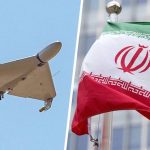
The defining rupture came over Iran. Before the Senate Intelligence Committee, Gabbard stated in written remarks that there had been no effort by Iran to rebuild its nuclear capability after US attacks last year “obliterated” its nuclear program. That assessment was factually grounded — and politically explosive. It directly contradicted Trump, who has repeatedly asserted that the war was necessary to head off an imminent threat from the Islamic Republic.
This created several awkward exchanges with lawmakers who asked Gabbard for her opinion on the threat posed by Iran as the nation’s top intelligence official. She repeatedly said it was Trump’s decision to strike, not hers, stating, “It is not the intelligence community’s responsibility to determine what is and is not an imminent threat.” Top counterterrorism official Joe Kent had already stepped down over the decision to go to war with Iran, arguing in his resignation letter that Iran posed “no imminent threat.”
Ahead of Trump’s decision to strike Iran’s nuclear sites, Gabbard had posted a video warning that the world is “closer to the brink of nuclear annihilation than ever before,” which angered Trump and the White House, putting her on the sidelines. After the strikes, she was caught between defending an action she had warned against and serving a president who had publicly dismissed her professional judgment. Trump viewed the video as thinly veiled criticism of his consideration to allow Israel to strike Iran, and later publicly rebuked his intel chief’s perspective, telling reporters, “I don’t care what she said. I think they were very close to having it” — the same day he greenlit US strikes on Iran’s nuclear sites.
Sidelined Before She Resigned
The Iran dispute was not an isolated incident — it was the clearest expression of a structural problem. Gabbard had clashed with her CIA counterpart, John Ratcliffe, and during pivotal moments as Trump deliberated over possible military action or watched live video feeds of operations in Iran or Venezuela, Gabbard was often not in the room, underscoring her outsider status.
When Trump’s national security team gathered at Mar-a-Lago on New Year’s Day to watch the US operation in Venezuela unfold, Gabbard was thousands of miles away posting pictures on social media from a beach in her home state of Hawaii. Gabbard and CIA Director Ratcliffe had a fraught relationship, with Gabbard feeling that Ratcliffe at times was going around her directly to the president, despite the agencies traditionally working hand in hand.
Former Deputy DNI Beth Sanner put it bluntly: “This is why her initials DNI became ‘do not invite.'” That quip captured something real. The Director of National Intelligence is supposed to be the president’s primary interface with the intelligence community, overseeing all 18 agencies and delivering the Presidential Daily Briefing. When that official is routinely excluded from major decision-making, the entire architecture of coordinated intelligence assessment starts to break down.
What She Did Accomplish
Gabbard did find ways to operate within the administration’s priorities when her own instincts aligned with Trump’s. She declassified documents from the intelligence community’s assessment on 2016 Russian election interference in order to claim President Barack Obama was behind a “treasonous conspiracy” against Trump. She oversaw the declassification of hundreds of thousands of pages tied to the assassinations of President Kennedy, Senator Robert Kennedy, and the Rev. Martin Luther King Jr. — a transparency effort that generated genuine public interest regardless of its political motivation.
She also launched an investigation into more than 120 foreign biological laboratories funded by US taxpayer dollars, targeting both Chinese labs linked to COVID-19 research and Ukrainian labs that Russia had long accused of offensive biological research. A source close to Gabbard told CNN that despite her turbulent tenure at DNI, a key reason she stayed in the job as long as she did was simply that the president still likes her personally.
In the end, she wasn’t ousted like former Attorney General Pam Bondi or former Homeland Security Secretary Kristi Noem. She is the fourth Cabinet member — all women — to leave Trump’s second-term administration, following Noem’s ouster in late March and Labor Secretary Lori Chavez-DeRemer’s resignation in April. Trump wrote that he has “no doubt” her husband will “soon be better than ever,” adding that “Tulsi has done an incredible job” and that Principal Deputy Director Aaron Lukas will serve as acting director.
There remain concerns about having a director leading national intelligence who is not Senate-confirmed as the top executive, though Lukas was confirmed 51–46 as deputy in July 2025. Analysts note the country is “probably at the highest threat level since before 9/11, given all the nation-state threats and terrorist threats,” making the leadership transition at DNI a genuine challenge. The gap she leaves is not just institutional — it’s the gap left when someone willing to deliver an unwelcome intelligence assessment to the most powerful man in the room quietly walks out the door.
Original analysis inspired by Scott Ritter from RT. Additional research and verification conducted through multiple sources.