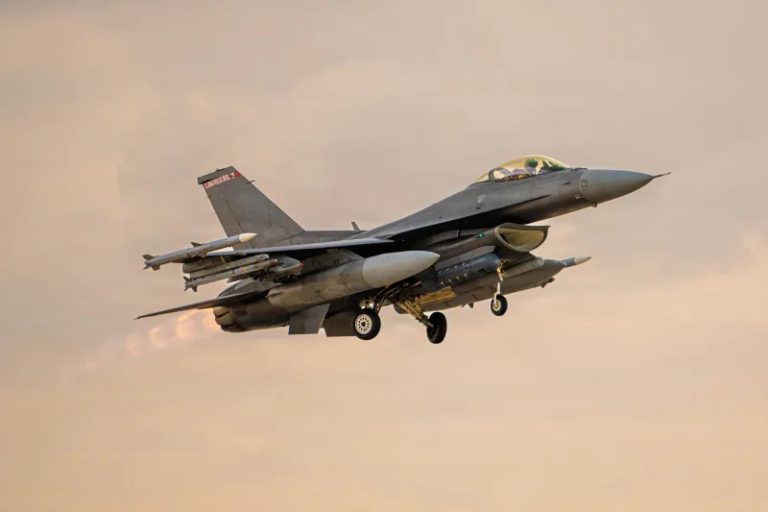
The United States launched a war against Iran from more than 6,000 miles away because decades of basing arrangements made it structurally possible to do so. That capability — built through hundreds of formal and informal access agreements with states across Europe, the Middle East, and the Indo-Pacific — has defined American military power since the Second World War. It has also, according to a growing body of strategic analysis, made Washington more likely to choose military action over diplomacy by reducing the practical friction that would otherwise constrain the decision to go to war. The Iran conflict is now testing whether the states that made that capability possible are willing to keep paying the price for it.
Operation Epic Fury has depended entirely on foreign territory. F-22s and F-35s have flown from Al Udeid Air Base in Qatar and Al Dhafra in the UAE. Carrier strike groups in the Arabian Sea rely on port access across Bahrain, Oman, and beyond for fuel, ammunition, and maintenance. Intelligence and surveillance assets have operated from Kuwait and the UAE. Ground forces deployed to undisclosed regional locations as ground operation options were being weighed. Without that network of host-state permissions, the United States could not have placed overwhelming firepower within range of Iranian targets. The war, in a literal operational sense, is a coalition product even when most coalition members decline to acknowledge their participation publicly.
When Hosting Becomes a Target
The problem that the Iran war has exposed for access-granting states is not abstract. Tehran has fired more than 5,000 missiles and drones at regional targets since the opening days of the conflict, systematically targeting the bases and infrastructure from which US forces operate. Prince Sultan Air Base in Saudi Arabia, Al Udeid in Qatar, Ali Al Salem in Kuwait, and Naval Support Activity Bahrain have all absorbed hits. The UAE has intercepted close to 3,000 Iranian drone and missile strikes — the highest toll of any single host state — including strikes on civilian desalination infrastructure and the Al Dhafra Air Base itself. Kuwait’s main airport was knocked out of commission by an Iranian barrage on June 3.
Iran’s strategic logic is transparent. It is simultaneously trying to degrade US operational capacity and coerce host governments into withdrawing their permissions. The coercion component has largely failed — most Gulf states responded to Iranian strikes by loosening rather than tightening access restrictions, calculating that deeper American military engagement offered better protection than neutrality. But the failure in this conflict does not guarantee the same calculation in the next one. The lesson that host states are drawing from the Gulf’s experience is that wartime access makes their territory a military target, and that the US promise to shield them from retaliation is not as reliable as it was during the Gulf War era, when American technological dominance could neutralize most adversary air threats before they reached host-state territory.
The Drone Revolution and the Erosion of the Security Guarantee
The proliferation of cheap ballistic missiles and drone swarms has structurally altered the calculus that made wartime access politically sustainable for host states. During the first Gulf War, the United States could credibly neutralize the Iraqi air force threat to Turkey by deploying superior fighter aircraft to Incirlik. That guarantee worked because American technological superiority translated directly into protection for the host. The mathematics of drone and missile warfare invert that relationship. Producing Shahed drones and ballistic missiles at scale costs a fraction of what it costs to build and operate the interception systems required to defeat them. Even a technologically dominant military struggles to protect host-state territory when an adversary launches coordinated saturation attacks designed specifically to overwhelm interception capacity.
The Taiwan scenario makes the implications explicit. Washington’s operational plans for defending Taiwan depend on access to bases in Japan, Australia, and potentially the Philippines and South Korea. Those governments will need to weigh whether allowing US aircraft to fly from their runways would invite Chinese Rocket Force strikes on their military and civilian infrastructure — strikes the United States could not neutralize without escalating to attacks on Chinese mainland targets. The Gulf’s experience in 2026 is being studied in every Indo-Pacific capital that might face an equivalent choice.
If host states begin denying access in larger numbers — spooked by the precedent that hosting the United States makes you a priority target for sophisticated missile and drone arsenals — Washington would lose the global reach that has defined American military power for eighty years. That outcome would be strategically consequential and institutionally painful. It might also, given the pattern of wars that wartime access has made possible, constitute an accidental benefit — fewer opportunities for the United States to start conflicts whose political objectives remain unclear long after the first bombs fall.
Original analysis inspired by Rachel Metz from Foreign Affairs. Additional research and verification conducted through multiple sources.